

















Discover how Astanayika archetypes, rasa theory, and feminine emotional philosophy shape literature, performing arts, and contemporary cultural thought
Prashanta Nanda

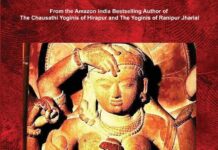
Book Title: Astanayika: The Romantic Heroines from Natyashastra to Modernity
Author: Manorama Choudhury, Dr. Jayakrushna Choudhury)
Reviewer: Prashanta Nanda
‘Astanāyikā: The Romantic Heroines from Nātyaśāstra to Modernity’ is not merely a book to be read; it is a text to be contemplated. The text serves as a foundational reference book to understand the art and science of human emotions. The original work, Astanayika; tattwa O Kabita, by Manorama Choudhury under the guidance of Dr. Jayakrushna Choudhury, in the Odia language. The English text on the same subject matter is more than a translation. It is reorganized with additional extensive research materials and written in refined reflective English in collaboration with her mentor. Together, the authors create a text where śāstra meets sensitivity and research breathes with rasa.
Manorama, an Odia scholar residing outside India, yet profoundly anchored in India’s civilisational memory, revisits one of the most luminous frameworks of Indian aesthetics, the Astanāyikā, the eight emotional romantic states of the heroine. Dr. Choudhury, though formally trained as a science educator and retired from NCERT, brings to the work a lifelong engagement with literature, philosophy, and classical Indian thought.
Rather than treating the Astanāyikās as static categories inherited from classical treatises, they approach them as living emotional archetypes, psychological, ethical, and spiritual states that continue to resonate within the contemporary human psyche. The result is a work that is at once academically rigorous and deeply humane.

Reinterpreting the Classical Framework
Rooted in Bharata’s Nātyaśāstra and later aesthetic traditions, the Astanāyikā paradigm has long shaped Indian dance, music, poetry, painting, sculpture, and dramaturgy. Yet in many modern interpretations, these heroines have been reduced to iconographic poses, frozen aesthetic types severed from emotional complexity.
Manorama Choudhury decisively liberates them from such taxonomy through her original poems and interpretive insights. Each nāyikā, whether Vāsakasajjā in anticipation, Virahotkaṇṭ hitā in longing, Khaṇḍ itā in wounded dignity, or Abhisārikā in daring resolve, is explored as a fully realised psychological condition rather than a decorative label. The book restores depth to feminine experience, portraying the nāyikā as emotionally sovereign, morally aware, and spiritually resonant.
Methodological Rigour without Rigidity
One of the book’s greatest strengths lies in its methodological balance. The authors demonstrate disciplined engagement with classical Sanskrit and medieval aesthetic texts, performing traditions such as Odissi, Bharatanatyam, and Kathak, visual representations in miniature painting and temple art, and regional literary cultures and historical contexts.
Yet this scholarship never becomes pedantic. The prose operates through dhvani (suggestion) rather than assertion, allowing meaning to unfold organically. Academic precision coexists with poetic restraint, making the book equally suitable for university curricula and for serious reflective general readers. The psychological interpretations drawing parallels with Natyashastra’s rasa theory are another significant aspect of this text.
Reclaiming the Feminine Principle
Astanāyikā also functions as a subtle yet firm intervention in contemporary gender discourse. The nāyikā here is neither passive nor defined solely by her relation to the hero. She possesses agency in desire, dignity in separation, and courage in transgression.
Especially striking is Manorama’s re-reading of Abhisārikā, a figure often subjected to moralistic misinterpretations. In her poems, Abhisārikā emerges as a symbol of existential courage, a woman who ventures into social and literal darkness in pursuit of inner truth. This interpretation is deeply Indic in spirit, grounded in notions of bhāva choice and inner autonomy rather than in imported theoretical frameworks.
English that Thinks in Sanskrit
Although written in English, the book thinks in Sanskrit and feels through an Odia sensibility. The prose reflects a mind trained in classical categories yet attuned to lived emotion. It achieves the rare balance of being globally accessible while remaining culturally uncompromised, an essential quality for contemporary Indic scholarship.
Academic and Cultural Significance
Astanāyikā deserves serious consideration for inclusion in Indian and international university syllabi, departments of Literature, Aesthetics, Gender Studies, Behavioural Studies, and Performing Arts research libraries focused on Indic civilisation and institutions committed to decolonised humanities.
For Odisha in particular, the book is a matter of cultural pride, affirming that Odia scholarship continues to illuminate the broader landscape of Indian thought. The inclusion of Odia literary stalwarts and their contributions to kāvya, especially within śṛ ṅ gāra rasa, is especially praiseworthy. Inclusion of vernacular poets of the Indian diaspora and their contributions to Indian literature is worth mentioning.
A Shared Intellectual Legacy
In its totality, Astanāyikā emerges as a luminous scholarly achievement, one that restores emotional dignity to classical forms and rehumanises theory through empathy and insight. The book does not merely interpret tradition; it converses with it, allowing ancient categories to speak anew.
It is essential, in conclusion, to acknowledge the immense contribution of Dr. Choudhury as mentor and co-author. His role extends far beyond formal guidance. With deep grounding in Indic philosophy, classical aesthetics, and comparative cultural studies, he provides the work with its theoretical spine and methodological discipline. His mentorship ensures that interpretive freedom remains anchored in śāstric clarity and that emotional insight is balanced by analytical precision.
The silent intellectual dialogue between Manorama Choudhury’s intuitive sensitivity and Dr. Jayakrushna Choudhury’s scholarly rigour has shaped Astanāyikā into a work that is both emotionally luminous and academically authoritative. The book thus stands not merely as an individual accomplishment but as a shared intellectual legacy where mentorship becomes creation and guidance matures into co-authorship.
In an age of hurried interpretation and diluted tradition, this book stands as a quiet, luminous lamp,
illuminating the eternal feminine as understood by India And now, offered to the World.
(The reviewer is a noted filmmaker. Views Expressed are Personal.)