

















Odisha’s Black Swan Summit marks a strategic shift as the state embeds itself into global digital finance networks, signalling a new execution-driven model of economic growth
OdishaPlus Bureau

Big economic shifts rarely announce themselves with fanfare. They arrive quietly—through patient institution-building, global linkages, and a willingness to move from intent to execution. The Black Swan Summit India, being hosted in Bhubaneswar on February 5–6, may well be one such moment for Odisha.
At one level, the summit is an impressive gathering: over 1,700 delegates from 24 countries, nearly 100 speakers from five continents, and participation from global policymakers, regulators, investors, technology leaders, startups and academics. But to read it merely as another high-profile conference would be to miss its deeper significance. What Odisha is attempting here is not branding—it is repositioning.
For decades, India’s digital and financial innovation narrative has been dominated by a few metropolitan centres. Odisha’s intervention challenges that geography. By partnering with Singapore-headquartered Global Finance & Technology Network (GFTN)—an entity of the Monetary Authority of Singapore—the State is embedding itself directly into trusted global digital finance networks rather than trying to build an ecosystem in isolation.
The organisers’ assertion that what Singapore achieved in fintech and startups over a decade can be achieved in Odisha in five years may sound ambitious. Yet ambition, when backed by institutions, talent pipelines, and global connectivity, is precisely what differentiates aspirational policy from transformative policy.
What stands out in Odisha’s approach is its deliberate shift away from technology fetishism. The focus is not on AI, FinTech, or InsurTech as ends in themselves, but as economic instruments—to generate jobs, build skills, seed enterprises, and attract long-term capital. This reframing is crucial at a time when digital policy across India risks becoming a checklist of platforms rather than a pathway to prosperity.
“Odisha is not preparing to merely participate in the global digital economy; we intend to help shape it,” said Vishal Kumar Dev, Additional Chief Secretary for Electronics and IT. The emphasis on operationalising digital finance—rather than celebrating pilots—marks a notable change in how State governments approach emerging technologies.
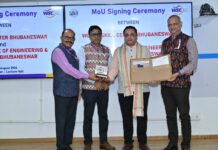
The BharatNetra initiative, under which the summit is organised, offers a glimpse of this execution-first mindset. Its five-month FinTech and InsurTech programme, run in collaboration with the National University of Singapore’s Asian Institute of Digital Finance and GFTN, aligns skilling directly with industry demand. The early outcomes—graduates being interviewed by global firms, selections under the MUFG Young Innovators and Singapore Pathfinders programmes—suggest a model where policy ambition translates into employability and global exposure.
This matters deeply for Odisha. With nearly 69% of its population of working age, the State’s development challenge is not just growth, but productive absorption of talent—especially beyond Tier-I cities. By positioning Bhubaneswar as a hub for global capability centres and digital finance infrastructure, Odisha is attempting to insert itself into global value chains that reward skills, trust, and scale.
The presence of President Droupadi Murmu at the summit, and its origins in President Tharman Shanmugaratnam’s 2025 visit to Odisha, underline the diplomatic and strategic weight behind this initiative. More importantly, they signal confidence—both domestic and international—in Odisha’s readiness to move from policy articulation to delivery.
Whether the Black Swan Summit becomes a turning point will depend on what follows: sustained investment, regulatory clarity, institutional depth, and the ability to retain and continuously upskill talent. But as a statement of intent, it is unambiguous.
Odisha is no longer asking where it fits in India’s digital future. It is making a case for why that future can—and perhaps should—be shaped from the east.