
















Odisha Budget 2026–27 focuses on agriculture, infrastructure, and women empowerment, but its real success will depend on effective execution and delivery
Bhaskar Parichha

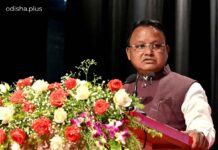
The ₹3.10 lakh crore Budget for 2026–27 presented by Mohan Charan Majhi represents more than a routine financial exercise. It is a statement of intent—an effort to blend welfare commitments with infrastructure expansion while maintaining fiscal prudence. As the third Budget of the present government in Odisha, it reflects both political priorities and developmental strategy.
At first glance, the scale is striking. With ₹1,80,000 crore—about 58 percent—earmarked for programme expenditure, the administration is clearly emphasizing delivery-oriented governance. Administrative expenditure stands at ₹1,14,000 crore, while ₹5,375 crore has been allocated for Disaster Risk Management Funds, a necessary cushion for a state frequently vulnerable to cyclones and climate-related disruptions.
The capital outlay of ₹72,100 crore—6.5 percent of GSDP and 23.3 percent of the Budget—signals a strong push toward asset creation. High capital expenditure typically generates long-term economic returns, from roads and irrigation to water infrastructure and connectivity. Importantly, the government has committed to keeping the fiscal deficit at 3.5 percent of GSDP while projecting a revenue surplus of around 3 percent, ensuring compliance with FRBM norms. This combination of expansion and restraint sends a reassuring signal to investors and financial observers.
Agriculture remains the centrepiece of the Budget, with a substantial allocation of ₹42,492 crore. This is a strategic choice. A large segment of Odisha’s population continues to depend on farming and allied activities. Allocations to schemes such as Samrudha Krushaka Yojana (₹6,088 crore), CM-KISAN (₹2,030 crore), Shree Anna Abhiyan (₹400 crore), and crop diversification (₹469 crore) indicate a layered approach—income support, nutrition-oriented crop promotion, and diversification beyond traditional staples.
The proposed ₹5,000 crore revolving fund for procurement operations could be a game-changer if implemented effectively. Delayed payments have often eroded trust between farmers and procurement agencies. Ensuring liquidity and prompt disbursal may stabilize rural markets and boost farmer confidence. Additionally, allocations for the Viksit Bharat–Guarantee for Rozgar and Ajeevika Mission (Gramin) and ₹1,500 crore for the Mahatma Gandhi National Rural Employment Guarantee Act (MGNREGS) suggest a commitment to sustaining rural employment.
However, income support alone cannot transform agriculture. The larger challenge lies in building value chains—cold storage, agro-processing units, branding, and market access. Without these, diversification risks remain a policy aspiration rather than an economic reality.
Women’s empowerment forms another central pillar of the Budget. With ₹18,957 crore allocated for women and child development, the government has introduced the Mukhyamantri Kanya Sumangal Yojana. The promise of ₹20,000 at birth and ₹1, 00,001 upon graduation aims to encourage families to prioritize girls’ education. If supported by a strong schooling infrastructure and higher education access, the scheme could contribute to higher female literacy and workforce participation.
The DALKHAI initiative, designed to address distress migration through coordinated livelihood interventions, reflects a structural understanding of rural vulnerability. Migration from economically weaker regions has long been linked to limited local employment. Tackling root causes—rather than offering temporary relief—could produce more sustainable social outcomes.
Infrastructure and water security receive considerable emphasis. Under Mission PoWaR, ₹1,000 crore has been allocated to improve connectivity to unconnected settlements. Meanwhile, rural drinking water projects are backed by ₹800 crore for incomplete piped water schemes, ₹1,495 crore under Basudha, and ₹7,000 crore under the Jal Jeevan Mission. Universal access to safe drinking water by March 2027 is an ambitious goal, but one that could dramatically improve public health and reduce rural hardship, particularly for women.
Perhaps the most culturally significant announcement is the ₹1,000 crore Shree Jagannath Interpretation Centre in Puri, alongside restoration of heritage sites such as the Gundicha Temple and Emar Math. Such investments in spiritual and cultural infrastructure may serve not only devotional purposes but also strengthen tourism-driven economic growth. When managed sustainably, religious tourism can create employment across hospitality, handicrafts, and local services.
Yet, the real test of this Budget will lie in execution. Odisha has often demonstrated strong fiscal management but has sometimes struggled with timely implementation and monitoring. Large allocations must translate into measurable outcomes—higher farm incomes, reduced migration, improved learning levels, and reliable infrastructure.
In sum, the 2026–27 Budget outlines a balanced roadmap: welfare-driven yet growth-oriented, culturally rooted yet economically pragmatic. If administrative efficiency matches fiscal ambition, Odisha could move closer to a model of inclusive and sustainable development. Otherwise, even the most carefully crafted Budget risks remaining a promise on paper rather than a transformation on the ground.
(The author is a senior journalist and columnist. Views expressed are personal.)