

















Odisha reports 94,485 government vacancies across key departments. Explore impacts on education, health, and governance, and the urgent need for systemic reform
OdishaPlus Bureau

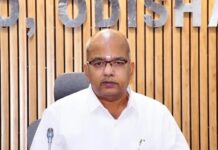
Chief Minister Mohan Charan Majhi on Monday informed the Odisha Assembly that a staggering 94,485 government posts remain vacant across 41 departments as of February 12, 2026 — a revelation that underscores both an administrative challenge and an opportunity for systemic reform.
The data presented in response to a BJD MLA’s query by Chakramani Kanhar paints a mixed picture of governance in the state. While the government claims progress in recruitment, the scale of vacancies — particularly in critical service sectors — raises serious concerns about service delivery and institutional capacity.
Education, Home, and Health Hit Hardest
The School and Mass Education Department tops the list with 20,289 vacancies. In a state where learning outcomes and school infrastructure remain uneven, such a massive shortfall inevitably affects classroom teaching, student-teacher ratios, and policy implementation. Vacancies in education are not mere numbers — they translate into unattended classrooms and compromised futures.
The Home Department, with 16,032 vacancies, comes next. Given the growing complexities of law enforcement, cybercrime, and internal security, such shortages can stretch the police force thin and undermine public safety.
The Health Department, reporting 10,457 vacant posts, presents an equally worrying scenario. Post-pandemic realities demand stronger public health systems, yet manpower deficits continue to plague hospitals and primary health centres, particularly in rural and tribal regions.
Other departments with significant vacancies include Higher Education (5,826), Panchayati Raj and Drinking Water (5,154), Fisheries and Animal Resources Development (4,154), Forest, Environment and Climate Change (3,589), Scheduled Tribes and Scheduled Caste Development (3,352), Agriculture and Farmers’ Welfare (2,955), and Water Resources (2,724). Six additional departments reportedly have between 1,000 and 2,000 vacant posts.
Interestingly, the Industries Department has only three vacancies — the lowest — followed by Science and Technology (7), and nine each in E&IT, Mission Shakti, and Public Enterprises. While this suggests near-full staffing in select departments, it also highlights disparities in workforce allocation priorities.
Government’s Recruitment Roadmap
Majhi informed the House that the government has prepared a roadmap to fill 65,000 posts over the next two years. He further stated that between June 12, 2024, and February 12, 2026, appointments have already been provided to 39,505 candidates.
Fresh recruitment notifications, according to the Chief Minister, have been issued to accelerate hiring and reduce the backlog. On paper, this appears proactive. However, even if 65,000 posts are filled as promised, nearly 30,000 vacancies would remain — assuming no new positions are created, or additional retirements occur.
This raises a broader question: is the recruitment pace sufficient to match the scale of the deficit?
Transparency and Reform Measures
A significant part of the Chief Minister’s statement focused on restoring credibility in recruitment. The enactment of the Odisha Public Examinations (Prevention of Unfair Means) Act, 2024, is presented as a structural reform to curb question paper leaks and examination malpractices.
In recent years, allegations of irregularities have dented public trust in recruitment agencies across several states. By empowering authorities to monitor recruiting bodies and impose stringent penalties for unfair practices, the Act seeks to safeguard the integrity of public examinations.
If effectively implemented, the law could enhance transparency and boost confidence among aspirants — a crucial step in a state where lakhs of young candidates compete for limited government posts.
Governance at a Crossroads
The scale of vacancies must also be understood in the context of Odisha’s socio-economic priorities. Government employment remains a major avenue for upward mobility, particularly in rural and semi-urban areas. Large-scale vacancies mean delayed opportunities for youth and weakened public service delivery.
At the same time, filling posts without structural reform would be inadequate. The state must ensure Time-bound recruitment cycles, Digitised and transparent examination processes, Department-wise manpower audits, and Performance-based deployment.
Vacancies are not merely administrative statistics; they are indicators of state capacity. A school without teachers, a hospital without nurses, or a police station without personnel directly affects citizens’ daily lives.
The Road Ahead
Mohan Charan Majhi’s announcement brings much-needed transparency to the discussion on government employment in Odisha. Yet transparency must now be followed by sustained execution.
If the roadmap succeeds, it could mark a turning point in strengthening governance and restoring youth confidence. If it falters, the numbers disclosed in the Assembly may come to symbolise not reform, but recurring administrative inertia.
Ultimately, the true measure of progress will not lie in announcements or statistics, but in classrooms staffed, hospitals strengthened, and public institutions made responsive to the people they serve.