





















Union Budget 2026 positions technology as the backbone of India’s future economy, focusing on semiconductors, AI, data centres and digital sovereignty
Bhaskar Parichha
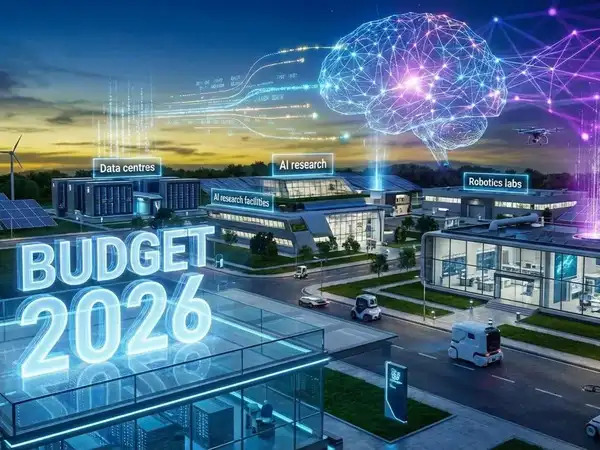
Nirmala Sitharaman’s ninth Union Budget can be read as a quiet but consequential statement on how the Indian state now understands technology—not as an auxiliary engine of growth, but as the structural backbone of economic power, strategic autonomy, and global positioning. Stripped of spectacle, the Budget advances a long-horizon view in which digital capacity, industrial policy, and human capital are deliberately fused. It reflects a state that has learned from earlier experiments with digitisation and now seeks to translate scale into sovereignty.
The most striking shift is in the treatment of semiconductors. Earlier policy frameworks were animated largely by the urgency of attracting fabrication units, driven by global supply chain disruptions and geopolitical anxieties. This Budget moves decisively beyond that narrow focus. By expanding the India Semiconductor Mission into a full-spectrum industrial programme, the government signals an understanding that fabs alone do not confer technological power.
Design expertise, equipment manufacturing, materials processing, and ownership of intellectual property form the real spine of the semiconductor ecosystem. Without these, manufacturing remains fragile and dependent. The Budget’s language, therefore, suggests a maturing industrial imagination—one that recognises chips not merely as components but as instruments of leverage in a fragmented world order.
Data infrastructure receives a similarly strategic treatment. The incentives offered to global cloud service providers to operate through Indian data centres are framed not just as investment inducements, but as long-term bets on India’s role in the global digital economy. Data, in this vision, is no longer an abstract resource; it is an asset whose location, governance, and control shape national competitiveness.
By encouraging capital-intensive data centre ecosystems within Indian jurisdiction, the Budget subtly aligns economic policy with concerns over data sovereignty, regulatory oversight, and technological self-reliance. The assumption is clear: future innovation will be anchored where data resides, and India intends to be one such anchor.
Artificial intelligence, meanwhile, is approached with deliberate restraint. Unlike the breathless rhetoric that often accompanies AI policy worldwide, this Budget situates AI within the practical constraints of employment, governance, and social impact. The emphasis on applied AI—particularly in sectors such as agriculture, health, and public administration—reveals an intent to integrate intelligence into existing systems rather than disrupt them indiscriminately. The proposed institutional mechanisms to examine AI’s labour impact indicate a state aware of the uneven distribution of technological gains. This is not an attempt to halt automation, but to domesticate it, to make it compatible with India’s demographic realities rather than corrosive to them.
For the IT and IT-enabled services sector, the Budget signals continuity with nuance. Having powered India’s global integration over three decades, IT services now face headwinds from automation, protectionism, and shifting demand. The Budget does not attempt to revive the sector through fiscal extravagance. Instead, it offers predictability—expanded safe harbour provisions, simplified compliance, and regulatory clarity. This reflects a belief that stability, rather than subsidy, is what mature industries require. The IT sector is positioned as a dependable revenue and employment base, even as the state nudges the economy toward higher-value technological frontiers.
Equally telling is the Budget’s widening conception of what constitutes the “tech sector.” By incorporating animation, gaming, visual effects, and digital content creation into its policy horizon, it recognises that technology today operates as much through culture and narrative as through hardware and software.
These creative-digital industries sit at the intersection of code, design, and storytelling, shaping global perceptions and soft power. The emphasis on early-stage talent development through labs and institutional support suggests an awareness that future technological influence will not be confined to factories or server farms, but will circulate through screens, platforms, and immersive experiences.
Underlying all these interventions is a recalibration of the state’s role. The Budget neither retreats into laissez-faire optimism nor embraces heavy-handed control. Instead, it assumes the posture of an enabler—absorbing risk where private capital hesitates, building institutions where markets remain thin, and setting rules where unregulated growth could prove destabilizing. This is especially evident in the coupling of deep-tech ambitions with skilling, research, and employment frameworks. Technology is treated not as an isolated vertical, but as an ecosystem that must be socially and economically anchored.
Taken together, the tech narrative of Sitharaman’s ninth Budget marks a transition from digital expansion to digital consolidation. The earlier phase of India’s tech story was about access—bank accounts, connectivity, platforms, and scale. This Budget belongs to a different moment. It is about depth, resilience, and strategic presence. It accepts that technological leadership is capital-intensive, slow, and politically complex, but insists that it is unavoidable if India is to shape, rather than merely respond to, global technological change.
In that sense, the Budget’s treatment of technology is less about immediate growth metrics and more about institutional confidence. It reflects a state increasingly willing to think in decades rather than quarters, and to align economic policy with geopolitical reality. Whether these ambitions translate into execution will depend on coordination, capacity, and continuity.
But as a statement of intent, the ninth Budget positions technology as the nervous system of India’s future economy—connecting industry, governance, culture, and power into a single, evolving architecture.
(The author is a senior journalist and columnist. Views expressed are personal.)