



















German historian Hermann Kulke reshaped global understanding of Odisha’s history through his research on Jagannath culture, kingship and regional identity
Bhaskar Parichha
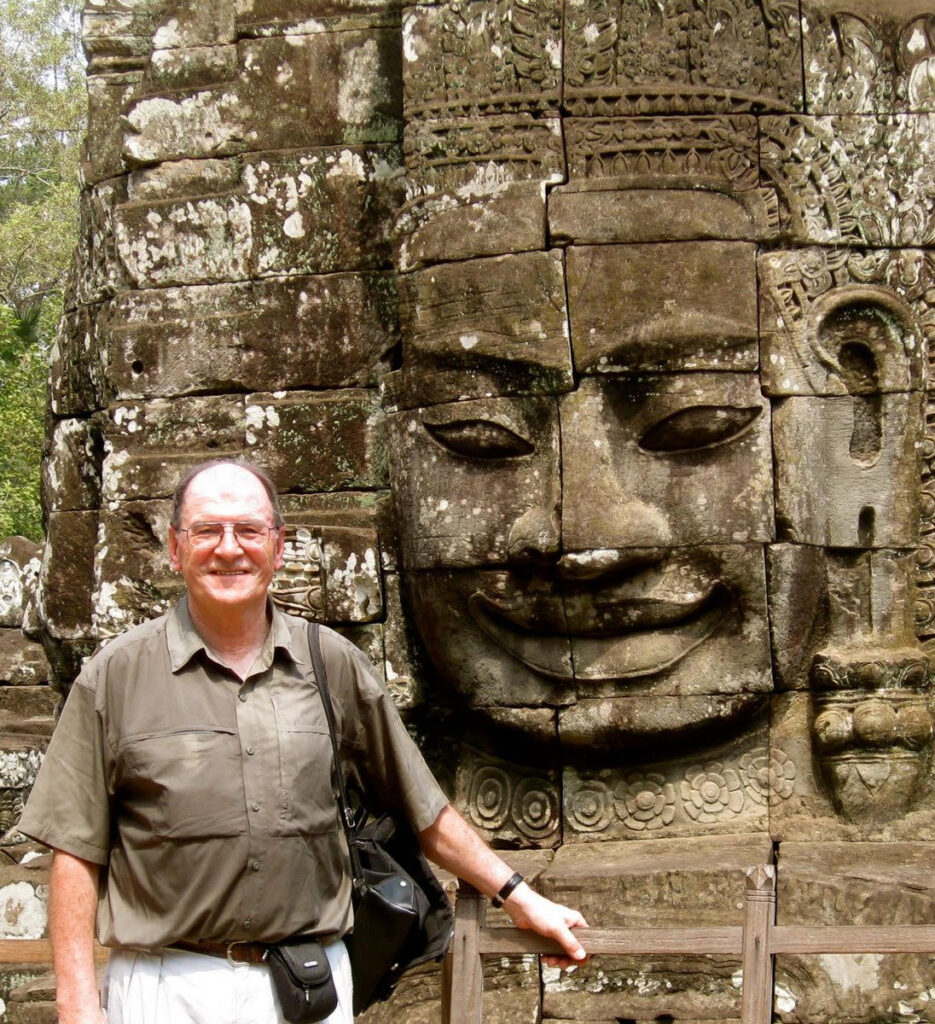
The passing of Hermann Kulke marks the end of an era in the study of Odisha’s history. For more than five decades, the German historian shaped modern understanding of the region’s political culture, religious traditions, and regional identities. His scholarship—rigorous yet imaginative—helped place Odisha firmly on the global map of South Asian historical studies.
Odisha’s Historical World
Kulke, long associated with the Heidelberg University South Asia Institute, devoted much of his academic life to the historical evolution of Odisha, particularly during the early and late medieval periods. His research moved beyond conventional political narratives and focused on the deeper processes that shaped regional identities, kingship, and religious traditions.
He explored how Odisha’s coastal plains and tribal hinterlands interacted historically to create distinctive political formations. By examining temple traditions, ritual practices, and local myths, Kulke demonstrated that the region’s history was not merely a sequence of dynasties but a complex cultural dialogue between communities.
Orissa Research Projects
One of Kulke’s most influential contributions was his leadership in the Orissa Research Projects (ORP), interdisciplinary research initiatives launched in the 1970s by the South Asia Institute with support from the German Research Foundation.
The first ORP (1970–1975) concentrated on coastal religious and political centres, especially the sacred city of Puri and the traditions surrounding Jagannath. The project examined the cultural and historical significance of temple rituals, pilgrimage, and the famous Rath Yatra. The research resulted in a landmark publication, The Cult of Jagannath and the Regional Tradition of Orissa, co-edited by Kulke, which remains a foundational text in Odisha studies.
The second ORP (1999–2005) shifted attention toward the tribal hinterlands and sub-regional identities. Kulke coordinated this phase, encouraging interdisciplinary work involving historians, anthropologists, and archaeologists. This project eventually produced studies such as Centres Out There? Facets of Sub‑regional Identities in Orissa, which explored how smaller regional cultures shaped Odisha’s broader identity.
Through these projects, Kulke helped transform Odisha into an important field of international historical research.
Tribalization and Hinduization
Kulke’s most influential theoretical insights were his analysis of the interaction between tribalization and Hinduization in Odisha’s former feudatory states.
He argued that the mountainous tribal zones of the interior and the fertile coastal plains formed two distinct socio-economic worlds. Between them emerged nearly two dozen small kingdoms—what he famously described as “little kingdoms.” These states developed through a dynamic exchange between tribal traditions and Brahmanical Hindu institutions.
Rulers of these kingdoms often adopted Hindu court rituals and built temples to establish legitimacy among the coastal elites. At the same time, they maintained strong connections with tribal communities by honoring indigenous deities, especially powerful local goddesses known as thakurani.
Kulke pointed to examples such as Keonjhar, where the goddess Tarini rose from tribal origins to become a major royal deity. Similarly, in Ranpur, local legends describe tribal goddesses gradually taking on forms associated with Hindu goddesses like Durga. Tribal priests were often retained alongside Brahman priests, symbolizing the coexistence of traditions.
Kulke described this mutual adaptation as a two-way cultural process rather than a simple imposition of Hindu culture on tribal societies.
Jagannath and Gajapati Kingship
Kulke’s most celebrated work dealt with the relationship between the Jagannath cult and the ideology of the Gajapati rulers.
In his landmark doctoral research, later published as Jagannath Cult and Gajapati Kingship, he argued that the Odishan Empire was symbolically structured around Jagannath as the true sovereign. The king was not worshipped as a god but regarded as the deity’s deputy or servant.
According to Kulke, Jagannath was seen as the supreme ruler—Odisha-rajya-raja—while the Gajapati king was described as the deity’s putra (son) or rauta (deputy). Rituals at the Jagannath Temple and during the Rath Yatra reinforced this symbolic relationship between divine authority and royal power.
Kulke emphasized that this system differed from the devaraja traditions of Southeast Asia, where kings were directly identified with gods. In Odisha, the king remained subordinate to the deity, a unique model of sacral kingship.
Recognition and Legacy
Kulke’s contributions were widely recognized in both India and Germany. In 2010, the Government of India honored him with the Padma Shri for his pioneering research on Odisha’s history and culture. He also received Germany’s Federal Cross of Merit in 2011.
His long association with Odisha was further recognized when Ravenshaw University conferred an honorary Doctor of Letters on him in 2018.
A Lasting Influence
Kulke’s scholarship fundamentally reshaped the historiography of Odisha. By combining historical analysis with anthropology and religious studies, he illuminated how local traditions, tribal cultures, and royal institutions interacted to produce the region’s distinctive identity.
His studies on Jagannath, kingship, and the “little kingdoms” of Odisha continue to guide researchers today. More importantly, they demonstrated that regional histories—when carefully studied—can reveal broader insights into the processes of state formation, religion, and cultural integration in South Asia.
Even after his passing, Hermann Kulke’s work remains a cornerstone for anyone seeking to understand the historical soul of Odisha.
(The author is a senior journalist and columnist. Views expressed are personal.)