




















Abhaas by Bijaya Jena is a rural Odisha-based drama that explores forbidden relationships, guilt, and emotional conflict within a traditional social structure. Blending poetic storytelling with realism, it delves into power dynamics, repression, and human vulnerability
OdishaPlus Bureau
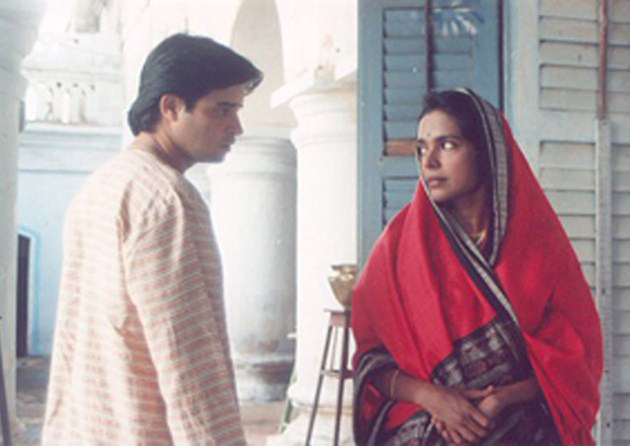
Bijaya Jena’s movie ‘Abhaas ‘is a poetic parable and a realist drama on the pastoral paradise that is rural India, set in a small village in the lush green fields of Odisha it is both a sweeping cross-generational tale of an aristocratic family and the peasants who form the two aspects of this fragile social milieu, but moreover it is a sensitive human drama that discusses some forbidden themes which border onto almost incest, adultery and lost youth love and aborted lives in a very spontaneous subtle manner where the characters are given full freedom to exploit the best and worst in the human spiritual aptitude.
The hallmark of this brash endeavour is the freedom of choice the director has realised for the characters, where no cliche is applicable, or event is predictable, and they roam free in a world as grey and vague as the reality we inhabit in truth, albeit the drama is just as engaging as the dubious characters who follow their imperfect choices in individualistic liberty. Family life is observed in an antique mansion inhabited by a soft-spoken liberal landlord, Ray (Murali), his wife, and two close relatives who have been supported by the couple. Chandra (Akshay Anand) plays a young, idealistic poet who is a sensitive young man, while Bijaya Jena is Kokila, a young woman widowed early in life, living in traditional simplicity, though she is not as inhibited by her status due to the family favours bestowed upon her.

The director deftly introduces the characters as the daughter of the house visits her parents, and her son takes a liking for both Chandra and Kokila, and their joint ventures into the ‘exotic ‘local fairs and murmuring waterfalls subtly establish the innuendo that Kokila and Chandra share a mutual affection for poetry and each other.
Kokila, despite her widowhood, is treated favourably by her guardians, and she is a sensitive, educated woman who is as much a member of the family in every aspect as she keeps the fiscal accounts of the peasant serfs and looks after the household run by an army of servants. Into this perfect world, Jena introduces her dark and menacing twist, which is as stunning as it is harrowing when Chandra witnesses discreetly that Ray is having a clandestine, illicit sexual relationship with Kokila, which seems to be semi-consensual out of obligation.
From here, the movie is a discussion of guilt and conscience with lost love and feminist compromise, and the narrative is both an eclectic mix of brutal reality and poetic lyricism, which throbs with the dynamic yet subtle twists of the memorable story, which has both visual beauty and a spiritual texture that I have missed in Indian cinema for a while.
The script is rich with trivia where the decrepit servitude of the local peasantry is depicted just as the silent sexual repression of Kokila, and there are some unforgettably tender scenes between Chandra and Kokila, who are both doomed in a silent love affair, which will touch the most cynical of critical souls as they are both living a borrowed life.
The movie is technically quite accomplished and set in original locales without using any sets and is seen through the eyes of the Ray grandchild Rabi who is played by a newcomer Asif as the child who witnesses the short joys that Kokila and Chandra experience and then comes back from England as a teenager to find the catastrophe where the family has been shattered and has to find his own answers to his anguish in a philosophical treatise that this freshly fragrant movie presents in the earthly colors of Odisha where the browns and greens mingle with the blue of the eternal sky to define the relativity of time in a generational study.
Jena’s film is both self-assured and freshly unique and has a bold but discreet approach to the themes of adultery, illicit abortions and the miscarriages of justice and cover-ups which comprise the paradox that is humanity and rural India, but she also gives her characters a profound depth which makes them spontaneously natural and extremely sensitive from the guilty conscience Murali to the female victim who is implicitly consensual in a forced compromise and the poet sage Chandra who must fulfil his destiny and deny his love and life for his own conscience and as such both Bijaya and Murali steal the movie though all the characters act naturally and the dialogues are equally spontaneous and profound.
The movie ultimately is a sublime piece that appraises the Indian culture and its virtues and vices in a precarious balance, and it maintains a suave and sophisticated atmosphere and balance, whether discussing the scandal-mongering peasantry or the guilt-haunted Murali who bears his own cross for his blunders.
The humanity of the piece is just as implicit in eliciting the natural ambience of the raw characters and their intensely original and exotic environment which is shot immaculately by a budding talent who can almost make you taste and smell the freshness of her forbidden theme and the luscious green of the rice fields with the metaphorical river which represents the eternity of time itself and alludes to this precious gem as a realist illusion.