







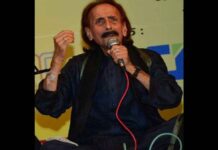






Renowned poet Haraprasad Das analyzes the evolution of Indian English poetry, the legacy of Jayant Mahapatra, and the shift toward vernacular-inspired verse
Haraprasad Das
English is now an Indian language, and there is a large body of competent English language users in India. Indians who owe their prosody and rich intrinsic language sense to both Sanskrit and Tamil navigate even foreign languages through their multiple phonetic inflexibilities.
In the process, the Indians have come to invent many local cadences that are anathema to the Anglo-Saxon palate. But in handling purposeful prose as text, Indians continue to nurture the very best tradition perfected over time. Chinua Achebe was right when he demanded attention to the new blooms of English in distant lands. Does that exclude Poetry? Would an English poem written grammatically perfectly by a Tamil speaker have the English resonance? Can poetry perform?
With the death of Derek Walcott, the mainline Eliotic English Poetry practically ceased to perform. The performativity of poetry awaits theorization, but every practicing poet knows how the kinetics of poetry work, how a single image lifts up a dead hulk and makes it into a living force. Much of English Poetry today is wordy nonsense. The better poets are amongst the non-English outsiders operating with a studied cadence, prim, proper, balanced, and often heavy in content. Never mind the pretenders who hardly know the language, yet are shoulder-rubbing aspirants who collectively keep the din of English Poetry from thinning.
In India, I am compelled to say the golden age of English Poetry has set with Jayant Mahapatra. Mahapatra, Ezekiel, Kamala Das, Patel, Parthasarathy, Daruwalla, and, of course, the redoubtable Ramanujam and a few others in the same class crafted and valorized a brand that celebrated the best in English Poetry after decolonization.
They were free agents, deeply rooted and steeped in the Eliotic afterglow that came streaming through latticed mediation, beautifully ornate and soulful. Poets like Arundhati Subramanian still imbibe the spirit, but I notice a palpable degree of exhaustion, which is alarming.
The other day in Delhi, Ashwani Kumar, a new-gen English poet, impressed me with his Ragmala poems. What I liked is the complete freedom from idiomatic servitude. Poets like Ashwani have set up their own smithy.
But powerful new voices are too few to count. The best, I believe, are into vernacular. Years ago, I had a brief but memorable discussion with Arun Kolatkar of Jejuri fame on the return of English to the vernacular. That was prophetic.
Not much needs to be said about the American or French brinkmanship when we find their best poets in a Divya Victor (an expatriate) or Jean de Amerique (from Haiti under French occupation). The mainstream English Poetry, what you see in Poetry or University Reviews, is woefully deficient. The venerable Poetry Mag itself openly solicits poems that twist, turn, and manufacture startling wordscapes.
I believe the West has a serious crisis in content. Emptied of Civilizational remains and afloat on artefacts, the West has nothing more to give. Africa, Asia, and the Arabian Peninsula have kept poetry alive in wonder and gratitude. India is the future from where the margin would awake to make poetry perform, if not in English, in many languages of mankind still alive.
(The writer is a renowned Odia poet. Views expressed are personal.)