





















Explore the Sijimali bauxite mine dispute in Odisha’s Kashipur, including tribal protests, Vedanta’s project, Gram Sabha controversy, and environmental concerns
OdishaPlus Bureau
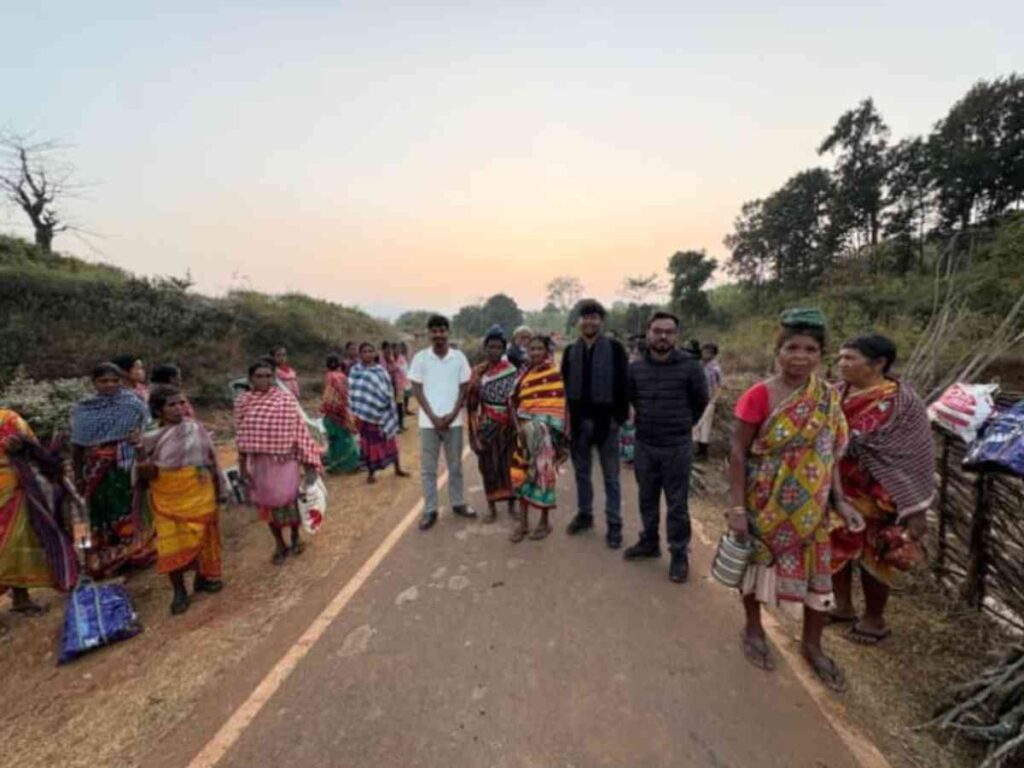
Conflicts between rural tribal communities and law enforcement in the vicinity of Odisha’s Rayagada district resulted in injuries to at least 40 police officers and 25 residents on Tuesday.
The immediate cause of the unrest was the development of a 3-km access road to the Sijimali bauxite mine in Kashipur, according to officials. However, the opposition to this road signifies a deeper, long-standing dissatisfaction regarding the bauxite project, which has been a point of contention since the mine was auctioned to Vedanta Ltd in 2023.
The approval process for the project has been controversial. The district administration has reported that Gram Sabhas (meetings that include all adult members of a village) were convened in all eight impacted villages on December 8, 2023, in accordance with the Forest Rights Act, and that the residents of these villages provided their “unanimous approval.” Vedanta has also put forth a request to the central government for the necessary clearances to commence mining operations.
Nevertheless, the residents have claimed that the Gram Sabhas were conducted in a fraudulent manner and that their signatures were falsified. They have organized protests against the project, expressing concerns that it would jeopardize their means of livelihood.
In response, Vedanta asserts that it has obtained Stage-1 forest clearance from the Union government and aims to initiate the project next year. Stage-1 clearance is a conditional approval, requiring the company to adhere to compensatory afforestation measures, deposit funds for the diversion of forest land, among other obligations.
Sijimali is situated within the Eastern Ghats hill ranges and is characterized by its valleys. The bauxite reserve, which spans 1,500 hectares, encompasses the districts of Rayagada and Kalahandi. With an estimated 311 million tonnes of high-grade bauxite, Sijimali is in proximity to Vedanta’s alumina refinery located in Lanjigarh, Kalahandi district.
Alumina is extracted from bauxite ore and is utilized in the production of aluminium, which plays a crucial role in the manufacturing of various items, ranging from soda cans to aircraft. The properties of aluminium, including its strength, lightness, and conductivity, enable a wide array of applications. Furthermore, it is the most prevalent metal in the Earth’s crust and ranks as the third most abundant element, following oxygen and silicon.
As reported in the Indian Bureau of Mines’ 2022 Yearbook, Odisha is responsible for 41% of India’s bauxite resources and was the top producer in 2021-22, contributing approximately 73% of the total output. In addition to bauxite, Odisha is home to some of the richest mineral deposits in the nation, which include high-grade iron ore, coal, nickel, gemstones, and graphite, collectively representing nearly 17% of India’s overall mineral reserves.
Vedanta previously encountered rejection in its attempt to extract bauxite from the adjacent eco-sensitive Niyamgiri hill, which is home to the Dongria Kondhs, a Particularly Vulnerable Tribal Group that venerates Niyam Raja as the deity of the Niyamgiri forest.
Vedanta, in collaboration with the state-owned Odisha Mining Corporation, established a joint venture to exploit the bauxite reserves for the Lanjigarh alumina refinery. However, the project faced significant challenges when the Centre denied Stage-II forest clearance in 2010 for the diversion of 660 hectares of forest land.
In 2013, the Supreme Court determined that the mining initiative required approval from the Gram Sabhas. Subsequently, later that year, all 12 Gram Sabhas voted against the proposal.