























Kartavya review: Saif Ali Khan delivers a memorable performance in Pulkit’s crime thriller exploring justice, patriarchy, and moral duty, now streaming on Netflix
Dr Khusi Pattanayak
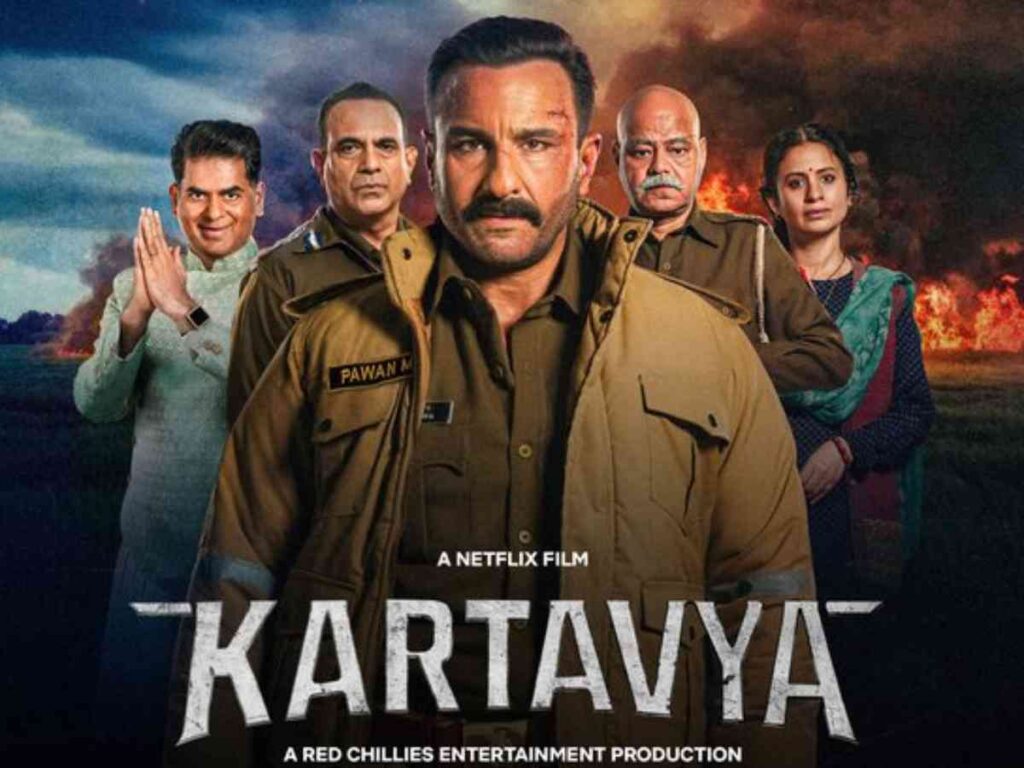
Kartavya (2026) is a cop drama revolving around justice, crime, and fathers -both metaphorical and biological.
Director -writer Pulkit sets his action thriller in a fictional land in Haryana, a place that is still patriarchal in its mindset and practises. It follows a system of control and repression that is normalised through fear and obedience. At the helm of the structure, we have father figures who are over consumed by their pride and ambitions. The children and women are at the bottom operating under limited autonomy or personal freedom while serving the needs of the male authority figures.

Kartavya means ‘duty’. But within the Indian socio-cultural context this ‘duty’ is not just executing a mere job it carries a moral and ethical value. Thus, when the protagonist considers avenging those who have wronged him – personally and professionally –he is notfuelled by a fragile ego rather he embarks on a journey to heal the society of pests which corrupt the voiceless and defenceless with their very presence;the only way through which he canfulfil his kartavya as a cop who is meant to protect the moral order of the society.
Individually the primary plot and the sub-plot are interesting. But together they fail to converge into a coherent cinematic experience. They remain episodic and feel forced. Kartavya is neither Manorama Six Feet Under(2007)nor Kohraa 2 (2026) nor Sirf Ek Bandaa Kaafi Hai (2023). It does not inspire or surprise beyond a point and drives the audience towards a lack lustre climax and ending. The movie unfolds too many issues at the same time and struggles to offer a proper closer to most of them.
The curse and the boon of Kartavya is its genre. Crime, thriller, noir never fail to amuse the audience, but with the sudden explosion of international and national content through numerous streaming platforms it is difficult to keep the audience engaged.This is where Kartavya falls flat. It does not know how to move beyond a point especially when the audience and the protagonist are informed about the motive of the crime, who is responsible for it, and why it is difficult for the law to cuff the criminalall within first 30 minutes of the movie.
Pulkit as a director with love for social crimes (Bhakshak , 2024) manages to create moody dark frames and some interesting moments. But as a writer he has a long way to go. This is not Saif’s Sacred Games but he is brilliant. The ensemble cast – Rasika Duggal, Sanjay Mishra, Zakir Hussain, Durgesh Kumar, Yudhvir Ahlawat-are effortlessly impressive. But the script lets them down. They have less screen time than the SHO’s jeep and his white shoes.
The popular journalist Saurabh Dwivedimakes his acting debut. Having watched innumerable episodes of The Lallantop I was looking forward to Dwivedi’s performance. But his inexperience coupled with director’s decision to show him from the back for most of his screen time, made me wonder why was he cast in such a prominent role in the first place. Why not take someone who looks menacing and kind, intimidating and respectable at the same time like Bobby Deol in Ashram; someone who can hold on his own while facing a seasoned actor like Saif or Manish Chaudhari.
In a rare meta cinematic moment Dwivedi’s character utters – patrikar ke hatyaka dukh mujhe bhi hai, waise bhidesh mein bache hi kitne hain! That was hilarious and unintentionally funny.
The production design and background music are effective. The dialogues are engaging but the accent keeps fluctuating. And pitching a Lord Shiva’s devotee against a corrupt god-man seemed like an afterthought to appease the general mood of the film going public (and the government).
This Red Chillies Production, despite its flaws, is a one-time watch for its interesting premise, good performances, and a conservative run time (under two hours). Kartavya is streaming on Netflix.
(The author is an internationally published writer & corporate communication specialist. Views are personal)