









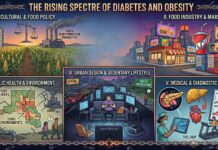









Explore the NFHS-VI findings on India’s rising diabetes and obesity rates, the stagnation of childhood nutrition, and the urgent need for systemic healthcare reform
Satya Narayan Misra
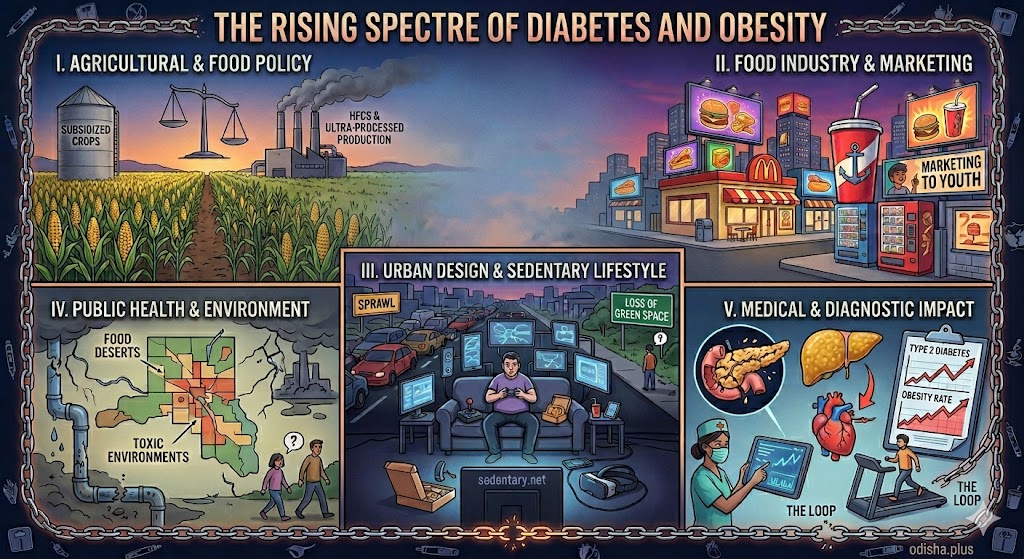
The just-released NFHS VI survey, covering 6.7 lakh households across 715 districts of India for the period 2023-24, throws up a few major surprises in the health and family welfare spectrum of India. Starting with the first survey in 1992-93, the International Institute for Population Science (IIPS), a highly professional and independent institution, conducts this survey under the aegis of the Ministry of Health and Family Welfare in a very scientific manner, using robust statistical tools. Prof James, its earlier director, notes that the surveyors provide high-quality data on health and family welfare, levels of fertility, infant mortality and child health. These inputs, in turn, assist policy makers and program managers to examine the effectiveness of ongoing programs in India’s health sector, which is often blighted by very high levels of malnutrition among children and anaemia among women, leading to our poor rating in the Global Hunger Index. The surprise findings of this year’s survey are: rising levels of obesity among both men and women, and a sharp spurt in Diabetes.
The Twin Menace
The NFHS VI survey brings out the following trend since 2015-16 in respect of high blood sugar and people with obesity, both among men and women. The prevalence of non-communicable disease risk factors in Odisha has risen significantly over the past decade. Among men, the proportion with high blood sugar increased from 8% in NFHS-IV (2015–16) to 15.6% in NFHS-V (2019–21) and further to 20.9% in NFHS-VI (2023–24). Among women, the prevalence of high blood sugar rose from 5.8% to 13.5% and then to 17.8% during the same period. Rising body weight has accompanied this trend. The proportion of men with a high Body Mass Index (BMI) increased from 18.9% in NFHS-IV to 22.9% in NFHS-V and 27.3% in NFHS-VI. Among women, the share with a high BMI grew from 20.6% to 24% and then to 30.7%, highlighting a growing burden of obesity and related lifestyle diseases in the state.
Interestingly, obesity has become a far more serious problem for women compared to men. Weight is a major risk factor for diabetes, cardiovascular disease, hypertension, and various kinds of cancer. The sale of injectable GLP-1 against Type 2 diabetes, such as Moujara, Wegovy, and Ozempic, has surged by a whopping 22%. Obesity can become a key driver for future health care costs and chronic disease burden.
Nutritional Status: Trends
The recent data shows a mild reduction in low-weight women, and children who are stunted (low height for age), wasted (low weight for age) and underweight. India is home to the largest number of undernourished children despite the marquee Integrated Child Development Program, kick started by Indira Gandhi on 2nd October 1975 and the subsequent Poshan program flagged by Mr Modi in 2018.The 14 lakh Anganwadi Centres managed by 13 lakh workers and 10 lakh assistants are the epicentres to provide supplementary nutrition, folic acid, and micronutrients to stem malnutrition among 40 million poor children and 10 lakh pregnant and nursing mothers. Bereft of accountability and poor supply chain mismanagement, one of the basic pillars of Viksit Bharat, adequate provision of nutrition, remain weak and sclerotic.
In Odisha, key child nutrition indicators have shown gradual improvement across successive National Family Health Surveys (NFHS). The proportion of children who are stunted declined from 38.4% in NFHS-IV to 35.5% in NFHS-V and further to 29.3% in NFHS-VI. Similarly, the prevalence of wasting among children decreased from 21% in NFHS-IV to 19.3% in NFHS-V and 19% in NFHS-VI. The percentage of underweight children also fell from 35.8% in NFHS-IV to 32.1% in NFHS-V and further to 31.8% in NFHS-VI, indicating a steady improvement in child nutritional outcomes over the years.
Quite clearly, the improvement in our nutrition parameters is insignificant. This is also responsible for the high levels of Infant Mortality Rates, which stand at 35.2 per 1000. The NFHS VI Survey does not bring out the latest IMR. Prof Partha Dasgupta, in a seminal book, “ An Enquiry into Wellbeing and Destitution brings out how protein is critical for brain development in the first three years of a child. Starved of the 12 grams of protein per day that Anganwadis promise to feed them, the damage to the brain becomes irreversible later. The promise of the Constitution that it’s the ‘duty of the state to raise the level of nutrition ‘remains illusory for the poor Indian citizens.
Missing Anaemia
Chastened by the high levels of anaemia among girls / women and children, Mr Modi launched the Anaemia Mukt Bharat Program in 2018, with a thrust on Iron and Folic Acid supplementation, Deworming and IFA-fortified food. The % children suffering from anaemia went up from 58.6% in the NFHS IV Survey to 67.1% in the NFHS V Survey. In the case of women in the age group of 15-49, an increase was noticed from 53.1% in the NFHS IV survey to 57% in the Vth Survey. Almost every state has been guilty of having a high incidence of anaemia without appropriate mitigating measures. The Supreme Court, in a landmark judgement in January 2026 in Jaya Thakur Vs UOI, has decreed that good menstrual health is part of the right to life. Strangely, the NFHS VI Survey skirts collecting data on anaemia on the specious plea that ‘capillary blood sampling method led to inconsistent data and potential overestimation’. This is indeed a serious omission and clearly manifests the present government’s paranoia about any data showing the government in poor light.
The Reality
The Health Minister, Mr Nadda, in his foreword to the NFHS VI Survey, has observed that the government wants to track the performance of various flagship programs launched by the Government. Of these, Ayushman Bharat Scheme has played a role in increasing access to affordable health care services. Private insurance and government health schemes today account for 19% of total health expenditure, while out-of-pocket expenditure is humungously high at 43.3%. Central government Health expenditure is around 1.9% of GDP as against 2.5% targeted by the National Health Policy of 2017. It is considerably lower than the spending on the National Health Service in UK or Canada (8% of GDP), which assures universal health care and sound public health infrastructure. There is a strong case for opting for an NHS-type health program in India by building better primary health care centres and facilities, rather than opting for a private corporate-driven US insurance system, which is prohibitively expensive.
The Poshan 2.0 scheme is inadequately funded, as the allocation has increased at a snail’s pace from Rs 11000 Cr in 2020-21 to Rs 12500 Cr in the budget of 2025-26. The program is high on hype and low in delivery. The critical pillar of nutrition and health care, sans state support and commitment, has driven the bottom half of India’s population to the precipice of a health disaster. Health is a state subject, and some of the states like Kerala and Delhi have an edifying record as the NFHS Surveys clearly demonstrate. However, passing the blame to the states by the Centre does not reflect well on the mission of Viksit Bharat.
(Satya Misra teaches Constitutional Law & is deeply involved in Development Studies. Views Expressed are Personal.)