















Previewing the 2026 FIH Men’s and Women’s Hockey World Cups in Belgium and the Netherlands, analyzing India’s medal hopes and rich Odisha connections
Satish Sharma
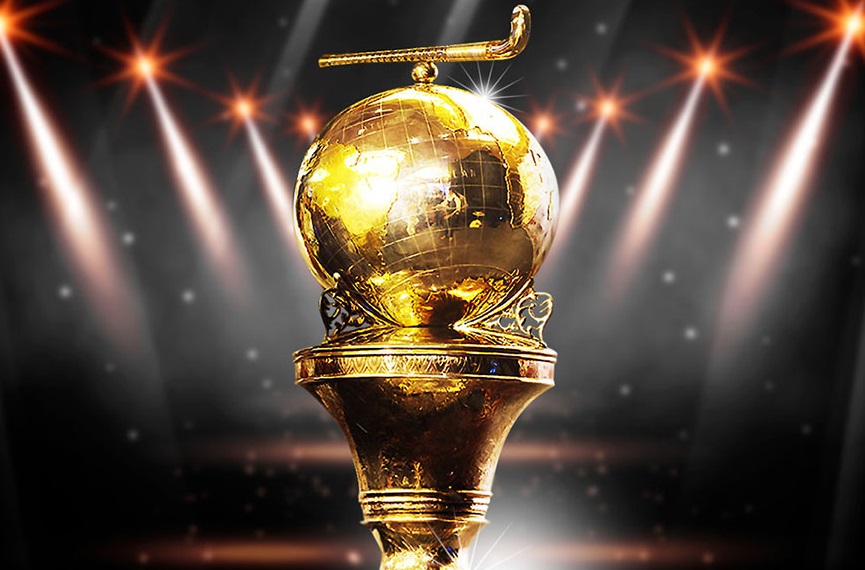
The biggest carnival of world hockey is knocking at the door once again. The 16th edition of the FIH Hockey World Cup will be held from August 15 to 30, 2026, jointly hosted by Belgium and the Netherlands. The tournament will be historic as, for the first time, the Men’s and Women’s World Cups will be staged together. The world’s top 16 teams in each category will battle for the coveted World Cup title at Wavre in Belgium and Amstelveen in the Netherlands.
For the Indian men’s team, the tournament presents an opportunity to end a 51-year wait for a World Cup medal. The Indian women’s team, meanwhile, will be looking to create history by winning its first-ever World Cup medal.
India’s men will begin their campaign against Wales on August 15. In Pool D, they will face England on August 17 before taking on arch-rivals Pakistan on August 19.
The Indian women will open their campaign against China on August 16, followed by matches against South Africa on August 18 and England on August 20.
51 Years of an Unfulfilled Golden Dream
India is one of only four countries—along with the Netherlands, Germany and Spain—to have participated in every edition of the Men’s Hockey World Cup.
In the early years of the World Cup, Indian hockey demonstrated its supremacy on the global stage. India won bronze in 1971, silver in 1973 and gold in 1975, finishing on the podium in each of the first three editions.
The 1975 World Cup triumph in Kuala Lumpur, where India defeated Pakistan to win the gold medal, remains one of the brightest chapters in Indian hockey history. Since then, however, India’s World Cup journey has been marked by hope, disappointment and repeated struggles.
More than the absence of a medal, what is particularly worrying is that India have not reached the World Cup semi-finals even once since 1975. In seven of the last 12 editions, the team failed to progress beyond the quarter-finals. For a nation that once dominated world hockey, the record is certainly a matter of concern.
The 2026 World Cup, therefore, offers Indian hockey a golden opportunity to reclaim some of its lost glory.
Hosting the World Cup, But Success Still Elusive
India has hosted the Men’s Hockey World Cup four times. Mumbai hosted the event in 1982, New Delhi in 2010, Bhubaneswar in 2018, and Bhubaneswar and Rourkela jointly hosted the 2023 edition.
Despite tremendous home support and the enormous popularity of hockey, India have failed to win the World Cup on home soil. The team reached the quarter-finals in 2018, while in 2023 it finished ninth.
This contrast is an important part of India’s World Cup story—success as a host, but failure to translate home advantage into a medal.
Odisha: A Powerful Pulse of Indian Hockey
Any discussion on Indian hockey inevitably brings Odisha into focus. Known as one of the country’s premier nurseries of hockey talent, Odisha has consistently produced international players for the Indian team.
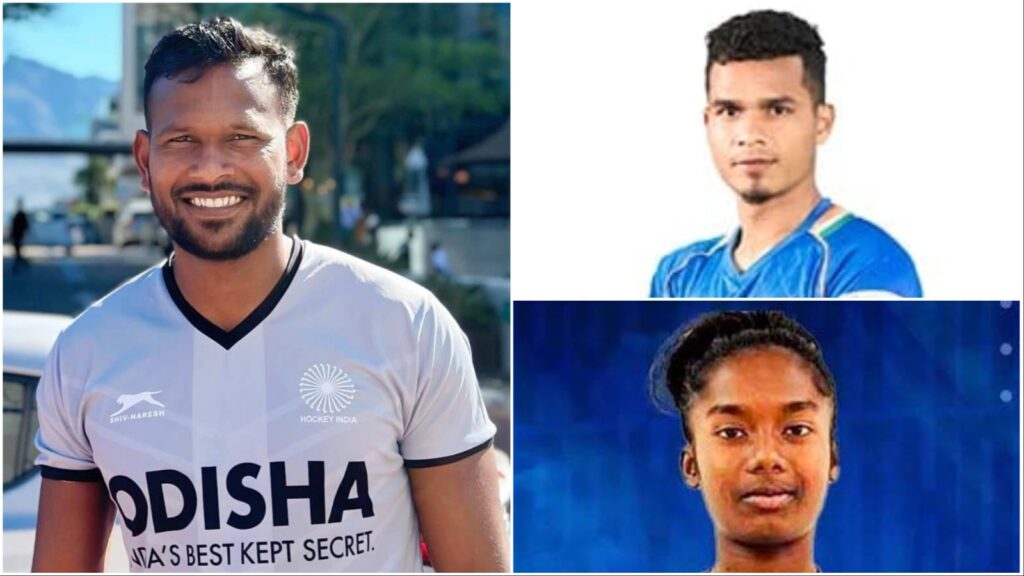
Two Odisha players—Amit Rohidas and Shilanand Lakra—are part of the Indian men’s squad for the 2026 World Cup. In the women’s team, Sunelita Toppo is Odisha’s lone representative.
Odisha’s association with the World Cup, however, is not new. Its roots go back to the 1982 Junior World Cup, when Peter Tirkey represented India.
Odisha players made their mark in the Senior World Cup from 1998, when Dilip Tirkey and Lazarus Barla were selected for the Indian team. Since then, the presence of Odisha players in India’s World Cup squads has steadily grown.
In the men’s category, Dilip Tirkey (1998, 2002 and 2006), Amit Rohidas (2018, 2023 and 2026), Lazarus Barla (1998 and 2022), Ignace Tirkey (2002 and 2006), Prabodh Tirkey (2006), Birendra Lakra (2014 and 2018), Nilam Sanjeep Xess (2023) and Shilanand Lakra (2026) have proudly represented India at the World Cup.
Jyoti Sunita Kullu was the first Odisha player to feature in the Women’s World Cup, representing India in 1998 and 2006.
After Kullu, players such as Subhadra Pradhan, Binita Toppo (2006 and 2010), Mukta Prava Barla (2010), Sunita Lakra, Namita Toppo, Lilima Minz (2018) and Deep Grace Ekka (2018 and 2022) carried the tradition forward. The proud legacy has now reached Sunelita Toppo in 2026.
Dilip Tirkey and Jyoti Sunita Kullu also share another distinction. Both captained the Indian teams at the 2006 World Cup—Tirkey leading the men’s side and Kullu the women’s team.
Odisha’s rich hockey legacy from Hosting to Sponsorship
Over the past several years, Odisha has contributed to Indian hockey not merely by producing players but also by hosting and supporting major international competitions.
Odisha hosted the 2018 and 2023 Men’s Hockey World Cups as well as the 2021 Junior Men’s World Cup. Bhubaneswar and Rourkela have emerged as major international hockey destinations.
In 2018, Odisha announced a 10-year partnership to support Indian hockey. The association has since been extended until 2036. As a sponsor, Odisha has contributed towards better facilities, training and international-level preparation for Indian players.
Women’s Hockey: Time for a World Cup Medal
The story of Indian women’s hockey is one of struggle, resilience and immense potential.
The inaugural Women’s World Cup was held in 1974. Led by Ajinder Kaur, India produced an impressive performance to finish fourth. It remains the team’s best-ever finish at the World Cup.
During the league stage of that tournament, India stunned the hockey world by defeating the formidable Netherlands 1-0. Ironically, the Netherlands went on to win the title.
India, however, could not maintain that level of success in subsequent World Cups. Of the 15 editions held so far, India failed to qualify on seven occasions. The fourth-place finish in 1974 remains the team’s best World Cup performance.
The 2026 edition provides an opportunity to change that narrative. The players have access to improved facilities and the team has achieved several notable successes on the international stage. The FIH Women’s Nations Cup title has further strengthened the team’s confidence. Captain Salima Tete is also optimistic about India’s chances of winning a medal this time.
A Memorable Indian Hockey Connection with the Netherlands
The Netherlands also occupies a special place in the golden history of Indian hockey.
At the 1928 Amsterdam Olympics, India won its first Olympic gold medal, marking the beginning of an extraordinary golden era for Indian hockey.
In 1973, the Netherlands hosted the second Men’s Hockey World Cup, where India reached the final. In a thrilling contest, India lost to the hosts in a tie-breaker and had to settle for the silver medal.
Now, in 2026, the World Cup returns to the Netherlands and Belgium. For Indian hockey, it is another opportunity to revive memories of a glorious past.
Olympic Medals Raise Fresh Hopes
The last few years have brought renewed optimism for Indian men’s hockey. With consecutive bronze medals at the Tokyo 2020 and Paris 2024 Olympics, India have demonstrated that they have the ability to challenge the world’s best teams.
Under captain Harmanpreet Singh, the current squad’s fitness, skill, experience and strong bench strength have further raised expectations.
The controversy surrounding the team jersey has certainly generated discussion off the field. But for the players, the real challenge lies on the field. It is therefore important for the team to put all off-field distractions behind and remain completely focused on the World Cup campaign.
India has two different but equally significant targets this time. For the men, the challenge is to end a 51-year wait for a World Cup medal. For the women, the dream is to reach the World Cup podium for the first time in history.
Can the Indian men finally end the 51-year medal drought?
Can the Indian women reach the World Cup podium for the first time?
From August 15 to 30, millions of hockey fans across the country will watch the action with hope and anticipation as India seeks answers to these questions.
After Olympic medals, Indian hockey fans will now dream of seeing World Cup medals around the necks of their players. It is not merely the dream of the players—it is the dream of every Indian hockey lover.
(The author is a Senior Sports Journalist. Views expressed are personal.)