



















From intricate silver filigree to generations of skilled artisans, kataka’s Chandi Medhas celebrate the enduring bond between Durga Puja, cultural identity, craftsmanship and devotion in Odisha
Dr Aditi Panda
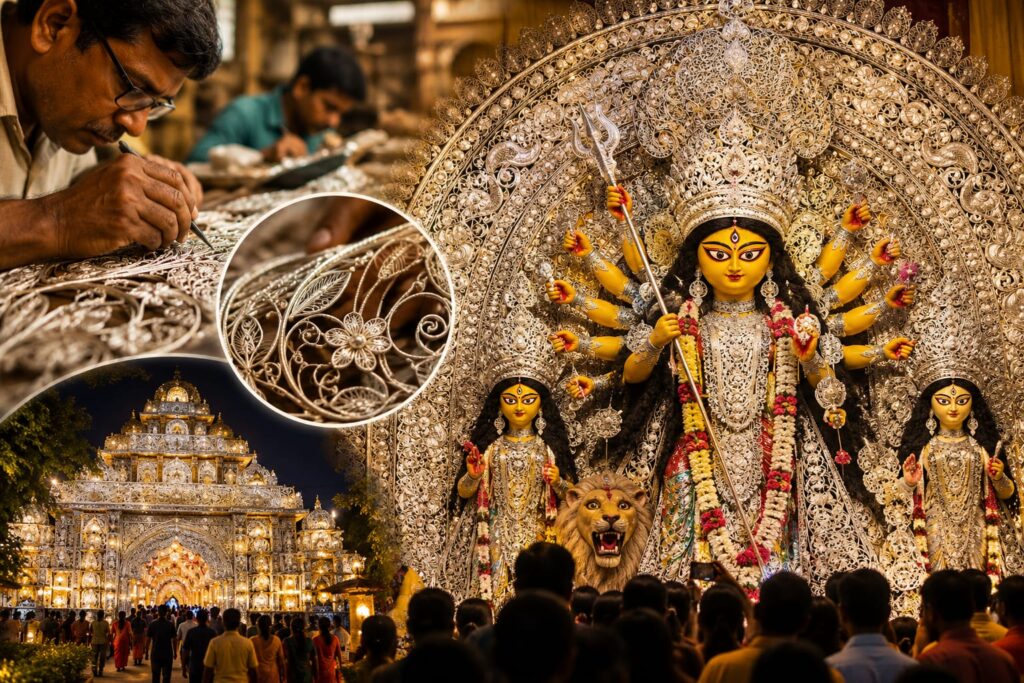
For many people in Odisha, especially in the former capital, which is renowned for its traditional ethnicity, Durga Puja in Kataka is more than just a celebration. It is a sensation, a recollection, and a nostalgic journey back home. Everyone’s eyes are drawn to the majestic Chandi Medhas, which have grown to be the Silver City’s pride, as the city lights up and the music of the dhak fills the air. The way these elaborate silver backdrops turn an ordinary pandal into something remarkable has always captivated and mesmerised anyone who sets eyes on these beautiful creations. Their brilliance tells a story of legacy, commitment, and the extraordinary artistry that has been handed down through the ages.
Chandi means silver. The term “Medha” describes the patterned backdrop or structure behind the deity. Therefore, “Chandi Medha” literally means the magnificent silver filigree backdrop behind the idol of Goddess Durga. Kataka is recognised across the globe as the “Silver City” because of its world-class Tarakasi (silver filigree) artistry, which is deeply connected with this tradition. Walking down memory lane, the Choudhury Bazaar Durga Puja Committee is credited with creating the first silver Chandi Medha in 1956. To begin with, an intricate filigree backdrop for the goddess, using almost 2.5 quintals of silver, was aesthetically created. This creative endeavour garnered significant community attention and instantly established itself as a defining characteristic of Kataka’s Durga Puja festivities.
The creators of these fascinating filigree decorations are the Tarakasi artisans, the unsung heroes who toil day and night to bring this entire work of art together. Yet, they remain behind the curtain when the stage opens for spectators from across the world who come to see the brilliant splendour of each Chandi Medha. Few people are aware of the effort and skill embodied in each delicate curve and complex theme, while enthusiasts marvel at the glittering silver sets. Generations of artisans spend months crafting exquisite silver strands into works of art that come to life during the holiday season in little workshops nestled in the Silver City’s alleyways. Their hands do more than just make decorations; they preserve a tradition and an art form that are integral to Kataka’s cultural identity.
As you dig deeper into the different layers of this astounding Chandi Medha tradition, you discover new revelations and realise the immense responsibility and coordination that go into continuing this age-old tradition with a new flavour year after year. The silver itself has a life story, as even after the festival is over and the idol is immersed, the silver stays on. Delicately taken apart and protected, it is carefully kept for another year. As the next Puja approaches, the skilled hands of dedicated Tarakasi artisans start transforming the old pieces into new designs, carrying fragments of the past into the future. The thought itself is so intriguing that the same silver that overwhelmed devotees decades ago is still glistening today, woven into a changed pattern and telling a new story. In every loop of wire and every delicate motif lies a link between generations, telling the present generation that traditions endure not because they remain unchanged, but because they are tenderly revived.
Choudhury Bazaar, Sheik Bazaar, Mangalabag, Chandni Chowk, and Alisha Bazaar are some of the most well-known Chandi Medhas in Kataka. While each has a unique style, they all highlight the city’s well-known silver filigree craftsmanship, which attracts thousands of tourists during Durga Puja. Choudhury Bazaar is especially well-known for starting the Chandi Medha tradition and for its ornate, gold-adorned Suna Medha. Having started the tradition, Choudhury Bazaar carries the responsibility of history. Mangalabag dazzles with its sheer grandeur, while Sheik Bazaar stuns with its precise artistry. Alisha Bazaar captivates guests with delicate silver designs that look practically alive, while Chandni Chowk combines innovation and heritage. Together, they turn the city into a breathtaking display in which each community uses this magnificent silver work to showcase its rich cultural history, which is being handed down with love and devotion to be carried forward with the same devotion and dedication.
The religious significance of the celebration is enhanced when mesmerised devotees throng to watch the tableau and receive prasad, even when there are thousands of visitors. Traditional khiri (rice pudding), suji halwa, khai (popped rice), batasha, coconut pieces, seasonal fruits, and other offerings to Goddess Durga are usually distributed among devotees, with the items varying depending on the Puja committee. The sheer happiness of receiving prasad enhances the beauty of the Chandi Medha and serves as a reminder to visitors that devotion is the crux of the spectacle.
The genuine essence of Chandi Medha lies in a celebration of craftsmanship, legacy, and faith, which is revealed year after year in Kataka’s Durga Puja celebrations amid the solemn murmur of prayer and the glittering radiance of silver. Every devotee has an incredibly touching and visually stunning experience that offers a glimpse into the rich customs followed zealously and passed on to the new generation. This helps carry forward our rich traditions while preserving Odisha’s religious heritage, encouraging traditional craftsmanship, and strengthening the spirit of unity among the people.
(The author is a development sector professional. Views expressed are personal.)