















Education on menstruation is essential for girls to manage their menstrual health, yet many girls are unaware of what menstruation is prior to their first period
Vidhika Kohli
The Period has often been regarded as a topic for behind closed doors; a conversation to be whispered and ended swiftly on the rare off chance that it is not entirely avoided. For decades, young girls and women have silently suffered as they are forced to keep mum about their own health. From fear to shame, no negative feeling has spared them at a time where even their physical health can face a toll.
This spiral of silence has gone as far as leaving them uninformed about their own health.
Stories of women leaving reproductive and menstrual health issues unchecked because of a lack of knowledge are more common than you think, alongside the stories of girls losing out on their education and daily lives because they cannot find support for their health and hygiene at school or at home.
In recent years, however, a significant change has been seen to this outlook. Slowly, but surely, people are having conversations around the period a little more freely, a little more loudly, without the kind of hesitation it is usually prefaced by.
Problems related to Menstrual Health and Hygiene and the need to address the flawed outlook towards menstruation as something to avoid talking about, have slowly come to light.
And it was for this very effort: to inform and remind people around the world of the very need to talk about periods, to keep the conversation in the sphere of public discourse and inspire positive change that Menstrual Hygiene Day came to be.
“Menstruation is a natural biological process—an essential part of life. It happens within our own bodies, so why should we feel ashamed to talk about it?” said Dr Nilanjana Mukherjee, MD, Kalinga Hospital. “Even today, in many rural parts of our country, women are still restricted from entering the kitchen or participating in religious rituals during their periods. It’s time to break these taboos. We stand united for a period-friendly world. Don’t hesitate to speak up or seek medical advice. There’s absolutely nothing to be embarrassed about. This is a natural process and being a woman is something to be proud of,” she added.
What is Menstrual Hygiene Day?
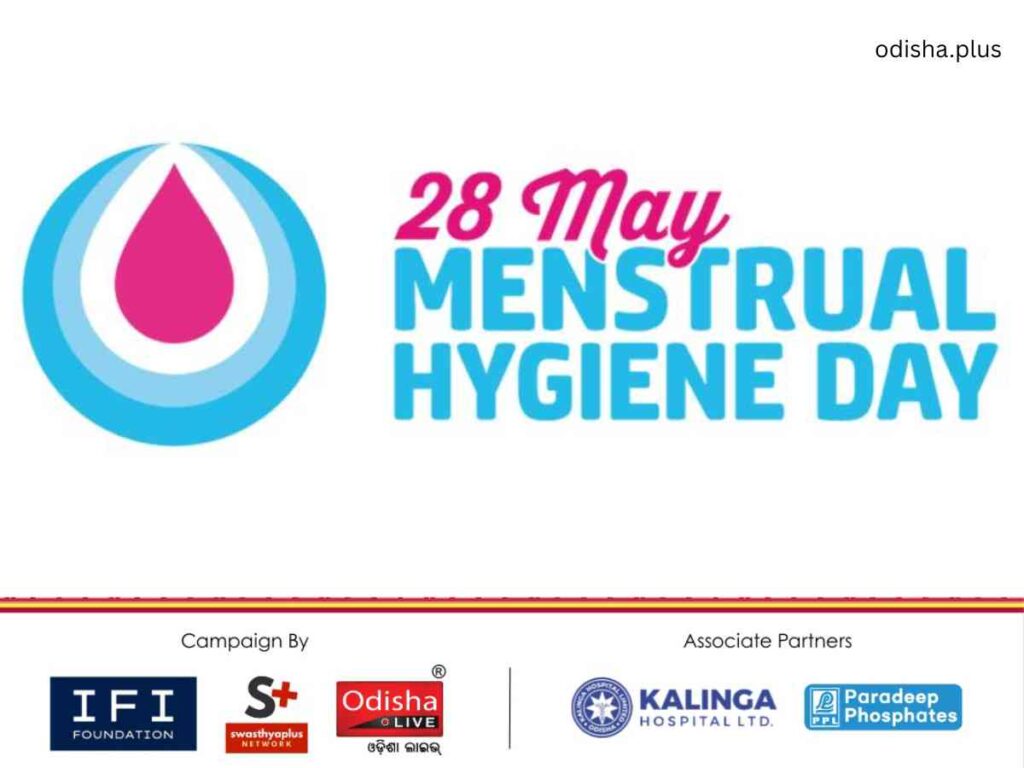
Introduced in 2013 by WASH United, a German based NGO and Creative agency, Menstrual Hygiene Day unites individuals, organizations, the media, and several supporters from around the world every year in its joint mission ‘Together for a #PeriodFriendlyWorld’.
Observed annually on May 28th, with reference to the menstrual cycle which lasts for 28 days and the period which lasts for 5 days on average, the global movement and effort is dedicated to creating a world where the taboos and stigmas surrounding the period are demolished and where no one is held back because they menstruate.
Since its advent, Menstrual Hygiene Day has aimed to make progress in 5 key areas towards a period friendly world, namely, creating a period friendly social environment where menstruation is accepted as normal and is no longer stigmatized, provision of education about menstruation from an early age to all, ensuring everyone has access to and can afford period products of their choice, as well as, ensuring that everyone has access to period-friendly toilets and menstrual health services.
The Issues, globally
We learn through global statistics that, presently, menstrual health and hygiene is far from universal.
According to the World Bank there are around 500 million women that lack access to the sanitary products and facilities they need during their period.
90 percent of women in 46 out of 51 surveyed countries have access to necessary menstrual materials (such as sanitary pads, tampons, menstrual cups, cloth, or cotton wool), but there are still five countries where more than 10 percent of women lack access to these basic necessities. Instead, these women only use toilet paper, underwear alone or nothing.
(Source: World Bank)
Poor hygiene management can lead to several health risks including, but not limited to, urinary or reproductive tract infections.
Further, Education on menstruation is essential for girls to manage their menstrual health, yet many girls are unaware of what menstruation is prior to their first period.
The Need for both Knowing and Acknowledging the facts.
Menstrual Health is more than just a health issue it is a human rights issue that regularly affects several women, girls and people who menstruate around the world. Poor menstrual health and hygiene not only worsens social and economic inequalities it undermines human dignity, amplifies deprivation and stigma, and interferes with the right to bodily autonomy. It keeps young girls from school and harms both the mental and physical health of millions of people who menstruate, regularly.
It is important we acknowledge these facts as we move forward and work together for a #PeriodFriendlyWorld.
“In our society and even within families, menstrual health and periods are still not openly discussed. It remains a taboo, even in this day and age,” said Sudhi Ranjan Mishra, Head of Corporate Affairs at Paradeep Phosphates Limited. “Every mother and every woman should educate their daughters about menstruation, and it’s equally important for men to adopt a responsible and supportive attitude. I’m truly pleased to see IFI Foundation, OdishaLIVE, and Swasthya Plus Network come together for such a meaningful cause. I hope their efforts help raise awareness and break the stigma surrounding periods,”said Sudhi Ranjan Mishra , Head, Corporate Affairs, Paradeep Phosphates Limited.
The IFI Foundation in collaboration with OdishaLIVE and Swasthya Plus Network launched the ‘Let’s Talk Periods’ campaign back in 2023 as a multi-year effort towards raising awareness, addressing the stigma and promoting better menstrual health and hygiene in Odisha. The campaign which has combined informative content, videos, engaging discussions and community involvement has successfully addressed the many taboos and misconceptions surrounding menstruation while also providing a platform for open and honest conversation, allowing others to share their experiences and access both resources and support.
‘Lets Talk Periods’ has successfully impacted several communities across Odisha and has been playing an important role in breaking down barriers while promoting positive change towards Menstrual Health and Hygiene practices.