





















The urgency of the situation was underscored by U.S. President Donald Trump’s sudden departure from the G7 summit in Calgary, Canada, to return to Washington
Tejeswar Patnaik
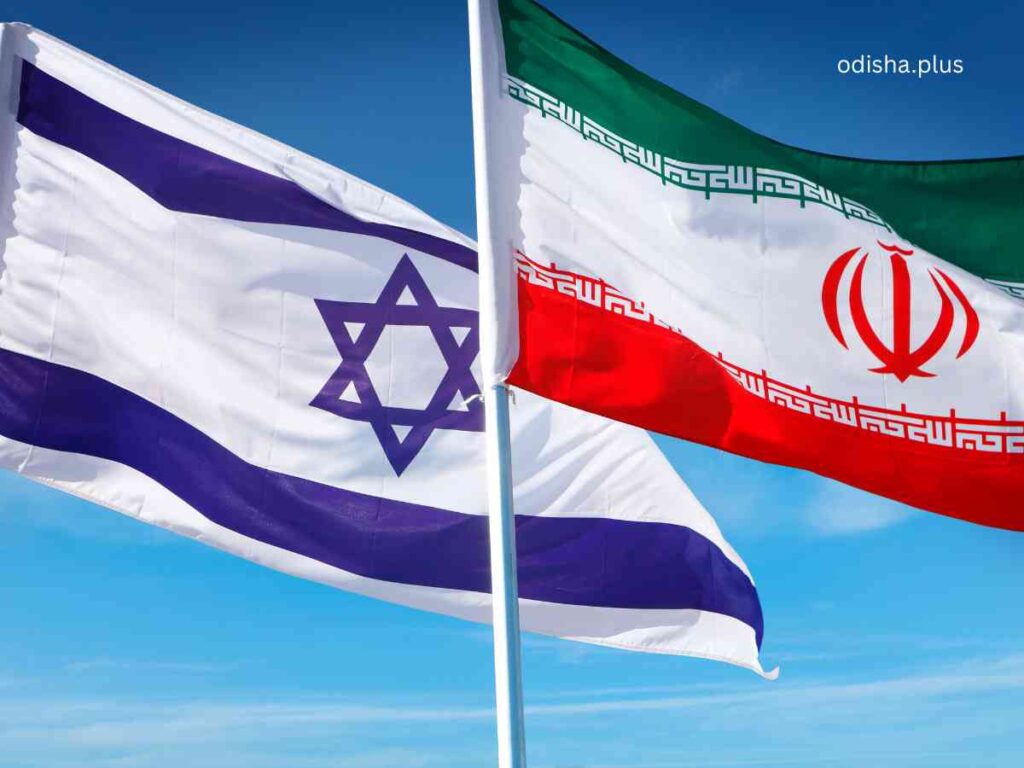
The ongoing Iran-Israel conflict is rapidly escalating into an explosive geopolitical crisis with far-reaching ramifications. Israel’s strikes on Iranian nuclear and military installations have provoked retaliatory drone and missile attacks from Tehran, pushing the region toward the brink of a broader war. Around 224 people have been killed in Iran since the outbreak of war. In Israel,24 people have died.
The urgency of the situation was underscored by U.S. President Donald Trump’s sudden departure from the G7 summit in Calgary, Canada, to return to Washington. It is worth mentioning that G7 leaders called for the de-escalation of conflicts in the Middle East, but they did not appeal for a ceasefire between Israel and Iran during the summit, thus fully backing the USA.
Trump‘s stern warning to Iran’s Supreme Leader, Ayatollah Ali Khamenei, asking him for unconditional surrender, along with his appeal to residents of Tehran to evacuate immediately for their safety, signals a worsening and volatile scenario in the region. The population of Tehran, the capital city of Iran, is around 9.5 million. This triggers speculation about the direct involvement of the U.S. military in joining hands with Israel in the war against Iran.
Big powers like China, Russia, and other Islamic nations have also appealed to Iran and Israel for the de-escalation of the current conflict.
According to an American defense policy strategist, the U.S.’s unequivocal backing of Israel—through the supply of military equipment and missiles—is a calculated move by the Trump administration to advance its foreign policy strategies as under.
First and foremost, the U.S. seeks to prevent Iran from developing nuclear weapons and ballistic missile capabilities. The current Iranian regime is known for funding militant groups such as Hamas and Hezbollah, Houthis, which pose significant threats to Israel’s security.
Secondly, another major objective of the U.S. is to ensure regime change in Iran. By destabilizing and overthrowing the existing government, Washington aims to create a chaotic environment and install a pro-US government. Given Iran’s strategic role in the Middle East, a pro-American regime would ultimately serve U.S. geopolitical interests. Some observers suggest that Israel launched its offensive against Iran only after receiving a green signal from Washington.
Third, the deeper intention of America appears to be the breaking of the strategic alliance between Iran, China, and Russia. The U.S. believes that installing a friendly government in Tehran would enhance its ability to control the Strait of Hormuz—the world’s most vital oil transit chokepoint. Since the fall of the U.S.-backed Shah regime in 1979, Iran has weathered decades of Western sanctions with support from China and Russia. It has maintained oil exports to China in exchange for yuan, challenging the U.S.-led petrodollar system all these years. Washington’s broader plan seems aimed at establishing absolute hegemony in the Persian Gulf by isolating Iran and minimizing the influence of both China and Russia, just as it did in Iraq, Libya, Syria, and Afghanistan by toppling pro-Russian regimes.
Fourth, the conflict aligns with Trump’s “Make America Great Again” agenda, which seeks to reassert American dominance as a unipolar superpower in the Middle East and East Asia, particularly to contain and encircle China. The US administration is determined to resist the BRICS alliance’s de-dollarization campaign and ensure continued global reliance on the U.S. dollar.
Fifth, toppling the Iranian regime would send a powerful message to other West Asian nations contemplating a shift away from U.S. influence or dollar transactions. Weakening alliances among members in multilateral groups such as BRICS and the Shanghai Cooperation Council (SCC), and fragmenting the Global South, are integral parts of this U.S. foreign policy strategy, which is intended to checkmate any move toward a multipolar global order. The economic interest of the U.S. can be served by preventing de-dollarization efforts by BRICS members.
Lastly, by fomenting divisions across the region, a long-term goal of U.S. policy might be to facilitate the complete colonization of Palestine, further tilting the balance in Israel’s favor.
Historically, since the 1979 Islamic Revolution and the fall of the U.S.-backed Pahlavi dynasty, Iran-Israel relations have deteriorated sharply. Iran refuses to recognize Israel’s right to exist and has consistently supported anti-Israel movements and the Palestinian cause. Israel, hence, views Iran as an existential threat, especially given Iran’s growing military capabilities in the Middle East and nuclear development program.
The fragile balance of power in West Asia is now under extreme stress. Sectarian rivalries, particularly between Sunni-majority Saudi Arabia and Shia-majority Iran, further complicate the situation. The Shia-Sunni divide fuels proxy conflicts, with Iran-backed Hezbollah playing a major role in regional instability.
The involvement of the United States elevates the conflict’s stakes, with potential global consequences such as disruptions to oil supplies, trade volatility, and broader regional destabilization. Moreover, Israel is home to over 500,000 American citizens, reinforcing Washington’s longstanding commitment to Israeli security. However, reports suggest internal divisions within the Republican Party, with some members disapproving of U.S. involvement in the conflict.
The Trump administration’s strategy—rooted in the MAGA doctrine—also aims to weaken China’s global ambitions and reaffirm American primacy. The ongoing Russia-Ukraine war, largely fueled by U.S. and NATO strategies, has already weakened Moscow’s influence. In this context, containing China and undermining its regional and global partnerships remains a cornerstone of U.S. geopolitical strategy.
The Iran-Israel conflict presents grave risks to international peace and stability. The only viable way forward is through diplomacy, dialogue, and de-escalation. Continued conflict would not only engulf the Middle East in chaos but also destabilize global energy markets, trigger humanitarian crises, and reshape international alliances with unpredictable consequences.
(The writer is a former banker and a columnist. Views are personal)