




















Food is peace. Agriculture is the glue that holds civilization together
Suresh Chandra Sarangi
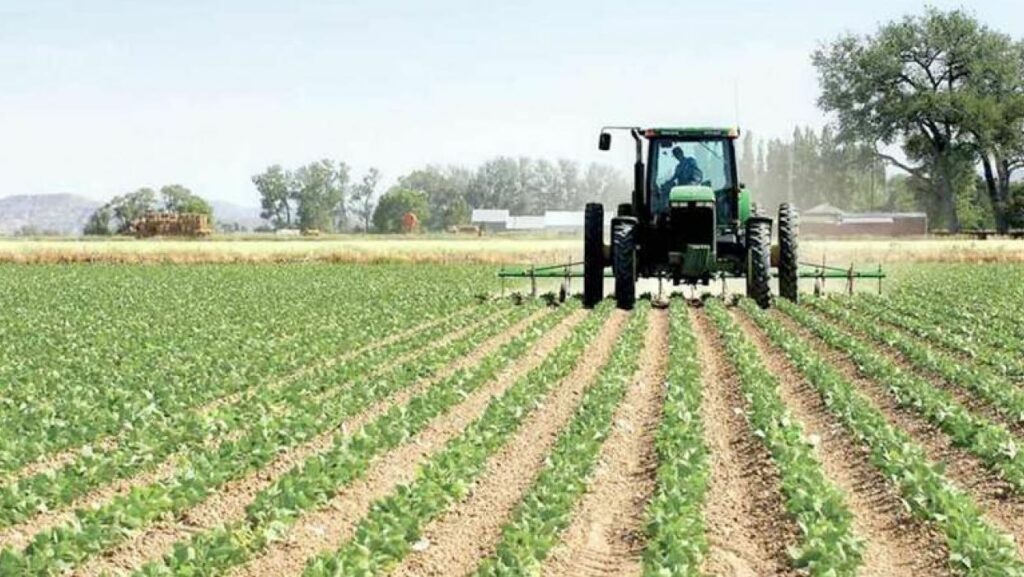
The Organisation for Economic Co-operation and Development (OECD) and Food and Agriculture Organization (FAO) have conducted a collaborative study on the state of Agriculture for the next 10 years. It deals in detail with the state of Agriculture and food markets, the Commodities market, and the report is a comprehensive one with a lot of stress on statistical information. This gives insights into trends and prospects, forecasts key projections and the key challenges the future Agriculture and food systems may confront, while focusing on climate-related problems like emission reduction technology for food security, and more particularly about the environmental sustainability of our food systems.
The report also dives into the emerging developments in the Agri markets, and the production needs, the consumption patterns, and makes inroads into the uncertainties hovering over Agri markets during the next decade or so. Trade and pricing are also the focused areas, with emphasis on fish production, the use of biofuels, and protein-rich crop production.
Gunnar Myrdal, the Swedish economist and Nobel laureate, in his 3 volume magnum opus, ”Asian Drama” ,writes, ”The war for development in South Asia, more so in India, shall either be won or lost in the battlefield of Agriculture”. There have been innumerable debates, projects, surveys, and discussions thereafter to find sustainable agricultural practices in the world. The report underscores the discussion, is a progressive and forward-looking one, that supports both evidence-based and experience-based support for Agricultural planning in the coming decade to meet the burgeoning population and ensure food security.
The report discusses in detail the evolving landscape despite policy paralysis and economic uncertainties, and emerging climate challenges. One of the Important findings that draws attention is the rising middle class and a change in dietary habits and consumption patterns, with an increase in disposable income, which goes more towards food. In constant prices, the total consumption of food and fish is expected to rise by 14% by the year 2034. This is alarming and therefore, the production has to be redoubled to meet the emerging requirements and ensure food security.
The rise in consumption was noticed more in low and middle-income group nations, as there is a large chunk of affluent population, which is rising steadily, and the families have a different outlook due to the surplus income. There is a catch here. The report says that while the need for a more balanced diet exists, the shift in food items is a result of higher income. In the higher group nations, the rise in food demand in the income group is based on an expanding population coupled with an increase in disposable income.
The middle-income group, with higher disposable income, has exhibited a shift in dietary preferences and patterns with emphasis on calorie intake and nutrition-based food. Therefore, the shift is more on livestock and fish products. It is estimated in the report that there may be a rise of about 6% in livestock-based food to supplement protein and the optimum calorie requirement. Interestingly, in the income group, the share of livestock-based food will rise to 25%.
Hence, a beautiful pattern is emerging where the thrust would be more on per capita consumption of calories of nutrient-dense food, which will surpass the per capita daily consumption of food as prescribed by FAO, from 300 calories to 364 calories. A quantum jump in 10 Years.
Here comes a point, the affordability of the household and the availability of the requirement for livestock food. There does not appear to be a distributional inequality amongst the nations. However, it seems difficult to achieve the nutritional goal as prescribed by the World Sustainable Development Goals by the year 2030. Particularly, because of low income in less developed countries, there is a risk that the target of achieving the Sustainable Development Goal appears to be elusive. It is expected that the livestock-induced food in these countries may be around 143 calories, and that appears a daunting task, in view of the requirement of at least 300 calories, outlined by the FAO food basket recommendations. Therefore, it appears that limited access to protein-rich food will continue for some time, unless structural barriers are lifted.
It goes without saying that to support the food requirement, agricultural and fish production must grow at 14%, at constant prices. The report says that to achieve these food projections, the middle-income group has to play a stellar role, and there has to be considerable agricultural expansion and necessary agricultural extension.
The structural shifts shall be driven by a combination of factors, such as knowledge upgradation in adapting to innovation, a sound pricing model, and a gradual adoption of innovative technology, capital investments, and improved seeds. Reforms in the improved distribution model for fair distribution are key to agricultural growth, fertilisers, and pesticides, including the adoption of organic farming practices.
This demands that production and productivity have to increase, the area under agricultural cultivation has to be increased, focus on expanding the rearing of livestock and breeding, and feeds for the livestock have to go combined. The report projects that there is enough potential in Africa and South Asia to meet this emerging demand, and that has to be tapped and explored, more particularly, in places where adoption as well as availability of technology for modern farming is not a problem. Notwithstanding all these, the nations have to concentrate on changing the pattern of crops, land use, and bio fertiliser use, to bring expected production growth..
Most important of all these, to reduce under-nourishment significantly, and to reduce direct agricultural emissions by 7% and bring agricultural growth by 15% seems to be contradictory. Therefore, there is a vital need to develop emission reduction technology, with state-of-the-art research in these areas. There appears to be a new development projecting 22% of calories will be transferred across the border, from surplus zone to deficient areas, and there comes the scope and hope for ever growing international Agri market, that can make equitable distribution. No doubt, agricultural trade is crucial, but eye on pricing mechanism and affordable tariff may increase the scope of cross border food movement. It is expected that in the medium term, the food prices may decline, and farmers initially may feel the pressure. Sustained innovation in efficient production, good access to agricultural inputs, scientific technology induced farming, May level of demand and supply mismatch.
In Agriculture 5.0, it would be artificial intelligence, an interdisciplinary approach, and the use of modern, scalable technological solutions that shall cut down emission risk, enhance sustainability, and make agriculture more productive. That is, in essence, precision Agriculture. What is needed is an emphatic Agricultural reform and its whole-hearted implementation.
In Food 5.0, How to feed the future, Rober DSalk, eminent agriculture scientist, says, ”Agriculture is the glue of civilizations, for without food you have anarchy”. Never in the history of mankind has agriculture faced such a challenge. He estimates that the amount of food we require in the next 30 years may be more than that which was consumed in the last 10000 years. We need transformative agriculture. Salk says that biofortification will help support zinc deficiency, iron deficiency, vitamin A deficiency, and iodine deficiency.
Finally, it is data collection, machine learning, artificial intelligence, and algorithms that are going to bring precision agriculture into focus in the next 10 years, and even more so, in Agriculture, sensors, robots, and drones are going to transform agriculture in line with findings in the report.
(The writer is a former General Manager of Bank of India. Views expressed are personal.)