













India’s journey from ancient civilization to emerging global power, its economic growth, cultural heritage, challenges, and the evolving role in world politics and trade
Suresh Chandra Sarangi
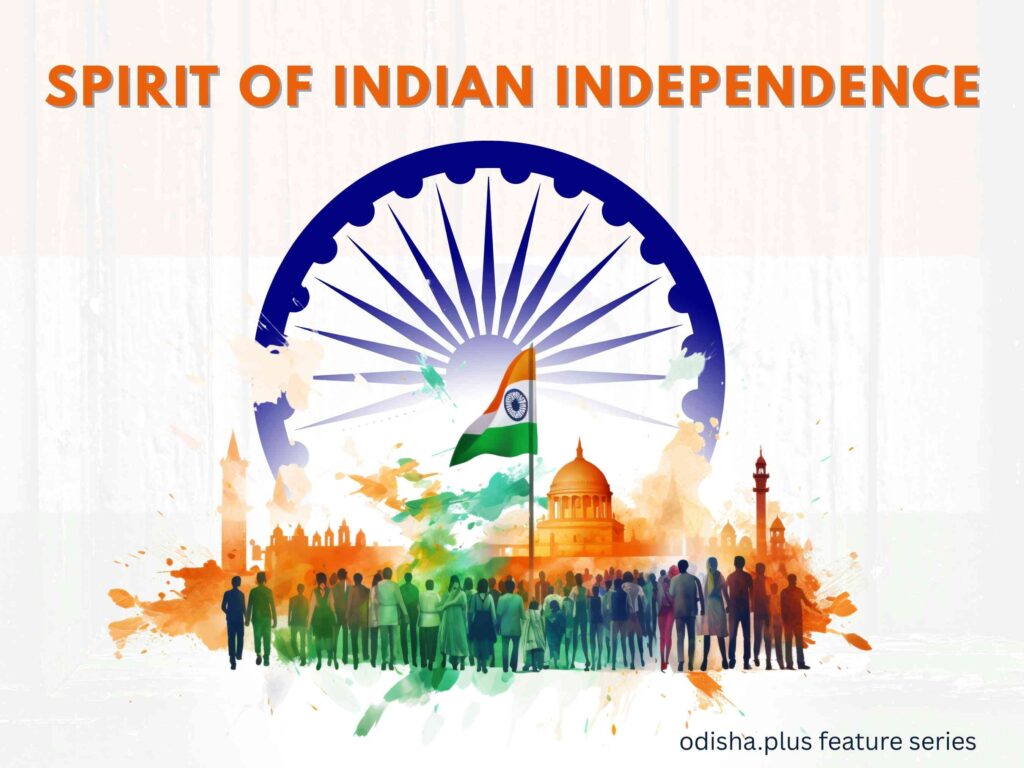
“The Wonder That Was India” is a book by an Australian history professor, A.L. ALBasham.. The book chronicles in a majestic style the majesty of a great civilisation, bounded by the mighty Himalayas on the North and its share being washed in the South by the Indian Ocean. A people whose philosopher Brahmadutta discovered 0, where the game of chess originated, and the first country in the world that showed the world how chicken is cooked, is now making waves and news, while quietly navigating through the corridors of time and making its place in the world. The country has cracked most of its problems and has already taken a quantum jump to become a superpower.
Of late, for almost a month, India has been at a crossroads, due to the whims of American President Donald Trump, who first imposed a tariff of 25% on Indian exports to America and then an additional 25% penalty, taking it to 50%, as India defied the US instruction not to purchase Russian Oil. India is the fastest-growing economy, in the 4th position, GDP-wise, in the world, and when the entire world was contemplating India’s chance of success, this sabotage to derail India’s growth story and development comes as a major shock.
Long plagued by endemic poverty, the country opened up in 1991, and since then, India has not looked back and actively pushed for reform, and what the world sees today is the country’s sheer scale of development. India has catapulted the country to have a greater global impact. It is cruising ahead cautiously, but with determination, and steering clear of the extremities, as the world’s largest democracy, aiming towards global integration and shaping its trajectory, which can be said to be a phenomenon.
Now no one treats India as a country of snake charmers, poverty, and inequality; rather, recently India has been chosen as a fourth equal state in the world, supported by democracy and pluralism. The social change occurred after India won the war of independence, becoming a professional society in the true sense of the term. The growing sense of ambition and possibility has brought about the myriad dreams of the youth, with soaring annual GDP growth, a market economy, and a pluralistic society, a welfare state, where inclusive growth has been the key to economic growth.
Thus, India has already arrived as an emerging power and increasingly has assumed the role of a consequential actor on the world stage. Now India enchants the world, and it is having an exciting time, fighting out its complexities, which is intriguing. No doubt, poverty, violence, and corruption have remained the perplexing problems. The immediate job before the 21st-century India is to create and provide jobs to all, food and education for all, construct houses, manage the depleting resources, think of climate change, and take care of its fractious democracy.
From zero to Bollywood is India’s gigantic stride on the world stage. India has captured the imagination of the world through its gift of yoga, four religious philosophies, the Decimal system, the Mars orbiter mission, exporting one-third of the Silicon Valley software engineers, who are leading technology stars and are the pathfinders, and rocking the world. India’s dance, drama, and music are celebrated in the world. India’s unity in diversity is a befitting reply to the West. 22 Indian languages,100 dialects, and 8 major religions coexist in India.
The Bhagabat Gita is the rarest contribution to mankind. Diversity, Equity, and Inclusion- India is an experiment of social justice, social equity, and social engineering. It is a civilisational story, latest being its soft power, a young nation on the move, which now puts its women folk at the forefront of politics and economy, business and science and technology, sports and leadership.
India’s enduring influence and legacy are all pervasive. A dynamic nation on the move. Indian cuisine and culinary dishes, and Indian hospitality, with the Idea of Basundhaib Kutumbaka, have sent ripples throughout the world. Employment guarantee schemes like Mnarega, or the right to information, or, for that matter, the UPI system of payment and settlement have surprised the world.
There are no more choked roads, polluted air, Chronic water shortage, electricity blackouts, and the villages, as well as the cities, are self-sufficient republics, with an increase in quality of life. While the 21st century is unfolding, India seems to have solved more problems. It has a tremendous presence in the global diaspora, a significant role in world politics, economy, technology, and all these multiple changes happening are mindblowing. The royal Bengal tiger, Alfonso mango, cotton, and cotton fabrics are shaping Indian lives.
The Puranas, Bhagavat, Gita, Ramayan, Mahabharata, and Upanishads are the guiding stars in an ocean of turbulence. The concept of Dharma defines right conduct remaining within one’s boundaries. An emerging middle class with an educational background, the fastest growing nation, approaching a 4 trillion economy, India has transformed, beyond recognition, though being the world’s most populous country. India is the crucible where many experiments have already taken place, is now taking up, and in the future holds immense potential. A country with a written constitution, a Republic, a parliamentary form of government, a federal state system, a multiparty system, checks and balances, and above all, an integrated, independent judiciary that defines a modern nation.
The high-frequency indicators of the Indian economy are interesting, with consumer price inflation at a reduced level of 1.85% during July 2025. This year, the erratic weather and supply shocks are at a reduced level. Agriculture, which is he mainstay of India’s economy, with more than 7% of excess rainfall and 83 million hectares of khariff crops,is 5% more than the gross cropped area. Nominal real wages have gone up, though the pace is slower.
Eight core industries, though growing at a lesser rate than that of last year, the steel and infrastructure segment is doing notably well, up over 9%. The IIP has grown almost to half of last quarter. The HSBC India manufacturing data shows that PMI rose to 59.1% in July, almost the highest in one year. Rail freight has slowed down, while coal, cement, and food grains are showing muted growth.
Ports are doing well with an increase of 5.6%, but as global trade has slowed down after Trump’s tariffs shattered the dreams of a resounding trade figures, nothing can be said of the future. The capital market is not doing well, and the Rupee is becoming weaker, an offshoot of Trump’s tariffs. It is expected that exports will fall as the Damocles sword in the form of a 50% tariff hangs over India’s head.GST collections have slowed down. It seems a tougher year is ahead; however, with India’s known resilience, there may be good fortune going ahead.It is defining its new energy game, spearheading its medical facilities, and has become an innovation hub.
India is on the move. Trump’s tariff of 25% to be increased to 50% this month is not a case of reciprocal tariff, rather a case of terrible miscalculation, turning a concern that kills comradeship of a century, in flagrant violation of international relations.
India has taken a calculated risk, a calm and quiet yet bold step in the interest of the greater national interest. It’s not the time that India can be underestimated. India’s move has outplayed all, and thus, it is a tectonic shift, exhibiting India’s calm resolve. In a world of continuous chaos, in the fractured geopolitical landscape, India is flexing its muscles. It seems India is on the lookout for a strategic partner. It is canvassing for a new world economic order, based on equity and justice. Intellectual capital, leverage, soft power, the youngest workforce in the world, biotech and fintech, and R&D are the shifts that are taking place in India.
India has to navigate through all these problems with a calm disposition. It has stopped eastern validation, and damn global narrative. However, the narrative is changing, under the watchful eyes of the world, and making room for its dignified place in the world. India’s time has come, and how clinically and quietly it is making its place in the world, a strategic imperative to write its own story and perspectives
(The writer is a former General Manager of Bank of India. Views expressed are personal.)