




















Explore how war fuels business, celebrate 50 years of Sholay, and discover Flybrary at Bhubaneswar Airport
Mrinal Chatterjee

War, Politics and Business

War brings untold misery to hundreds of thousands of people. It is also a good business- for some.
The complex relationship between politics, business, and military power has shaped the modern world in profound and troubling ways. From Eisenhower’s 1961 warning about the dangers of a “military-industrial complex,” to the wars in Iraq and Afghanistan, corporate interests have often dictated U.S. and E.U. foreign policy. Defence giants like Lockheed Martin, Boeing, Dassault, ASIG Sauer, Raytheon and other companies have reaped billions, turning conflict into a lucrative business model. The intertwined nature of these entities and government officials has not only fuelled global military engagements but also raised questions about the true cost of war—both in human lives and taxpayer money.
As these companies continue to thrive, their influence over the political agenda has only grown. Today, the Pentagon’s massive budget and the military industry’s role in global arms sales underscore a troubling trend: the prioritisation of profit over peace. In this environment, wars become self-perpetuating, driven by the economic imperatives of defence contractors. Peace becomes a casualty. As the arms companies and the countries where they are located, earn money, the warring countries are pushed into misery.
Sholay @50
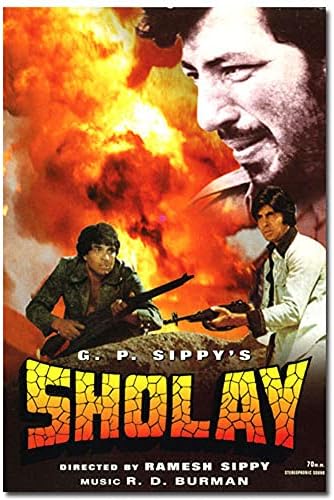
Released on August 15, 1975, ‘Sholay’ (The Flame) was the brainchild of writers Salim-Javed and directed by Ramesh Sippy. It was a time when Bollywood was transitioning, with filmmakers experimenting with different genres, narratives, and styles. ‘Sholay’ emerged as a film that seamlessly blended various elements—action, drama, romance, comedy, and music—creating a genre-defining “masala” film that appealed to audiences across the spectrum.
The film is set in the fictional village of Ramgarh and tells the story of two small-time crooks, Jai (Amitabh Bachchan) and Veeru (Dharmendra) who are hired by a retired policeman, Thakur Baldev Singh (Sanjeev Kumar), to capture the notorious dacoit Gabbar Singh (Amjad Khan). What unfolds is an epic tale of friendship, revenge, and justice, set against the backdrop of rural India.
One of the reasons for ‘Sholay’s’ everlasting appeal is its rich tapestry of characters, each etched into the collective memory of Indian cinema. Jai and Veeru, with their true camaraderie and iconic banter, have left an indelible mark on the audience. Thakur, with his tragic backstory and stoic resolve, represents the moral centre of the film. Basanti (Hema Malini), the feisty village girl with her endearing chatter, and Radha (Jaya Bachchan), the silent widow with expressive eyes, brought depth to the film’s emotional narrative.
However, it was Amjad Khan’s portrayal of Gabbar Singh that truly stole the show. His unforgettable dialogues and iconic mannerisms made Gabbar one of the most memorable villains in Bollywood history. Lines like “Kitne aadmi the?” and “Yeh haath mujhe de de Thakur” have become the most legendary dialogue of Indian Cinema.
The music by R.D. Burman, with lyrics by Anand Bakshi, became an integral part of the film’s success. Songs like “Yeh Dosti,” “Haa Jab Tak Hai Jaan,” and “Mehbooba Mehbooba” are still cherished, with each tune adding a unique flavour to the film’s narrative.
When ‘Sholay’ first hit the screens, it received a lukewarm response, with critics questioning its lengthy runtime and unconventional structure. However, word-of-mouth praise and repeated viewings turned the film into a juggernaut.
Its dialogues, characters, and scenes have been referenced and parodied countless times in films, television shows, and even political discourse. The friendship of Jai and Veeru became the gold standard for on-screen camaraderie, and Gabbar Singh’s villainy set the benchmark for all antagonists to come.
As ‘Sholay’ turns 50, its legacy remains unparalleled in Indian cinema. It is a film that has influenced countless filmmakers, and inspired generations of moviegoers. Even today, the film resonates with audiences, both young and old, who continue to discover its magic.
In a rapidly changing cinematic landscape, ‘Sholay’ stands as a testament to the timeless power of storytelling. It reminds us that at the heart of great cinema lies the ability to connect with audiences on a deeply emotional level, to make them laugh, cry, and cheer. Fifty years on, ‘Sholay’ continues to do just that, securing its place in the pantheon of India’s great films.
‘FLYBRARY’ at Bhubaneswar Airport
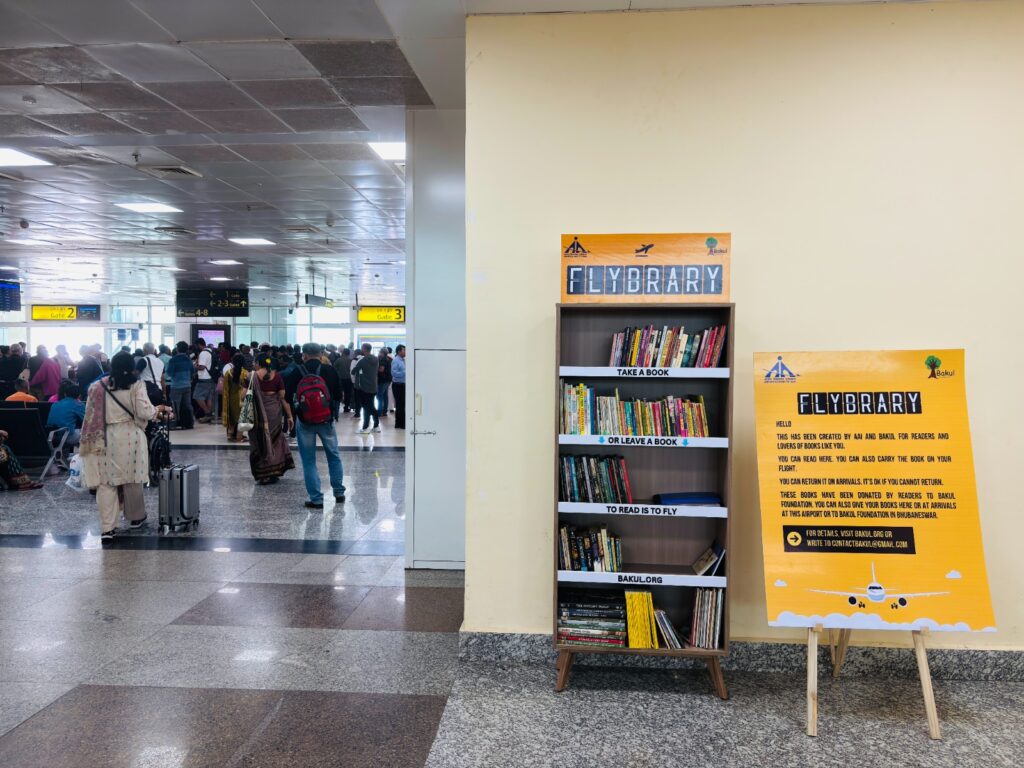
The FLYBRARY is a small open library at Bhubaneswar Airport. There are 2 shelves, one each at DEPARTURE and at ARRIVAL. You can pick up a book of your choice, read it and return it to the shelf there. Or you can take the book with yourself, read and return by post.
Set up by my friend Sujit Mahapatra of Bakul Foundation, this unique facility, the first of its type in the country, opened in late February this year. It has won wide appreciation. Even the civil aviation minister had stopped at the rack and written praises on his X Account.
Sujit has been on the forefront of Library movement in Odisha and has set up many libraries in many places including parks. It has prompted many institutions and individuals like yours truly to follow suit. IIMC, Dhenkanal created an open air library named KHUSI. My son has created one named AMRIT at Samaleswari Vatika, the housing complex where he lives in Sambalpur.
At a time when book reading is receding, we need such initiatives to make books accessible for people, especially the younger generation to read.
Tailpiece: Lizard

I was walking in the jungle and saw a lizard on his hind legs telling jokes.
I turned to a local tribesman and said, “That lizard’s really funny!”
The tribesman replied, “That’s not a lizard… that’s a stand-up chameleon.”
(Courtesy: Social Media)
(The author is Professor at Indian Institute of Mass Communication, IIMC Dhenkanal. Views expressed are personal.)
Author has tried to drive home his message succinctly to his readers.