





















Subroto Bagchi’s The Day the Chariot Moved, a powerful book on grassroots leadership, governance, and human development in Odisha and India
Bhaskar Parichha
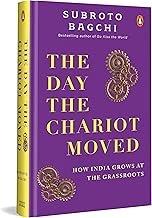
Book Name: The Day the Chariot Moved
Author: Subroto Bagchi
Publisher: Penguin Enterprise
Location: Gurugram
Subroto Bagchi is an entrepreneur, author, and public servant who co-founded Mindtree, India’s first venture-capital-funded software services company that went from concept to IPO. He has authored eight bestselling books, including The High-Performance Entrepreneur and Go Kiss the World. After leaving Mindtree in 2016, he became the pro-bono chairman of the Odisha Skill Development Authority, where he contributed to skill development, managed the Covid-19 pandemic, and improved institutional capacity over eight years.
In the much-anticipated publication ‘The Day the Chariot Moved: How India Grows at the Grassroots | Stories of Governance, Public Policy, Skill Development & Social Impact’, author Bagchi taps into his rich experience as a significant contributor to the Indian information technology (IT) landscape. He also reflects on his current responsibilities as a cabinet minister in the Government of Odisha. This book is designed to shed light on one of India’s exceptional success stories in the field of skill development, illustrating the transformative role that grassroots initiatives play in fostering the country’s growth.
A highly acclaimed author with numerous bestselling titles, Bagchi employs his sharp insights and extensive experience to narrate tales about the functioning of government, the essence of leadership at the grassroots level, and the characteristics of transformative change within established systems. Throughout his work, he reveals various aspects of India that you may not have encountered previously.
‘’The Day the Chariot Moved’ is a tribute to those remarkable individuals who bring about significant and enduring change within their lifetimes. This unique book delves into the fundamental principles of institutional leadership that are relevant across multiple sectors, while also tailoring the development agenda specifically for government policymakers. It challenges change agents in the social sector to rethink their conventional approaches and provides corporate leaders with insights into the complexities of executing large-scale transformations. The engaging narratives woven throughout this book will deepen your understanding of the various concepts related to development.
Writes Bagchi in the introduction: ‘This is primarily a book on leadership, but not my leadership. While forty years in the corporate sector gave me the chance to study leadership of a different kind, my work with the government brought me up close, on a daily basis, with leaders among ordinary people, whom we invariably miss in the crowd. These are the people who keep the world moving on its axis so that we can go seeking our name, fame and fortune. Yet they do not write memoirs, much less speak about who they are and what they do. In the course of my stint with the government, I was more inspired by them than by many of my previously held idols. I worked with and learnt from political leadership and some truly outstanding bureaucrats, both of whom are often objects of awe and vilification that shroud their real stories.’
He further writes: ‘This is a book by a crossover. In heeding Chief Minister Naveen Patnaik’s call to come work with the government, I was the quintessential crossover. The ability to cross over is particularly important in today’s world where one job, one employer, one career is losing its shine. More and more young leaders I meet want to have multiple identities; they want to cross over from the private sector to the public, from the government to the non-profit, from consulting to the setting up of their own enterprises. Some are quitting the security of a well-paying government job with its power and perks, to enter active politics. The list gets longer every day. It is a global phenomenon fuelled by a new reality that presents malleability of competences and new global opportunities.’
‘But the act of crossing over, from weighing the decision to making it work, needs thinking through. We do not have many frameworks to do that. It is in that context that I hope mine is a useful, lived script and a template that might serve young leaders.’
‘It is true that this book is built on my eight years of working with the Government of Odisha, largely in the domain of skill development. But Odisha is a major state among twenty-eight Indian states and eight union territories. Most of the things I got to see, feel and experience are relevant to any other place in India. And skill development, as you will find in the pages that follow, is truly about human transformation. Seen in that light, this is a book on the unfolding saga of human development in India, about how India is growing at the grassroots. The layered narrative of aspiration, achievement, failures, frustrations and eternal hope are universal. The lessons I learnt on development hold true across domains and geographies.’
The Day the Chariot Moved is a poignant narrative that will resonate deeply with one’s emotions, helping them to understand the profound impact that grassroots initiatives can have on transforming lives.
(The author is a senior journalist and columnist. Views expressed are personal.)