

















At the SCO Summit 2025 in Tianjin, India reaffirmed strategic autonomy, strengthened ties with China & Russia, and pushed for multipolar global order
Tejeswar Patnaik
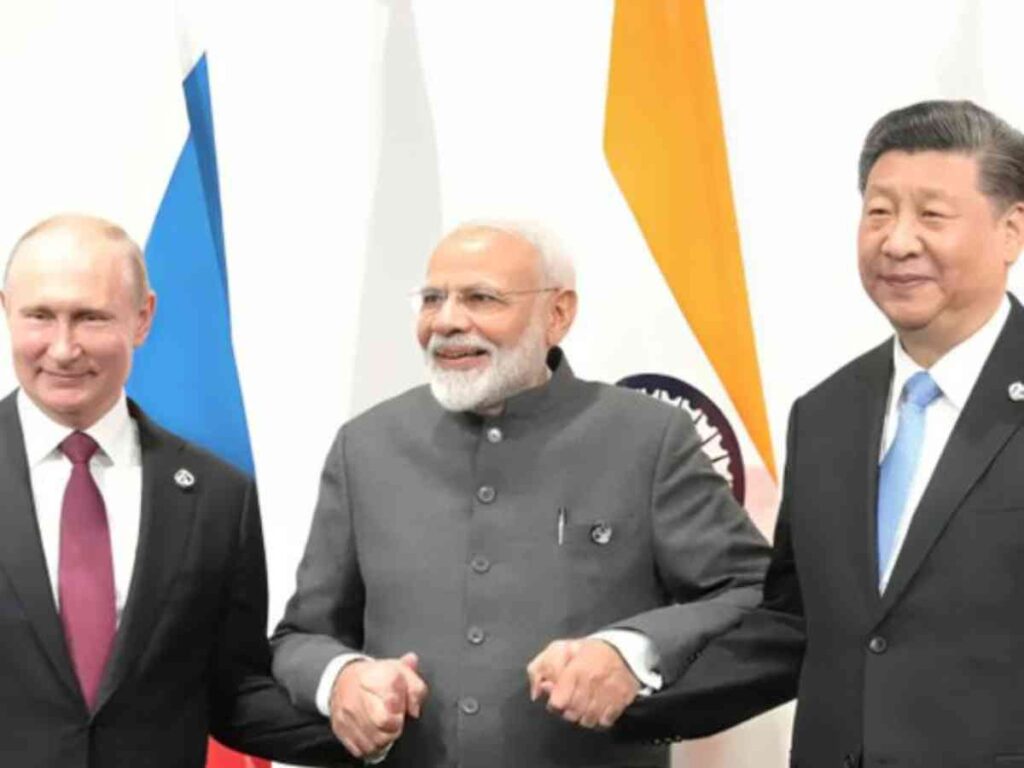
This year’s Shanghai Cooperation Organisation (SCO) summit in Tianjin unfolded under the shadow of shifting power equations. Former U.S. President Donald Trump’s imposition of tariffs as a political weapon has deepened global divides. Against this backdrop, the 25th SCO summit sent a clear message: the Global South will no longer remain a passive onlooker but will increasingly assert its role in shaping multipolarity.
The SCO, established in 2002 by China, Russia, and four Central Asian republics, was envisioned as a counterweight to Western-led blocs like NATO. Over the past two decades, it has evolved into a powerful forum where leaders across Eurasia build trust and coordinate on security, trade, and cultural cooperation. In today’s volatile geopolitics, its relevance has only increased. Soon after Trump imposed a 50% tariff on Indian goods for continuing oil imports from Russia, Russian President Vladimir Putin’s summit address symbolised defiance of unilateralism. Trump’s tariff war has drawn India, Russia, and China closer to a common ground.
The most consequential moment of the summit was the meeting between Indian Prime Minister Narendra Modi and Chinese President Xi Jinping. Within the SCO framework, the RIC trio — Russia, India, and China — is positioning itself as a balancing force against Western dominance. Together, their exports account for nearly 20% of global trade, and their combined population of 3.1 billion represents 37.8% of humanity.
For India, the summit carried significance beyond optics. Relations with the U.S. have soured due to coercive trade measures, Trump’s description of India’s economy as “dead,” and his public utterances of brokering a ceasefire in the Indo-Pak conflict, which India repudiated. By refusing to yield under pressure and persisting with Russian oil imports, India reaffirmed its strategic autonomy — a stance welcomed by Moscow and Beijing.
The Modi–Xi meeting was enabled by careful groundwork: NSA Ajit Doval and External Affairs Minister S. Jaishankar’s visits to Beijing, followed by Chinese outreach to New Delhi. Xi’s remark that “Dragons and Elephants can dance together” captured the spirit of normalisation. Confidence-building steps such as resuming direct flights, easing visa restrictions, and reviving Indian pilgrimages to Kailash Mansarovar reinforced this thaw. Both leaders agreed that India and China, with 2.8 billion people combined, cannot afford to remain mere rivals; their cooperation is essential for stabilising trade and regional security. Modi emphasised India’s doctrine of strategic autonomy, underlining that relations must be guided by mutual respect, benefit, and sensitivity rather than third-party pressures.
On the border issue, both sides welcomed stability since last year’s disengagement and pledged to seek a fair resolution through diplomacy. India stressed that peace along the border is crucial for broader ties. However, no breakthrough emerged, with Xi reiterating that the boundary dispute should not define overall relations. India also pressed to reduce its $120 billion trade deficit with China, highlighting the need to bridge trust deficits through follow-up action.
Connectivity featured prominently in the talks. Modi cautioned that projects must respect sovereignty — an indirect but pointed critique of the China–Pakistan Economic Corridor under Beijing’s Belt and Road Initiative. “Connectivity that bypasses sovereignty loses trust and meaning,” he remarked.
Xi responded positively and also assured cooperation on India’s long-standing concerns over terrorism, marking a diplomatic triumph for New Delhi given Beijing’s earlier hesitations.
A major highlight in the Tianjin joint declaration is that it condemned the April 22 terrorist attack in Pahalgam, Kashmir, extended condolences to the victims’ families, and demanded justice. It reaffirmed a united stand against terrorism, separatism, and extremism, while emphasising sovereign responsibility in countering such threats. The declaration also condemned Israeli and U.S. strikes on Iran and called for an immediate ceasefire in Gaza.
Looking ahead, the declaration unveiled a ten-year development strategy aimed at strengthening multipolarity. It proposed joint financial instruments to bypass Western-dominated systems and a new Development Bank to fund infrastructure and investment. Leaders also pushed for reforms in global governance and a fair, transparent multilateral trading system. Cultural exchanges, trade facilitation agreements, and enhanced institutional capacity were endorsed to deepen cooperation.
For India, it was an opportunity to assert autonomy, mend fences with China, and withstand U.S. coercive tactics without compromising its global stature. For Moscow and Beijing, it reaffirmed New Delhi’s pivotal role in building a broader Eurasian framework.
In essence, the Tianjin summit was more than a multilateral gathering. It reflected the contours of a new global order — one in which India is carving out space for strategic independence, China is signalling pragmatism, and Russia is pushing alternatives to Western dominance. The West witnessed the bonhomie between Modi and Putin symbolising a special and privileged and strategic partnership between India and Russia. Both leaders have had successful bilateral meetings on the sidelines of the summit, too. India should play a balancing act in its relations — improving its ties with the U.S. and it needs to carefully reset its ties with China.
(The writer is a former banker and a columnist. Views expressed are personal)