











An in-depth analysis of global chaos, wars, inequality, and the urgent need for growth, reform, and a new world order for peace and stability
Suresh Chandra Sarangi

The end of the Cold War was signalled by the fall of the Berlin Wall. The dismantling of the Soviet Union began with Gorbachev’s glasnost and perestroika. There was a bit of peace prevailing for quite some time thereafter, except for sporadic conflicts in West Asia and the rise of Terrorism. The post-Second World War ended, and the Cold War followed, as global leaders contemplated a world free of war, without arms races, nuclear weapons, and violence.
This was an optimal condition for the development of the world. It was an imperative, born out of the frustration of the Cold War, and gradually, the world became unipolar. But the world was living in an atmosphere of nuclear threat, distrust, and global divide between rich and poorer nations, and the uneasy truce broke down. Technology and forces like globalisation gradually became an unifying force. But nevertheless, the emergence of China, the rise of Soviet Russia, India, and others, and the emergence of the global south were challenging American hegemonism.
The attack of Ukraine by Russia, on the pretext that Western powers, more particularly, NATO, have been harbouring an interest in including Ukraine within the Nato system, provoked the aggression. The globalisation process came to a standstill due to the imposition of sanctions led by the USA, and then the intensity of this was increased thereafter. The economic divide due to globalisation and increased technology expansion was sharp and devastating. People were angry due to stagnant wages and growing inequality, which led to the rise of the Arab Spring.
The war brought a very sharp disruption to the supply chain, and the economic headwinds had affected world growth. The resources are depleting, sustainability of environment and climate crisis being the latest existential threat. with ageing population, a mountain of debt burden on most of the countries, short term thinking and ideological dogmas, democracy falling to violent nationalism and protectionism, the debilitating COVID 19 and declining living standards in sub Saharan Africa and other third world countries was ugly satire of a green planet.
The battle cry was for a better economic growth, so essential to global stability and the flowering of liberal democracy, and that can guarantee equity and justice, along with freedom. The scale, scope, and urgency of efforts to bring a new international economic order are more a pragmatic requirement than at any time in history. Inequality is on the rise, and the United States also has the highest level of economic inequality, as transparently written in the book “Hillbilly Elegy. written by today’s American vice president, JDVance, which catapulted the rise of Donald Trump.
Corruption at high places has angered people who revolt against the corrupt regime. The anger has been most voiced against globalisation that embraces world trade and internationalism, due to the loss of jobs, and the adopted policy never lifted “all boats”, as there was a lot of difference between promise and performance. The world had become crowded, hot, and flat with the climate crisis threatening the dry existence of human beings if it goes unabated. Trump’s dissociation from the Paris agreement and again in the second term, his indifference to climate action, has stalled the progress, despite a couple of conferences of the parties.
The Hobbesian State of nature, aggressive and poignant, violent and lacking farsightedness and stability, has made our journey full of thorns. It is a disenchanted world, gasping under the threat. The half-hearted measures to improve living standards, deteriorating real wages, worsening poverty, and poor social mobility in some countries make it more disruptive. The confluence of these factors has made social relations strained, weakening social cohesion with rising drug use, divorce rates, and violence.
In such a situation, growth is the only imperative that can meet human demands and improve living standards. Growth is, therefore, the unique requirement to promote a free market and ensure freedom. But Trump’s philosophy of imposing unreasonable and unacceptable tariffs is a threat to the free world, with turbulence growing all across the world. His tariffs have made growth across the global economy patchy and anaemic, and the IMF foresees growth falling year by year. This is alarming. The 2008 financial crisis had made the backbone of the world’s financial system very weak, further weakened by the debilitating 19, which was a blow to the international financial architecture, that almost made the world kneel down and disrupted the supply chain, apart from terrible death, job losses, and poverty.
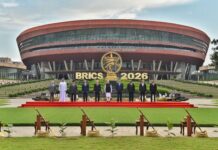
It is a fact that three drivers of growth, like capital, labour, and productivity, have eroded due to unprecedented global headwinds. In the face of these global headwinds, democracy and capitalism are in retreat. On top of it, the Arab -Israel war and the entry of Iran have made the position more dangerous, murkier, volatile, and fragile, and world peace a casualty. The rise of BRICS’s new power structure poses a threat to the Dollar. The dollar is losing its shine amidst talk of de-dollarisation.
The world is gasping under a debt trap, challenging demographics, stagnating productivity, and a constant threat of a nuclear arms race. A small mistake may extinguish the homosapiens from the face of the world. The defunct world body, the UN, and the embattled Security Council need reform to tackle world problems. Gradually, it is becoming a fact that the social maladies, religious conflicts, civil wars, geopolitical unrest, economic crisis, and on top of it, the fear of a virus infection, the rise of the right-wing politics, put the neo liberal order to the test.
The aspirations of the people at large are for justice, equality, and freedom. Another third world was, though the world is very much on the doorstep, is inconceivable. What we need now is growth, development, prosperity, and empowerment. Let the world and its people not be left to the few billionaires and warmongers who see war as a solution to every problem. Though the post-pandemic recovery looks uncertain, due to the two wars, the future looks uncertain and gloomy too. India breaks free from the conventional world order. Hope floats.
The world needs new thinking. There has to be an emerging paradigm shift in the politico-economic order. Let millions of germinating dreams strengthen the root for peace, freedom, and equality. Let the resolutions be democratization of society, radical reforms, and a perestroika for the new blue dot in the universe.
(The writer is a former General Manager of Bank of India. Views expressed are personal.)