








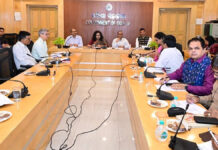









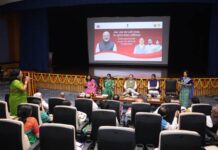
Uma Mahadevan shared powerful insights into the state’s transformative rural public library movement while delivering the keynote address at the Odisha Public Library Conference 2025. Here are the key excerpts from her address
Uma Mahadevan

It was a privilege to address the Odisha Public Library Conference 2025 (OPLC 2025), hosted by The Odisha Society of the Americas (OSA). This platform allowed me to share the inspiring journey of transforming Karnataka’s Gram Panchayat (GP) libraries into vibrant, community-centric knowledge centres. This transformation, significantly catalyzed during and after the COVID-19 pandemic, reflects the crucial role public libraries play in empowering rural communities, encompassing students, women, farmers, and senior citizens.
The Scale of Transformation
Karnataka, with nearly 5,800 Gram Panchayats, has 5,892 GP libraries and information centres. These are no longer mere book repositories; they are one-stop resources designed to foster knowledge access and sharing across the state.
- Digital Inclusion: Nearly 5,800 libraries (5,760) have been equipped with digital resources, including computers, laptops, smartphones, and Chromebooks, along with digital learning materials.
- Accessibility: Around 850 libraries have been transformed into disability-friendly spaces, featuring digital voice assistants, text-to-speech readers, and Braille books.
- Free Enrollment: Over the last five years, more than 5,000,000 children (50 lakh) have received free enrollment to borrow books.
- Enhanced Spaces: Libraries now include children’s sections and are designed as child-friendly and family-friendly spaces for intergenerational learning and interaction.

Pillars of Change and Sustainability
The revitalization of these libraries rests on three core dimensions of change, anchored by sustainable funding and robust infrastructure.
1. Sustainable Funding and Infrastructure
Funding is secured through a mandated 6% library cess charged by all local bodies (urban and rural), enabled by state libraries legislation dating back to 1965.
- State Support: The state provides around ₹85 crores for librarians’ salaries, ensuring they are paid minimum wages.
- Infrastructure Grants: Funds for buildings, furniture, books, and digital resources come from Gram, Taluk, and Zilla Panchayat grants, Corporate Social Responsibility (CSR), and MLA/MP Local Area Development Scheme (LADS) funding.
2. Enhanced Working Hours and Librarian Proficiency
To maximize community access, especially in rural areas, libraries are now open for eight hours daily and crucially, remain open on Saturdays and Sundays—when public footfall is highest.
- Professional Training: Librarians receive constant training, including one-week residential training and a six-month blended certificate course from the Mahatma Gandhi Rural Development at Panchayat Raj University.
- Focus on ‘Friendly’ Spaces: Training emphasizes being child-friendly, conducting engaging activities, and ensuring the library is a welcoming space for all.
3. Community and Digital Engagement
Libraries have been reconceptualized as ‘Arivu Kendras’ (Knowledge Centres), promoting scientific temper, literacy, and civic awareness.
- Promoting Constitutional Values: Copies of the Constitution are displayed, and activities like Preamble reading are conducted on important days. The Constitution Values Programme connects abstract ideals (justice, liberty) to local entitlements (MGNREGA – Mahatma Gandhi National Rural Employment Guarantee Act , Anganwadi care, legal remedies for women).
- Digital Literacy: Sessions have been conducted for over 600,000 self-help group women and community members, focusing on essential skills like UPI and online banking transactions to empower and protect rural users. Over 30.5 lakh (3.05 million) registrations have been made for digital skills and career guidance.
- Engaging Activities: Monthly activities include compulsory reading, writing, and reflection. Special focus areas include:
- Nature Education: Training librarians as nature educators connect children to nature, environment, and sustainability issues.
- Science in Libraries: Partnerships with organizations like Science Gallery Bangalore and activities like astronomy workshops promote scientific temper.
- Civic Awareness: The “My Library for Me” program encourages children to engage in civic actions, leading to stories of impact like rescuing child labourers and standing up against discrimination.
Strategic Partnerships
Crucially, the success is built on extensive non-financial partnerships with over 50 NGOs and civil society organizations. These partnerships enhance the libraries’ offerings:
- Azim Premji Foundation: Strengthening capacity building of librarians and providing children’s books.
- Shikshana Foundation (Dell Technologies): Modernizing 5,140+ libraries into Grama Digi Vikasana digital centres.
- British Council: Setting up “British Council Corners” to encourage English learning via free premium online courses and digital materials.
- Pratham Books: Providing books, including STEM books, and digital platforms like StoryWeaver.
The Future: Expanding the Network
Recognizing that some Gram Panchayat headquarters can be far for young children and senior citizens, the Chief Minister announced the start of nearly 6,600 additional village libraries under the Sakshi scheme. These new libraries will further democratize access, ensuring more communities benefit from a child-friendly environment, print books, computers, and furniture.
The Gram Panchayat libraries in Karnataka are evolving into nodes of positive social change, fostering a culture of reading, inquiry, and civic participation, and are now being recommended by the Union Government as a model for replication. We are eager to facilitate exposure visits for teams from Odisha to explore how this model can be adapted to strengthen public library systems across the state.
(Uma Mahadevan is the Additional Chief Secretary and Development Commissioner for the Government of Karnataka. She currently oversees the state’s Rural Development and Panchayat Raj Department. She is a recognized advocate for leveraging technology and community engagement to transform rural public libraries into knowledge hubs in Karnataka which has became a role model in the country)