


















Odisha Assembly’s unanimous decision to sharply raise MLA salaries sparks debate on political ethics, public trust, and democratic accountability
Bhaskar Parichha
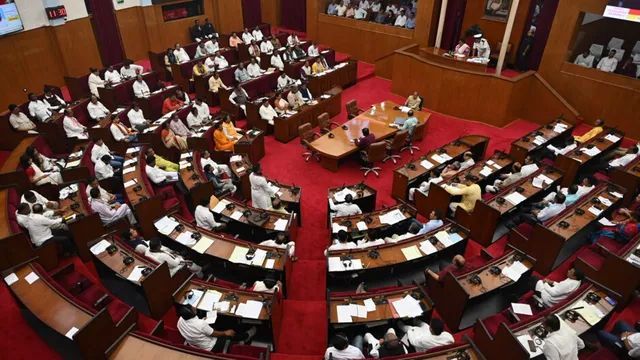
The Odisha Legislative Assembly’s unanimous decision to nearly triple the salaries and allowances of MLAs, ministers, and top constitutional functionaries is not merely an administrative act. It is a political statement—one that speaks volumes about priorities, entitlement, and the widening moral gap between rulers and the ruled.
Passed quietly on December 9, with retrospective effect from June 2024, the amendment bills raise an MLA’s monthly earnings from around ₹1.11 lakh to ₹3.45 lakh. Annual income now exceeds ₹41 lakh, placing Odisha’s legislators among the highest paid in the country. The Chief Minister, ministers, Speaker, Deputy Chief Ministers, and the Leader of Opposition will earn even more. Former MLAs will receive tripled pensions, while automatic revisions every five years institutionalise future hikes.
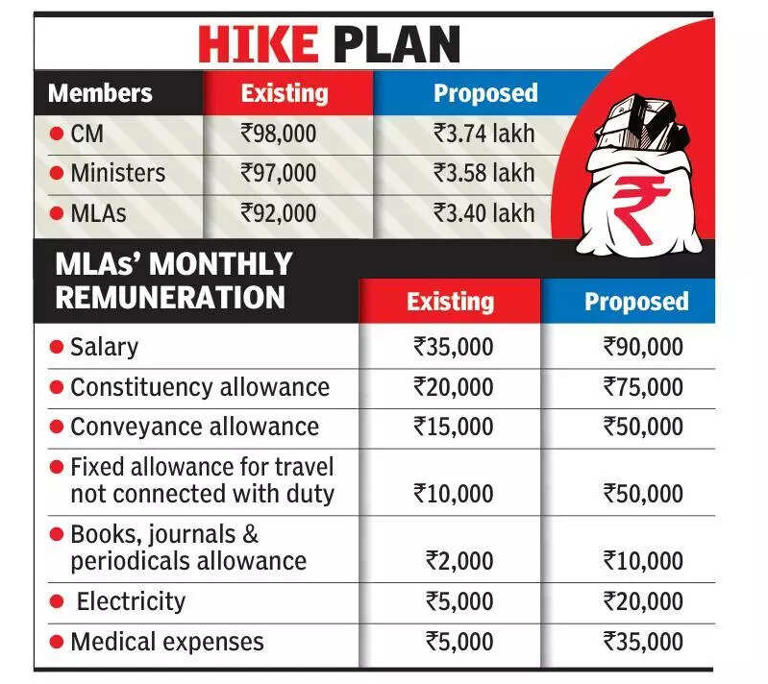
What makes this decision deeply troubling is not merely the quantum of the increase, but its timing and unanimity. The bills were passed even as teachers protested outside the Assembly, ASHA workers continued their long struggle for fair remuneration, and Odisha’s minimum wages remained among the lowest in the country. In a state where large sections of the population survive on daily wages and welfare transfers, the political class chose to prioritize itself.
Defenders of the hike cite inflation, rising responsibilities, and the fact that salaries had not been revised since 2018. These arguments collapse under scrutiny. Inflation affects everyone, but it has not translated into proportionate relief for frontline workers, contractual staff, or public service providers. Responsibilities may have increased, but so have perks: official residences, vehicles, staff, travel allowances, medical benefits, and post-retirement security. To frame this as a financial necessity is to insult public intelligence.
More revealing than the hike itself is the cross-party consensus behind it. BJP, BJD, and Congress—often bitter adversaries—found remarkable unity when it came to raising their own pay. The absence of debate, dissent, or even discomfort inside the House exposes a political culture where self-regulation has failed. When legislators decide their own salaries without independent oversight, conflict of interest becomes the norm rather than the exception.
The CPI (M)’s opposition—symbolic as it may be—stands out precisely because it breaks this consensus. Equally telling is the post-facto moral positioning by Leader of Opposition Naveen Patnaik, who announced he would forgo the enhanced salary. While politically astute, the gesture cannot erase the fact that his party supported the bill in the Assembly. Charity after consensus does not substitute accountability before legislation.
At stake here is not fiscal prudence—the salary hike will not bankrupt the state—but democratic legitimacy. An MLA in Odisha will now earn roughly 22 times the state’s per capita income. This widening distance between representatives and citizens erodes the idea that legislators are public servants rather than a privileged class. Representation loses meaning when lawmakers increasingly inhabit a different economic universe from those they claim to represent.
Across democracies, there is growing recognition that legislators’ pay should be determined by independent commissions, indexed transparently to economic indicators, and debated publicly. Odisha’s move does the opposite: retrospective implementation, automatic future revisions, and the possibility of ordinances to bypass legislative scrutiny. These mechanisms insulate political privilege from public accountability.
The controversy also exposes a deeper paradox. Odisha has made real strides in social welfare, disaster management, and poverty alleviation. Yet, the political elite’s actions risk undermining this credibility. Welfare loses its ethical force when those dispensing it appear unwilling to share economic restraint. Governance cannot be sustained on optics alone; it rests on trust.
The bills now await the Governor’s assent. While constitutional convention limits gubernatorial intervention, this is precisely the moment for pause and reconsideration. At the very least, the process should be reopened for public consultation and linked to an independent review mechanism.
Democracy does not demand that legislators live in poverty. It demands that they live with proportion, restraint, and moral awareness. When elected representatives reward themselves unanimously while asking citizens to tighten their belts, the damage is not just fiscal—it is institutional.
Odisha deserves better than a politics that closes ranks when privilege is at stake. In the long run, no salary hike can compensate for the erosion of public trust.
(The author is a senior journalist and columnist. Views expressed are personal.)
Very pertinent observation and accurate assessment. I wish this article gets widely circulated. I wonder why mainstream Odia newspapers have not come out with their own analysis of this political misadventure although they have dutifully printed the news.
The last sentence is ethically correct but ethics is the first casualty when intentions are Machiavellian.