

















Odisha is at a critical inflection point as rapid industrialisation, record investments, and infrastructure growth reshape its economy. An in-depth analysis of opportunities, challenges, and the road ahead
Bhaskar Parichha
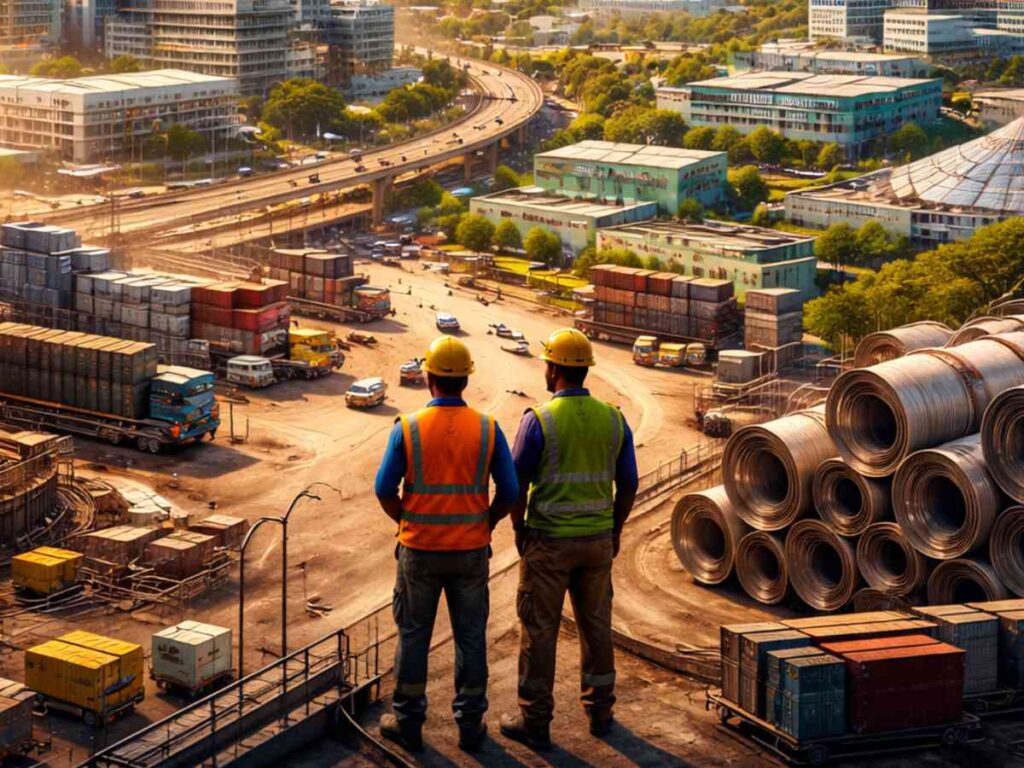
Odisha, located on India’s eastern coast, has undergone a significant economic transformation over the past two decades. Once perceived largely as an agrarian and mining-dependent state, it is now steadily emerging as a diversified industrial and services-driven economy. By 2025–26, Odisha ranks among India’s fastest-growing states, recording a projected Gross State Domestic Product (GSDP) growth of around 10 per cent in recent years, with the overall GSDP estimated at approximately ₹9.6 trillion.
A key marker of this transition is the changing sectoral composition of the state economy. The industrial and services sectors together account for nearly 79 per cent of GSDP, while the primary sector—comprising agriculture and mining—contributes about 21 per cent. This structural shift reflects sustained policy reforms, proactive investment promotion, and a deliberate effort to move beyond exclusive reliance on mineral extraction.
Odisha’s industrialisation is rooted in its extraordinary natural resource endowment. The state holds over 35 per cent of India’s mineral reserves, making it a national leader in the production of chromite, bauxite, manganese, graphite, nickel, and high-grade iron ore. This resource base has supported the growth of large-scale metal and mineral-processing industries.
Major steel producers such as SAIL’s Rourkela Steel Plant, Tata Steel, JSW, and Jindal Steel have expanded operations in the state, while aluminium production is anchored by NALCO’s facilities at Angul and Damanjodi. These sectors continue to form the backbone of Odisha’s industrial economy.
Power generation, particularly thermal power in the Talcher–Ib Valley belt, has historically supported industrial growth. In recent years, however, the state has begun shifting focus toward renewable and green energy, including proposals for green hydrogen and green ammonia projects.
Manufacturing activity is expanding across multiple sectors, including food processing, pharmaceuticals, textiles, chemicals, petrochemicals, and electronics. At the same time, Odisha is positioning itself in emerging and high-value industries. Bhubaneswar has developed into a growing IT and IT-enabled services hub, with Infocity parks attracting national and global firms.
The state is also making early but strategic moves into semiconductors, with new OSAT (Outsourced Semiconductor Assembly and Testing) units and a Silicon Carbide manufacturing facility in the pipeline. Apparel manufacturing, defence production, handicrafts—such as Cuttack’s renowned silver filigree—and tourism add further diversity. Port-led industrialisation, supported by Paradip, Dhamra, and Gopalpur ports, has strengthened logistics and export capacity.
Recent years have witnessed a surge in investment commitments. The Utkarsh Odisha–Make in Odisha Conclave 2025 alone secured investment intentions exceeding ₹16 trillion. In January 2026, the state approved projects worth ₹55,783 crore, projected to generate over 14,500 jobs, including a ₹35,000 crore steel plant proposed by JSW in Dhenkanal.
Cumulatively, project approvals in recent years have crossed ₹4–5 lakh crore, with more than ₹2 lakh crore already grounded. The government has prioritised sectors such as semiconductors, pharmaceuticals, textiles, and green energy. A 200-acre semiconductor park at Aranga, a pharmaceutical policy targeting ₹25,000 crore in investments by 2030, and six textile parks aimed at generating five lakh jobs reflect this forward-looking approach.
Infrastructure development has kept pace, with over 130 industrial estates, the Petroleum, Chemicals and Petrochemicals Investment Region (PCPIR) at Paradip, and regulatory reforms that have placed Odisha among the leading states in ease of doing business.
The Industrial Policy Resolution (IPR) 2022 has been central to this momentum, offering capital subsidies, power tariff reimbursements, employment-linked incentives, and concessional land allotment to attract investors and improve project viability.
Despite visible progress, Odisha’s industrialisation journey is not without challenges. Historically, growth was constrained by infrastructure gaps, land acquisition complexities, and lengthy environmental clearance processes. Continued dependence on mineral-based industries raises concerns about environmental degradation, including deforestation and pollution in mining belts such as Talcher–Angul.
Social challenges remain significant. Industrial expansion has often involved the displacement of local and tribal communities, making inclusive development and fair rehabilitation essential. Skill shortages persist, particularly in advanced manufacturing and high-technology sectors, while the startup ecosystem remains relatively modest, with around 3,200 active startups.
Political critics have also questioned the gap between investment announcements and on-ground execution, pointing to stalled or delayed projects in the past.
Looking forward, Odisha has articulated ambitious goals, including becoming a trillion-dollar economy by 2030 and realising the long-term vision of “Samruddha Odisha 2036.” Upcoming initiatives such as Enterprise Odisha 2026 are expected to further reinforce investor engagement. The policy emphasis is shifting toward diversification, clean energy, value addition, and inclusive industrial growth.
The challenge for the state will be to sustain momentum while balancing economic expansion with environmental protection and social equity. If managed effectively, Odisha’s transition from a resource-dependent economy to a diversified industrial hub could serve as a model for eastern India’s development.
Odisha today stands at a critical inflection point—leveraging its mineral strength while steadily pivoting toward high-value, future-ready industries.
(The author is a senior journalist and columnist. Views expressed are personal.)