














A reflective visit from Jagannath Dham to Penthakata in Puri, exploring fishermen’s lives, dignity-driven development, women’s empowerment, and grassroots change in Odisha
Manorama Choudhury

Penthakata, Jagannath Dham, Puri
Every visit to Jagannath Dham carries its own lesson.
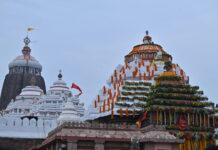
It is often said that one cannot visit Sri Jagannath without His wish. From my own experience, I have come to believe this deeply. When the call comes, I go with anticipation. Crowds have never deterred me from seeking His darsan. And yet, like many devotees, I often leave the temple with a quiet ache—why can I not stand before Him just a little longer, see Him more fully, to my heart’s content?
Perhaps He heard that unspoken prayer and chose to reveal Himself differently.
This time, my darsan extended beyond the temple.
I am closely associated with the BhaMa Foundation, where I firmly believe that strengthening local economies is integral to strengthening a nation. During our stay in Puri, our CEO suggested we visit one of the communities where BhaMa has been working. So, after our temple visit, I travelled with my husband and the CEO to Penthakata—a fishermen’s settlement along the Puri coast.
Penthakata is, in many ways, an informal settlement. Nearly 7,000 families—primarily from the Andhra region—have lived here for over seventy years. Telugu is the language of the community, yet as this is not a border district, government schools teach in Odia. Private schools exist, but affordability remains a barrier. Language disconnects often discourage enrolment or lead to early dropouts.
Life here is further shaped by geography. Odisha’s coastline is repeatedly battered by cyclones, which destroy homes that are already fragile.
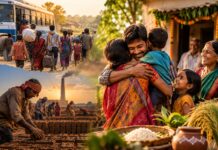
Fishing is the primary livelihood. Around 1,200 boat owners operate here, each employing four to five helpers. The day’s catch is divided—roughly sixty per cent retained by the owner, with the rest shared among the helpers. Unsold fish is dried for later sale, a process that is long, physically demanding, and precarious. Fish spread out on the beach must be constantly guarded from stray animals, and drying often happens in unhygienic conditions close to the settlement.
This labour falls largely on women—on top of household work, childcare, and the relentless task of daily survival.
The challenges are visible and stark. Children are unintentionally neglected. School dropouts increase. Child marriage persists. Alcohol consumption among men adds another layer of vulnerability. Constant exposure to salt-laden winds leads to the early onset of cataracts and other health issues.
There are also deeper, less visible forces at play. The easy availability of alcohol—nearly nine liquor outlets in proximity—appears to intensify dependency. Some residents reportedly retain voter identification in more than one state, reflecting enduring ties to their place of origin rather than a sense of rootedness here. At the same time, this makes the settlement a vote-influencing cluster—a reality often discussed but rarely addressed with sincerity. We also learned that substance abuse and other illegal activities exist in the area.
For me, this convergence of social, economic, and systemic distress was overwhelming—painful to absorb, difficult to process.
BhaMa Foundation does not believe in grand promises. It believes in practical dignity.
In partnership with Gopabandhu Seva Parishad, BhaMa has installed solar fish dryers in Penthakata. These enable faster, more hygienic drying, improve the quality of produce, and reduce both labour and loss. While such interventions cannot undo entrenched behaviours or cultural resistance overnight, they introduce safer, more sustainable livelihood practices—quietly, gradually.
For young women here, stepping outside the settlement to seek employment is especially difficult. The lingering smell of fish, limited education, and language barriers shut doors even before they can attempt to open them. BhaMa has therefore introduced a sanitary napkin–making machine, with plans to train young women to produce napkins for their own use. This addresses menstrual hygiene while also building confidence, skills, and a sense of self-worth.
These interventions are modest. They make no sweeping claims. But they create breathing space—saving time, improving income quality, and, most importantly, preserving dignity. Over time, we hope they also nurture an inner impulse toward change.
This visit reminded me that darsan does not always end at the temple gate.
Sometimes, the truest glimpse of the Divine appears in places that unsettle us—in communities that compel us to look at life without filters.
(The Writer is a poet and social entrepreneur based in the USA. Views expressed are personal.)