















Is social media strengthening democracy or creating a spiritual vacuum? An analysis of digital culture, public discourse, and inner life in the online age
Rabindra Kumar Nayak

Few inventions in human history have altered the texture of everyday life as swiftly and profoundly as social media. In little more than a decade, platforms that began as tools for connection have become arbiters of opinion, identity, and even public perception. They are often celebrated as engines of democratization, breaking down hierarchical barriers and amplifying unheard voices. Yet, beneath this promise lurks a gnawing discontent: are we paying for digital freedom with emotional depletion, spiritual emptiness, and an erosion of meaningful human relationships?
Undeniably, social media have expanded the democratic space. A smartphone today can do what printing presses and public spaces once did. Marginalised communities, political dissidents, whistle-blowers, and grassroots movements have found unprecedented visibility. Information, once monopolised by the powerful, now circulates freely —sometimes recklessly, often chaotically. Authoritarian narratives can be challenged in real time; injustice can be documented instantly. In this sense, social media have become the modern civic space, a global forum where participation is no longer restricted by geography or privilege.
But democracy is not merely the freedom to speak; it is also the capacity to listen, reflect, and deliberate. Here social media reveal their darker side. In the digital marketplace, anger rises while thoughtful debate declines; rapid reactions take the lead, while serious reflection is pushed aside. Complex ideas are reduced to slogans, public discourse has slipped from reasoned debate into noisy confrontation, and disagreement to personal hostility. The result is not a richer public sphere but a fragmented one, where the comfort zones of consensus masquerade as communities and genuine consensus becomes nearly impossible.
This fragmentation extends beyond politics into the most intimate realms of human life. Emotions that once belonged to private spaces like grief, love, longing, even spiritual doubt are increasingly performed for public consumption. A relationship is validated not by its depth but by its visibility; suffering is measured by likes and shares.
What should be inward, slow, and contemplative is externalised, accelerated, and quantified. Emotional life becomes content, and content must compete. Private emotions turn into public content competing for visibility and attention. In this relentless exhibition, something vital drains away. Silence, which once nurtured reflection, now feels intolerable. Solitude, once a companion of creativity and spiritual growth, is mistaken for loneliness. We scroll not because we seek meaning, but because we fear emptiness.
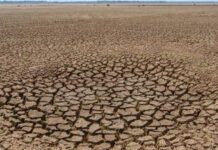
Yet the paradox is cruel: the more we consume, the hollower we feel. This leads to a deeper concern, a creeping spiritual vacuum. Not necessarily a loss of religious faith, but a thinning of inner life, like the figures in T. S. Eliot’s poem The Hollow Men, outwardly stuffed, yet inwardly vacant, whispering in a desert of meaning. Surrounded by abundance, we drift through a spiritual wasteland as depicted in Eliot’s another famous poem The Wasteland where voices lose resonance and gestures lose conviction.
We stand, not shattered by catastrophe, but quietly eroded from within, our age echoing Eliot’s vision of modern humanity, full of noise yet emptied of substance. Our digital world is crowded yet desolate. There is noise everywhere, but little music; motion everywhere, but little direction. Minds are overfed with information and undernourished in knowledge.
Spirituality, in its broadest sense, demands attention, patience, and inwardness. It requires the courage to sit with unanswered questions. Social media, by contrast, thrive on distraction. We are informed but not enlightened, connected but not rooted. Information merely passes through, leaving no nourishment behind. Are we, then, doomed to this aridity? Not necessarily. The problem lies less in technology itself than in our uncritical surrender to it. Social media are tools, not destinies. The way out begins with regaining control, both individually and collectively.
At a personal level, this means cultivating digital restraint. Not withdrawal, but discernment. Choosing depth over immediacy, conversation over commentary, reading over scrolling. It means restoring boundaries between the public and the private, allowing certain emotions to remain unshared, unperformed, and therefore sacred. It also means recovering practices that nourish the inner life—reading, contemplation, genuine dialogue, and unmediated contact with nature and people.
At a societal level, digital literacy must move beyond technical skills to ethical and emotional intelligence. We need to teach not only how to use platforms, but how to resist them when necessary; how to evaluate information critically; how to disagree without dehumanising. Democracy cannot survive on viral outrage alone—it needs informed citizens capable of patience and moral imagination.
Most importantly, we must remember that no platform can substitute for meaning. Rain does not come from the screen; greenery does not grow in virtual soil. If we wish to escape the wasteland, we must reclaim our inner lives—slowly, patiently, and consciously. Only then can the digital world become a place not of exhaustion, but of genuine connection and hope. If the wasteland is to bloom again, it will be because we choose to slow down, to listen inwardly, and to reconnect the outer world of communication with the inner world of conscience. Social media can democratise voices, but only human beings can restore depth, dignity, and hope. The responsibility, uncomfortable though it may be, is still ours.
(The author is a former Reader in English. Views expressed are personal.)