
























A review of Lal Odhani, Kapilas Bhuyan’s acclaimed Odia film exploring love, injustice, state power and resilience through compelling storytelling and performances
Pinaki De
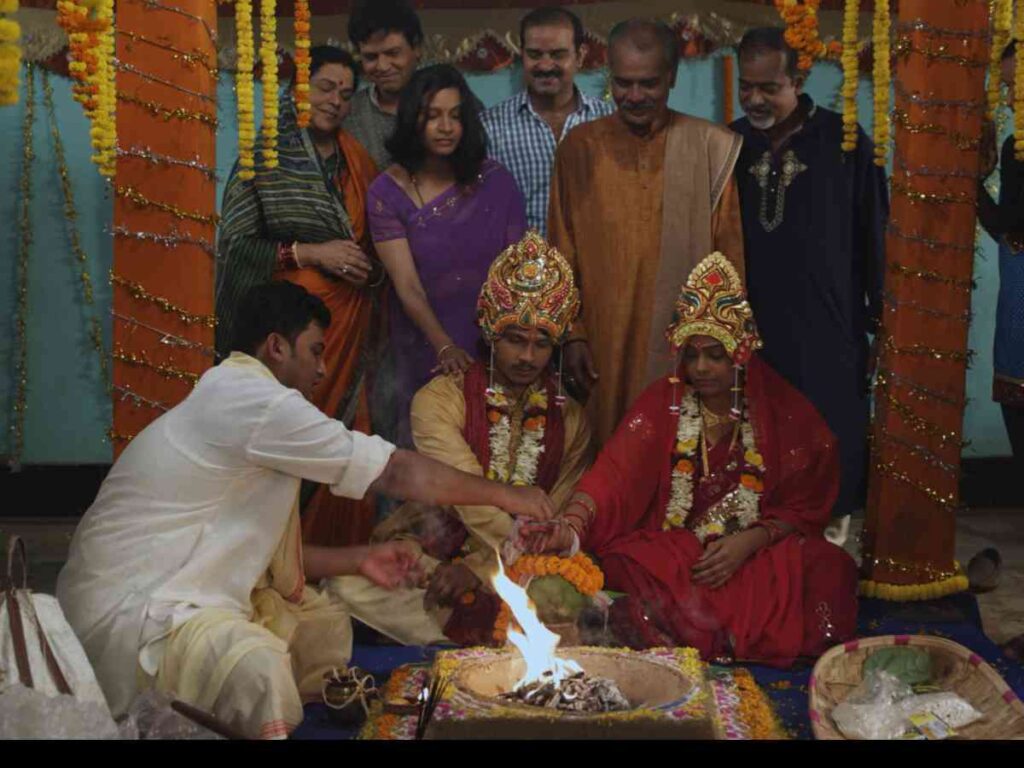
Cinema, or Moving Images as it’s aptly called, in its many facets of revelation, lulls for a moment and erects that magic where images burrow deep into the minds of viewers, and it remains sangfroid even after the film credits are rolled. This movie magic of red crimson coloured veil wrapped over the head of the bride Aparna (Manishita Das) as a kind of headcover in the beginning of the film Lal Odhani (The Red Veil) on her post-marriage consummation night and also at the end of the film when it is wrapped around her body as an entrapment after some playful antics, evokes the fundamental and primal meaning of womanhood and its related woes.
Lal Odhani, the debut feature film, written and directed by Kapilas Bhuyan, the recipient of National Award for his documentary film on Odia Jatra titled ‘Jatra Jeevan, Jeevan Yatra’ and some international accolades for his short-docu-fiction film ‘Breathing Without Air’ (2003) has loosely adapted the story from a fiction written by Dr Krushna Prasad Mishra, explores the sudden and dramatic departure of Jayadev (Satyajyoti Das) on one fateful night when the loved couple were celebrating their togetherness, forcibly taken away by a posse of policemen posing themselves as Team of Special Investigation Squad accusing him to be involved in Maoist activities which was regarded as a normal happening during the early decade of this century in the mineral rich district like Keonjhar where the event is located.
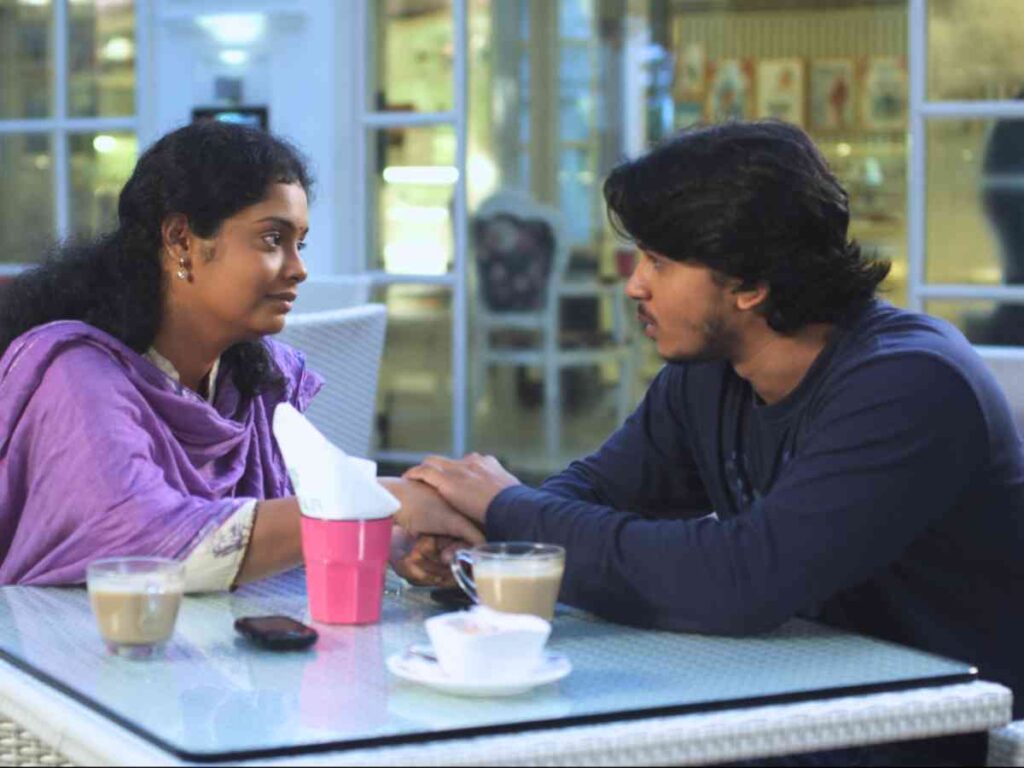
But none of his relation could believe this story implanted by the so-called police. Because Jayadev was a happy go lucky person who loved football more than anything else and tried to promote the game among the youngsters of the district by dreaming of organising an inter-State football tournament. He also played flute to his heart’s content on starry nights beside the vast expanse of sea to enchant his lady love.
The only crime that he had committed was he had made a veiled threat to the owner of the mining company who agreed to sponsor his dream project but with a frugal amount. Then, Jayadev had confronted him by saying that the profit they earn from this place through exploitation, adopting unfair means, has to be flowed back for the welfare of the local populace. A background voice-over of a poem written and recited by poet Bishnu Mohapatra on these resource pillagers under the garb of development aptly sums up the mood of the scene.
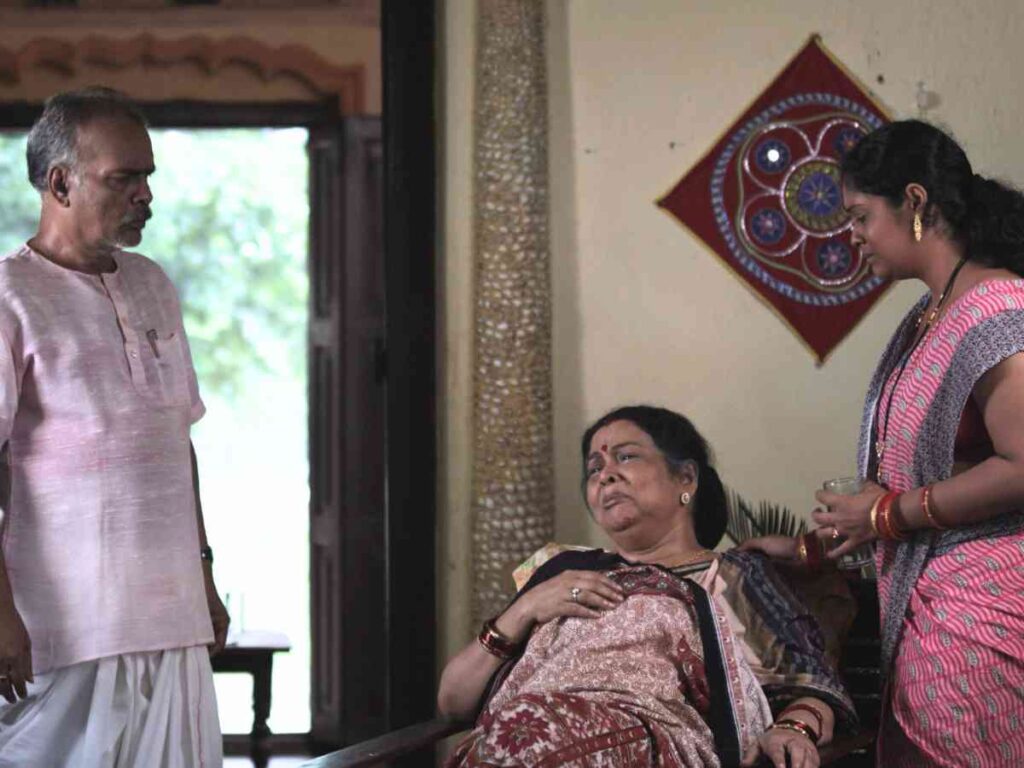
Then, the crestfallen father Nirakar Samantaray (Tapan Kanungo), a President Award winner, retired Head Master, embarks on a journey seeking justice for the release of his son from the clutches of extortionists through maze of bureaucratic obduracy. Even filing a Habeas Corpus for his missing son by the pleader (Jimut Baran Patnaik) looks like a monumental job under the garb of the haze of unwarranted delay and never-ending process.
Nirakar, who pursues with the police one day dozes off in the lobby of the Director, SIT, while waiting for an appointment. He snores, which rebounds and bounces through the corridors of power.
Here, there is a scene where Aparna now in advance stages of her pregnancy collecting the paper cuttings of the news item which after some momentary illusion floats around the room as she accidentally switches on the fan and with some Midas touch of Rabi Patnaik, the Editor, shifts to the images of Sachivalaya (now Lok Seva Bhawan) with falling paper bits over it, as if the powers that be are least aware of it. This reminds of the iconic scene of falling paper currency in Satyajit Ray‘s ‘Nayak’ where it is gathered in a cesspool, suffocating the drowning hero.
Meanwhile, there have been fissures in the relationship between Aditya (Sanjoy aka Pinku Patnaik) and Maya (Sweta Acharya) on the release of Jayadev, as Aditya was warned by the authorities that meddling with this issue may affect his prospects of career progression. As Aditya slyly paves his way away from the good Samaritan’s role, Maya equally bounces him from the relationship that has grown over the years. Fear eats the soul.
The role of Jayadev’s elder brother Bishnu Samataray, himself a successful highbrow power lusty individual deserts his family at this time of the hour.
But at home, Nirakar, in one of the scenes during sudden burst of rain, rushes to collect the clothes that were dried outside despite of his old age and fragile health to help his daughter-in-law Aparna, who seemed so helpless at these trying moments. This scene may look innocent and hackneyed, but it speaks volumes about the vortex that they are all drawn into without any folly of theirs.
There is another scene where Nirakar, before returning from the city, just ambles through a vast expanse of a football playground, where, in the background, one can faintly hear the sound of football commentary, but his face remains fixed without any expression. Here, Subash Sahoo, the National Award-winning Sound Designer, plays his sleight of hand by juxtaposing the sound and serenity with such elan that it captivates the viewers for a long time.
The Film has been produced by Tanaya Patnaik under the able guidance of Sri Soumya Ranjan Patnaik and under the banner of Manjari Movies. Jay Gandhi, a New York-based disciple of Pandit Hariprasad Chaurasia, who has designed the music for the movie has relied upon primal and rhythmic kind of pattern to enhance the mood of the film. Satyprakash Rath, the Director of Photography, has rendered an honest account of the whole film.
Lastly, Kapilas Bhuyan, the director, screenplay, dialogue writer of the film, with his deft astuteness, has tried to center around the narrative of relationship of age-old theme of conflict between the State and Individual, with some tweaks of love angles, which remains so contemporary, as the film was made in 2011 and after 15 years, the theme has not staled yet. When there is a war cry for making a different kind of Odia cinema, the choice for these kinds of themes will certainly embolden not only the makers but the viewers as well.
As regards the performances in the film the mainstay shall remain with actors like Tapan Kanungo, Manishita Das, Satyajyoti Das, Sweta Acharya, Sanjoy Patnaik. But as it is said primus inter pares, in this case, the bold theme that has been re-told.
After watching this film at Jaydev Bhavan, Bhubaneswar, shown as a part of 3rd Edition of the Bhubaneswar Film Festival (25th to 28th June 2026), I asked the film-maker whether it’s slow-paced. Is it so? He shot back. If that is so, I’ve succeeded in creating the mood of the film where half of the battle is won. Then he signs off gleefully.
(The author loves watching good cinema and occasionally writes on them. Views expressed are personal.)