





















Power, Politics and Procedure: Understanding Hockey India’s Internal Rift
Satish Sharma
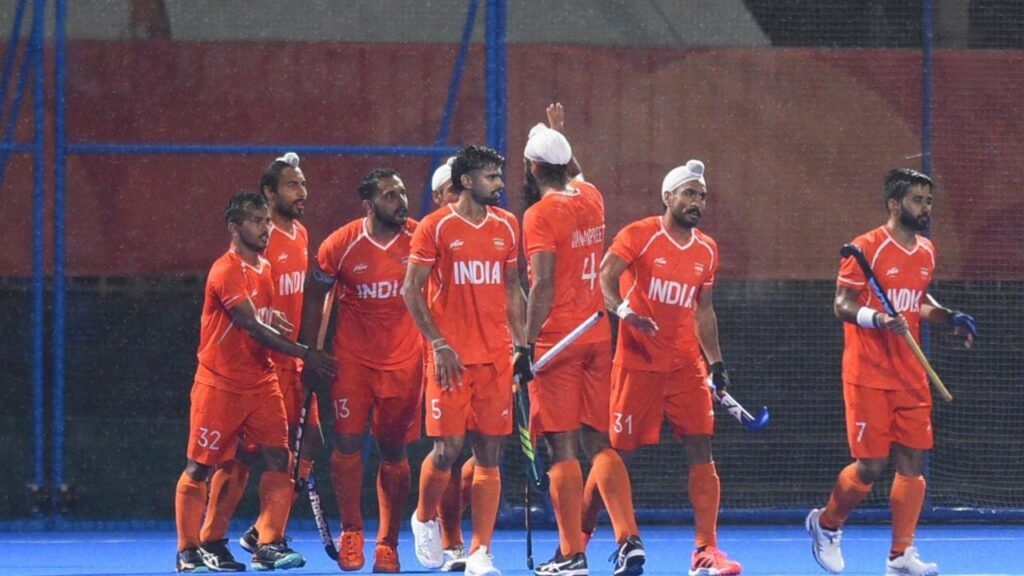
While India’s men’s and women’s hockey teams are battling for gold at the Asian Games in Japan, a very different contest is unfolding back home – one over power, authority and administrative control within Hockey India.
This year, the Asian Games gold carries added significance. Apart from being a symbol of continental supremacy, it also offers a direct qualification route to the Los Angeles 2028 Olympic Games. The champions in both the men’s and women’s hockey competitions will qualify directly for the Olympics.
As Indian players fight on the field for medals and an Olympic berth, Hockey India, the body responsible for administering the sport in the country, is facing an increasingly public internal dispute.
The differences between Hockey India president and former India captain Dilip Tirkey and secretary general Bhola Nath Singh have moved from a dispute over the national team jersey to action against the Director General, an emergency Executive Board meeting, the forthcoming elections and, most recently, a police complaint.
On September 24, Tirkey filed a complaint with the Delhi Police against four Hockey India officials. Police confirmed receipt of the complaint, although available reports at the time did not indicate that an FIR had been registered.
The developments have raised a fundamental question: Who actually has the power to take decisions in Hockey India, and where exactly do the powers of the president and secretary general begin and end?
President and Secretary General: Two Key Office-Bearers
Dilip Tirkey is the president of Hockey India, while Bhola Nath Singh is its secretary general. Both are elected office-bearers and hold important positions within the organisation.
Hockey India also has a treasurer, vice-presidents, joint secretary, executive members and athlete representatives on its Executive Board.
The answer to the question of who has the final authority, therefore, cannot simply be determined by the title of a post. It has to be established through Hockey India’s constitution, bylaws and the rules governing the functioning of its Executive Board.
The Jersey Dispute
The present confrontation came into sharper focus over the colour of the Indian team jersey.
The traditional blue jersey was replaced by a saffron/orange jersey during the recent World Cup, triggering questions within Hockey India.
Tirkey maintained that the decision to change the colour had been taken without his knowledge and without the approval of the Hockey India Executive Board.
Following the controversy, Tirkey issued a show-cause notice to Hockey India Director General Commander R.K. Srivastava and withdrew his powers with immediate effect. The notice referred not only to the jersey issue but also to several other administrative matters. Srivastava was given four weeks to respond.
Tirkey also alleged that Srivastava travelled to the Netherlands for the World Cup despite his instructions. This subsequently became one of the issues cited in the action against the Director General.
Emergency Meeting Deepens the Power Struggle
The confrontation escalated after the action against Srivastava.
On September 18, an emergency meeting of the Hockey India Executive Board was convened. The agenda included restructuring the Hockey India League, creation of a new governing council, fixing the date of the forthcoming elections, appointment of a returning officer and financial matters. This brought the question of institutional authority into the open.
Tirkey’s position was that, under the Hockey India rules, the authority to convene an emergency Executive Board meeting rested with the president and that such a meeting could not be called without his approval.
Bhola Nath Singh, on the other hand, maintained that the meeting had been convened after consultation with, and on the basis of directions from, the president.
The meeting was subsequently held and several issues, including the Hockey India League and the elections, were discussed.
Thus, what began as an administrative disagreement developed into a larger question: Who has the authority to convene an emergency meeting of the Executive Board?
The Dispute Reaches the Police
The most serious development came on September 24.
According to Tirkey’s complaint, while he was in Delhi on an official visit, the vehicle provided by Hockey India was called back while his personal belongings were still inside it. He said the belongings included a bag containing essential medicines.
Tirkey subsequently submitted a complaint to the Deputy Commissioner of Police in South Delhi seeking action against four persons—former Director General R.K. Srivastava, finance manager Subodh Kumar, director Bhushan Kumar and driver Harminder Singh.
The complaint mentioned allegations including criminal breach of trust, theft, criminal conspiracy, endangerment of life and wrongful abandonment.
It is important to emphasizes that these are allegations made in Tirkey’s complaint and have not been established through a police or judicial process. Delhi Police confirmed receiving the complaint, but available reports at that stage did not confirm the registration of an FIR.
The dispute became even more visible when Srivastava subsequently appeared alongside secretary general Bhola Nath Singh at Chandigarh during the formal announcement of the men’s Asian Champions Trophy.
Elections Add another Dimension
The forthcoming Hockey India elections have added significance to the dispute. Secretary general Bhola Nath Singh stated on September 25 that the elections would be held on November 7.
The controversy, therefore, is no longer merely a disagreement between two office-bearers.
It now touches on several important aspects of Hockey India’s functioning—administrative authority, control over professional officials, the procedure for convening Executive Board meetings, the future structure of the Hockey India League and the conduct of the elections.
Former Players Rally behind Tirkey
Amid the confrontation, a group of former players has publicly supported Dilip Tirkey and demanded reforms in the functioning of Hockey India.
On September 25, former players and Olympians gathered outside the Major Dhyan Chand National Stadium in New Delhi in support of Tirkey.
Former Olympians such as Zafar Iqbal, V. Baskaran and Ashok Kumar were associated with the protest, while former India women’s captain Asunta Lakra also participated.
The protesting former players alleged that people without sufficient knowledge of hockey were exercising excessive influence in the federation and sought changes in its functioning.
Their principal demand was that the administration of Hockey India be handed over to an ad hoc committee until the next election. They proposed a committee comprising former players, a retired judge or legal expert, and an observer from the Ministry of Youth Affairs and Sports or the Sports Authority of India.
These are demands raised by the protesting former players and do not represent the established position of Hockey India’s current administration.
So, Who Is the ‘Boss’?
That is perhaps the most important question arising from the entire episode.
In any institution, the powers and responsibilities of office-bearers are normally divided and defined by its constitution and bylaws. The important issue is not simply who occupies the higher-sounding post, but who has the authority to take a particular decision under the rules.
The Hockey India dispute presents several situations that demand clarification.
If the president withdraws the powers of a senior professional official, but that official continues to function, what is the institutional mechanism for implementing the president’s order?
If the president says that an emergency Executive Board meeting cannot be convened without his approval, but the meeting nevertheless takes place, what is the legal status of that meeting and its decisions?
If the secretary general has independent authority to convene such a meeting, what exactly are the limits of that authority?
If the official vehicle of the president is withdrawn during an official visit, who authorised the decision and under what provision?
These are not merely personal questions. They are questions about institutional accountability and the functioning of a national sports federation.
The Need for Clarity, Not a Contest for Power
The present controversy should not be reduced simply to the question of whether the president is more powerful than the secretary general.
The more important issue is whether Hockey India’s decision-making structure is sufficiently clear.
If the president and secretary general issue conflicting directions, the organisation must have a clearly defined mechanism to determine which decision prevails.
If the Executive Board can review or override a decision of the president in certain circumstances, those circumstances should be clearly specified.
Likewise, if the secretary general has independent administrative powers, their scope should be transparent and consistently applied.
The final answers must come from Hockey India’s bylaws, official records and, where necessary, an authoritative legal interpretation—not from competing claims made in public.
Players Fighting on the Field, Officials Fighting Within
The timing of the dispute is particularly unfortunate for Indian hockey.
At a time when India’s men’s and women’s teams are fighting in Japan for Asian Games gold and a direct Olympic qualification spot, the sport’s governing body at home is caught in a very public administrative confrontation.
The players are fighting on the field to uphold the reputation of Indian hockey. At the organisational level, however, the continuing dispute has raised questions about authority, accountability and institutional stability.
Ultimately, the question of who is the ‘boss’ in Hockey India should not be decided by personal influence or public perception.
It should be determined by the rules, the constitution and established institutional procedures.
Indian hockey needs its players to function as one team on the field. The administration of the sport also needs clarity, coordination and a clearly defined chain of responsibility off it.
(The author is a Senior Sports Journalist. Views expressed are personal.)