




























Explore an insightful analysis of widespread food adulteration in India, its health impacts, legal frameworks like FSSAI, and the urgent need for strict enforcement
Suresh Chandra Sarangi
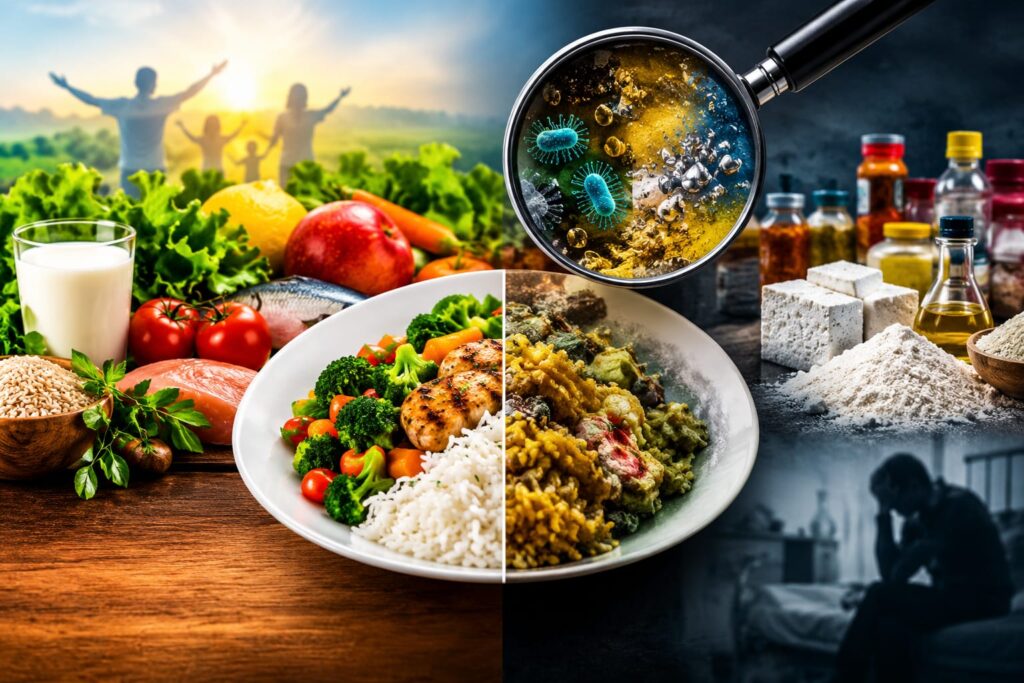
Karl Marx, the father of communism, had said that man must eat to live. In the current century, we are eating to die. On the one hand, we are eating more than we require, putting pressure on resources and at the cost of our lives, as more people die from overeating than undereating. Second, what we eat is not food but poison. The concerning fact is that the poorest people die today by drinking cheap, spurious liquor, rather than starving. That is the paradox of food and life, due to the criminal minds of some people who have no concern for human lives. After globalisation and the spread of ideas, good or bad, food adulteration today is accelerating. The hidden dangers of everyday food and what it means for our health have triggered much debate in India today, after the Maharashtra FDA started to seize poor-quality food and confiscated spurious food that stirred the conscience of the nation and the hornet’s nest.
It has hidden dangers and means a lot so far as our health is concerned. Widespread food adulteration affects one and all across societies. It calls for stronger national safeguards. Unfair competition and higher profit margins drive cheaper and poorer-quality food products, in violation of extant guidelines. From milk and candy to biscuits and flour, from oil to vanaspati, to chicken and fish, we do not protect what nature has preserved for us. Adulteration of food and culinary poisons is a bone-chilling business. This has remained a practice in human history, due to the machinations of unsocial people. The fraudulent methods used by unscrupulous manufacturers and vendors to expand at the cost of human life are the root cause of the problem, and at the same time, at the expense of human life. A conscious society, while purchasing food items such as drinks, meat, cheese, bread, butter, spirits, tea, coffee, cream, confectionery, vinegar, mustard, oil and many other staple items, is not free from the scourge of adulteration of public health.
Food is commonly contaminated and infected with harmful substances such as alum, copper, lead and other toxins, with regard to consumer safety. Identifying the risks addresses one of the major concerns of the growing global population that needs more food, and taking advantage of the consuming society, adulterators are free to create and sell. Adulteration reduces the crucial importance of food and destroys the vitamins and nutrients. Food gets contaminated with toxic chemicals, and treatment becomes expensive, with higher budgets for health keeping the poor and marginalised, which is a drain on the financial resources of the poor, and it has been found that health costs are one of the major reasons for suicide.
This is against consumer protection, allowing the adulterers to go scot-free. Fraudsters and adulterers pose an unreasonable risk and spoil the fabric of a good and prosperous society. The fraudsters have now extended into the realm of medicine, the most heinous of crimes, where those who are expected to save lives are against life itself. One of the main reasons is a shaken public trust. Labelling, a thing to provide information about food and medicine, is actually a scapegoat under which every adulteration is camouflaged. It goes without saying that adulteration is affecting foods, beverages, drugs, milk and eatables like confectionery. The hooch tragedies in Odisha are an example of mindless adulteration.

Our founding fathers had well thought of this epidemic and had brought provisions under Fundamental Rights and the Directive Principles of State Policy. In India, constitutional safeguards against food adulteration are easily discernible under Article 31, the Right to Life, including the right to a safe, healthy and wholesome life, meaning that any supply of food hazardous or injurious to public health violates fundamental rights. Under Article 47, coming under the DPSP, it puts a condition that the improvement of public health and raising the level of nutrition are primary duties of the State, requiring governments to act against harmful and adulterated goods.
Under the Concurrent List, Item 18 says that Parliament and State governments have the legislative power and competence to enact penal laws and regulations to prevent adulteration of foodstuffs and other goods. A revolutionary piece of legislation, the Food Safety and Standards Act (FSSAI), was passed to regulate safe manufacturing, storage, distribution and sale while penalising substandard or unsafe food. One more legislation is the Consumer Protection Act, 2019, which empowers consumers to file a case and seek compensation for any injury or harm caused by unfair trade practices like adulteration. There are penalties under the FSSAI as well. Food is a basic need for human existence, but the manufacturing of adulterated food is both a menace and a crime against public health and humanity.
Rajasthan High Court was very strong in upholding food safety legislation, invoking Article 31, the Right to Life. Eradicating the evil of manufacturing, distributing and selling adulterated articles of food is heretofore heavily guarded, with firewalls, but the profit mania tempts evil-minded people to throw all law to the wind, even at the cost of human life. It is a cancer in all societies, most particularly in Indian society, at a cost of colossal public health. Former FSSAI director says analogue paneer should be removed, he said, while going through an interview with NDTV. Products with no milk fats should not be marketed; FSSAI proposes to keep paneer under milk-based products.
FSSAI Act is indeed sweeping in nature and its provisions, but law implementation in India has faltered with poor enforcement, poor confiscation and poor punishment. The international technical standards to train the producers and the consumers are few and far between. Few initiatives in India, under FSSAI, are like Eat Right, Serve Safe, Save and Share Joy, which are praiseworthy for bringing public awareness. Food adulteration is done to quench the selfish interest of the vendors.
One thing is that, despite laws, rules and guidelines regarding food safety, they are blatantly violated. Some of the landmark cases in India are Nestle India Ltd. vs. FSSAI. The Bombay High Court set aside the rulings of FSSAI, after finding the food safety regulator’s ruling arbitrary in the case of Maggi noodles. Other cases are the Supreme Court directive on the provision of front-of-pack labels in State of Maharashtra vs. Sayed Mohammad Massod, which has become a better milestone judgment and guidance. Even the appeal of CSE, led by Sunita Narayan, on Coca-Cola containing more chemical ingredients beyond the permissible limit, stirred the conscience of the nation. The public has to change, and the wrongdoers must be punished. Punishment can pose a threat perception and perception management for the wrongdoers. Inspections are to be conducted at regular intervals. The demonstrative effect has to be stronger. If we love human life, if we want a healthy life, we need a healthy society and a healthy India, and if we do not want any transgression against our children and future society, we need an India minus adulteration. How many days can we say, ‘Bubhukshit kin nakaronti papam?’
(The writer is a former General Manager of Bank of India. Views expressed are personal.)