











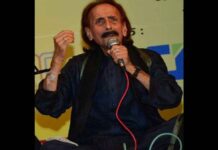









The death of Pranab Kishore Patnaik marks the end of a distinctive chapter in modern Odia music. His voice carried emotion, refinement, romanticism and an unmistakable melancholy. His songs became part of generations of listeners’ memories, living beyond the films they were recorded for
Bhaskar Parichha

Born on January 20, 1938, Pranab Patnaik grew up in a culturally rich family. His father, Lalmohan Patnaik, was a freedom fighter, writer and politician, and his sister, Sudhanshumalini Ray, was also associated with public life. Music, however, became Pranab’s lifelong passion. He was drawn to it from childhood and received musical guidance from Kundala Adinarayan Rao.
The legendary Balakrishna Das also recognised the unusual musical promise in the young singer.
His entry into Odia playback singing came in 1958 with the film ‘Maa’. It was the beginning of a career that would stretch across several decades and encompass cinema, radio, stage and private musical programmes. He subsequently lent his voice to films including ‘Sri Lokanath’, ‘Suryamukhi’, ‘Sindura Bindu’, ‘Sesha Srabana’, ‘Chinha Achinha’ and ‘Batighara’.
What distinguished Pranab was not simply the sweetness of his voice. It was his ability to enter the emotional world of a song. He sang with restraint rather than theatricality. Words mattered to him; so did their inner rhythm and emotional meaning. His voice could be tender without becoming sentimental, romantic without becoming ornamental, and melancholic without losing dignity. His ‘Re Atman Nidra Parihari’ (Bhaktakabi Madhusudan) has been a masterpiece.
He also possessed the rare ability to move between musical forms. Alongside film songs, he explored Odissi music, bhajans, folk and semi-classical traditions and became particularly associated with the ghazal. His experimentation helped introduce and popularise the ghazal sensibility in Odia music. He also sang Hindi ghazals, including compositions based on the poetry of Mirza Ghalib.
In an era when Odia cinema was producing some of its most memorable music, Pranab Patnaik stood among the principal voices that defined its sound. His career intersected with the work of some of the finest composers, lyricists and singers of the period. The result was a body of music in which melody and poetry complemented each other rather than competing for attention.
Pranab Patnaik, Prafulla Kar and Sikander Alam formed the triumvirate of Odisha’s golden era of popular music: Pranab Patnaik’s lyrical voice, Sikander Alam’s distinctive vocal identity, and Prafulla Kar’s all-round musical genius.
There was another dimension to Pranab Patnaik’s career. Unlike many full-time professional singers, he maintained a corporate career while pursuing music with extraordinary commitment. Music was not merely an occupation for him; it was a form of lifelong sadhana. He travelled extensively in India and abroad, carrying Odia music to audiences beyond the state.
Recognition came in abundance. Among the honours bestowed on him were the Jayadev Award, the Odisha Sangeet Natak Akademi Award, the State Film Award and several other distinctions, including the Gangadhar Rath Memorial Award, Prafulla Kar Samman, Sikandar Alam Samman and Odisha Nirman Samman.
In November 2025, he was among the artistes honoured with the Kabi Samrat Upendra Bhanja Award of the Odisha Sangeet Natak Akademi for 2023, the Akademi’s highest honour.
Yet awards alone cannot explain Pranab Patnaik’s place in Odisha’s cultural memory. His real award was the longevity of his songs.
For Odisha, he was more than a celebrated playback singer. He was one of the voices through which the modern Odia sensibility found expression. His songs gave melody to love, longing, memory and separation. And in doing so, Pranab Patnaik became part of the emotional history of Odisha itself.
His voice may have fallen silent, but his music has not.
(The author is a senior journalist and columnist. Views expressed are personal.)