





















A chronicle of Mahasweta Ray’s 50-year journey in Odia cinema, exploring how she redefined female agency and earned a record-breaking 8 State Awards
Bhaskar Parichha
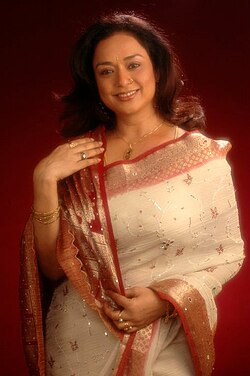
Some actors become stars, and then there are actors who become institutions. In the history of Odia cinema, Mahasweta Ray belongs firmly to the latter category. For nearly five decades, she has remained one of the defining faces of Ollywood, shaping not only the image of the Odia heroine but also the emotional vocabulary of popular cinema in Odisha.
Her journey is remarkable not merely because of longevity, but because of reinvention. Few actors in regional Indian cinema have transitioned as gracefully from glamorous leading roles to deeply layered maternal characters while retaining both audience affection and artistic credibility. Mahasweta Ray did precisely that, and in doing so, she transformed the possibilities available to women in Odia films.
Born in Puri and educated at SCS College, Mahasweta Ray came from a culturally rich background. Her father, Rajkishore Ray, was a noted writer and lecturer, and this literary atmosphere perhaps contributed to the emotional intelligence and restraint that later became hallmarks of her performances.
She entered Odia cinema in 1976 with Sesha Srabana – exactly fifty years ago – , opposite Prashanta Nanda, at a time when the industry was still searching for a modern cinematic identity. The film became more than a successful debut; it announced the arrival of an actress who would dominate the industry for decades.
The Odia cinema of the late 1970s and 1980s depended heavily on emotionally charged family dramas and socially rooted storytelling. Mahasweta Ray emerged as the ideal protagonist for this era because she combined glamour with emotional authenticity. She could portray vulnerability without weakness and strength without theatrical excess. Whether playing village girls, daughters-in-law, or socially conscious women, she brought dignity and conviction to her roles.
Films like Kaveri, Pooja, and Gouri established her as one of the leading actresses of her generation. What distinguished her from many contemporaries was her ability to inhabit characters fully rather than merely decorate the screen presence of male heroes. At a time when female characters in commercial cinema were often limited to romantic subplots, Mahasweta Ray infused them with agency and personality.
Her rise also coincided with an important period in Odia cinema when regional storytelling was beginning to assert its own cultural identity more confidently. Unlike the imitation-heavy tendencies visible in many regional industries during the 1980s, several Odia films remained rooted in local ethos, language, and social realities. Mahasweta Ray became one of the foremost carriers of this cultural authenticity.
Perhaps the most significant chapter of her career began in the late 1990s, when she made the difficult transition from heroine to mother roles. Indian cinema has historically been unkind to ageing actresses, often sidelining them once their romantic lead phase ends. Many disappear from the screen entirely. Mahasweta Ray refused to follow that trajectory. Instead, she reinvented herself with extraordinary ease.
In films such as Bou, Jaga Hatare Pagha, and Tu Thile Mo Dara Kahaku, she redefined the cinematic mother in Odia films. Her maternal characters were not ornamental figures of sacrifice alone; they possessed emotional depth, resilience, and authority. She carried forward the same screen strength that had marked her younger roles, proving that age need not diminish artistic relevance.
This reinvention reflected not just personal adaptability but also an understanding of cinema’s changing emotional landscape. Audiences who had once admired her as a heroine now embraced her as the emotional anchor of family narratives. Very few actors sustain such intergenerational relevance.
Her performance in Chini (2016) further demonstrated the depth of her craft. Playing Pani Nayak, a mother struggling within the hardships of rural life, Mahasweta Ray delivered a performance marked by restraint and emotional honesty. The role earned her another Odisha State Film Award, adding to a record-breaking tally of eight State Awards — an achievement unmatched by most actresses in Odia cinema.
What also makes Mahasweta Ray significant is her contribution to the representation of women in Odia popular culture. Across decades, she portrayed women as morally strong, emotionally intelligent, and socially conscious. Even within commercial frameworks, her characters often embodied resilience and leadership. She played not merely companions to heroes, but women who shaped the narrative direction of films.
In many ways, her career mirrors the evolution of Odia cinema itself — from the socially grounded dramas of the 1970s to the family-centric emotional narratives of later decades. Through every transition, she remained relevant because she understood a truth many actors fail to grasp: cinema changes, audiences change, but sincerity in performance never goes out of style.
Today, as regional cinema across India seeks renewed identity amid the dominance of digital entertainment and pan-Indian spectacles, the legacy of Mahasweta Ray offers an important lesson. Stardom may fade, trends may change, but actors who remain deeply connected to culture, language, and emotional truth continue to endure.
For generations of Odia audiences, Mahasweta Ray is not merely an actress from the past. She is a living bridge between the golden era of Odia cinema and its evolving present — an artist whose grace, versatility, and quiet authority remain unmatched.
(The author is a senior journalist and columnist. Views expressed are personal.)