












Read an excerpt from Janaki Ballav Patnaik’s memoir exploring Rameswar village, the historical Gajapati rulers, and the martial legacy of the Paika Rebellion
Bhaskar Parichha
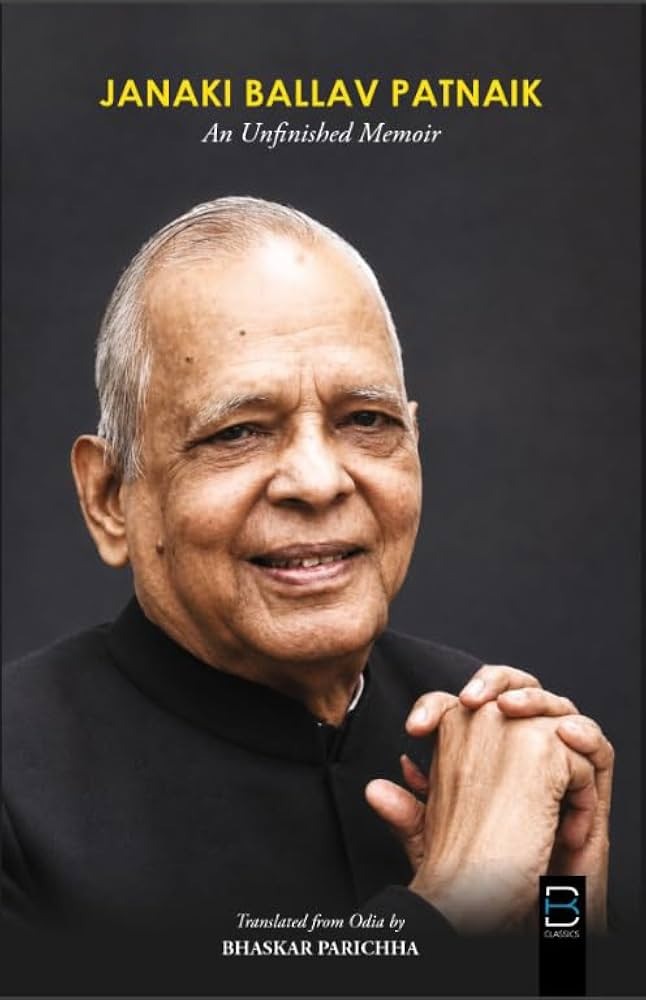
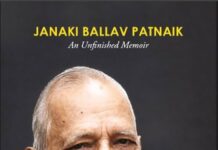
Janaki Ballav Patnaik – An Unfinished Memoir
My native village is Rameswar, a place of quiet distinction in the district of Khordha. Old records and documents often carry a curious phrase: “Among districts Rameswar; among forts Khordha”. In those days, the region fell within the larger district of Puri. How, then, did Rameswar once come to be regarded almost as a district in its own right? History offers an intriguing answer.
In 1568, when the Afghans overran Odisha, the then ruler of the Bhoi dynasty, forced to abandon the Barabati Fort of Kataka, moved southward. Near present-day Jatani, he established his new stronghold in a modest settlement called Khordha. It is a poignant turn of history: the illustrious Gajapati kings of Odisha—bearing titles of great splendour and valour—had once extended their dominion from the Ganga to the Godavari, and at times even as far as the Kaveri. Yet, in the end, their successors were left to rule over a far smaller realm centred on Khordha.
And so, as the old saying goes, “Where there is Rama, there is Ayodhya,” Khordha itself came to embody Odisha. Even today, one may encounter elderly people who, travelling from distant places like Balangir or Kalahandi, or even from nearby Banki, remark upon reaching Khordha that they have “arrived in Odisha.”
The kingdom of Khordha was, for administrative and military convenience, divided by the Gajapati rulers into twelve districts and one hundred and ten forts. Among these twelve divisions, Rameswar was one—a district comprising six forts and as many as 274 mouzas (revenue villages). This Rameswar district stretched widely: from Tapanga in the north to Kuhudi in the south, from the shimmering expanse of Chilika Lake in the east to Ranpur in the west. Long before I was born, Khordha had already passed into a different order of governance. It became a Khasmahal—that is, it came directly under the authority of the British Government.
The Gajapati king was divested of his sovereignty and reduced to a pensioner of the colonial state, residing thereafter in Puri. In a gesture both symbolic and administrative, he was appointed Superintendent of the sacred Jagannath Temple. The present Gajapati, Divyasingha Deb, is a descendant of that Khordha lineage. Though he no longer holds the position of Superintendent, under the provisions of the Jagannath Temple Act, he continues to serve as the Chairman of the Temple Managing Committee.
The ancient titles endure, and in the hearts of the people, he remains, even today, the revered Gajapati Maharaja, commanding undiminished respect and devotion. During the time of the kings, each garh (fortified unit) had its own administrative structure, with offices such as Dalabehera, Dalei, Bhuinmali, and Kothakarana. The Dalabehera functioned as the chief of the fort, while the Kothakarana and Bhuinmali were entrusted with the collection of revenue.
Yet, when the call to arms was sounded, all stood united in the defence of the garh. In every village, they were supported by the Paikas and Khandayats—the traditional militia and warrior communities of Odisha. The word Paika itself is derived from Padatika, meaning foot soldier. These warriors were skilled in the use of a wide array of weapons—swords, spears, daggers, curved blades, lances, and shields. They also wielded firearms such as cannons and muskets when required.
Even today, echoes of that martial tradition survive. The Paikas continue to demonstrate their skills through displays of stick-fighting, swordplay, pata (shield) exercises, and wrestling bouts.
Adorned with moustaches, marked with vermilion, and clad in their distinctive attire, they perform with vigour and pride, accompanied by sharp, rhythmic battle cries that pierce the air. Alongside the Khandayats, Pathans and others have, at times, exhibited remarkable prowess in these martial arts, keeping alive a legacy of courage and discipline.
Our village of Rameswar, once a noted garh, still bears the imprint of its layered past. Families belonging to the old administrative orders—Dalabehera, Dalei, Bhuinmali, and Kothakarana—continue to reside here. My own family traces its lineage to the Kothakarana tradition. The village itself is divided into distinct sahis or neighbourhood clusters, historically aligned along community lines—Brahmins, Karans, Khandayats, cultivators, Gudias, Goudas, Telis, Pathans, Dhobas, Hadis, Bauris, and others. Yet, over time, education has quietly reshaped these divisions. The younger generations across all sahis have grown increasingly literate and capable, and with this, the rigidities of caste have begun to soften and recede.
The houses in these sahis once stood in long, continuous rows, each dwelling pressed closely against the next. In earlier days, most homes were thatched, and when a fire broke out, it would sweep mercilessly through entire neighbourhoods, reducing them to ash. Today, that landscape has changed. The fragile thatch has given way to sturdy, permanent structures.
As I look around now, I see far more pucca houses than thatched ones—a transformation not only of my village but also of much of rural Odisha. To the west of our village rises a hill known as Dhanaghara. In my childhood, it was lush and alive with greenery. We would climb its slopes, delighting in the abundance of wild fruits—baincha koli, beta koli, and many more—which we plucked and ate along the way. From its summit, one could glimpse, faint yet unmistakable, the spire of the sacred Jagannath Temple in Puri. Much of Khordha once shared this character—a land of undulating hills and dense forests, where one ridge seemed to merge into another and the woods stretched unbroken. Wildlife was abundant. Creatures of many kinds, including the elusive leopard, roamed these forests freely.
In those days, a man from our village, Banua Harihar Patnaik, was well known for his skill in hunting. He would often return with game—wild boar, deer, and sambar among them. Whenever a boar was brought back, a quiet excitement would ripple through the village; people would gather eagerly, and the meat would be carefully divided and sold in portions.
On one occasion, he even brought down a large leopard—an act that became part of local memory. He was renowned for his unerring aim, a marksman of rare precision. Even today, the green abundance of that hill near our village has not entirely faded. The villagers, with quiet resolve, have formed a forest protection committee and taken it upon themselves to preserve this woodland. Inspired by their example, several neighbouring hills have also been safeguarded in a similar manner. The great predators are no longer seen, but wild boar and other animals still inhabit these forests, sustaining a living connection with the past.
The district of Khordha is a land of undulating terrain, its rolling hills and scattered forests offering a landscape of rare charm. To travel through it by rail is to witness a panorama that unfolds like a moving painting, with each village revealing its own cluster of hills and groves. In earlier times, these very hills and forests served as natural fortresses, rendering many regions inaccessible and difficult to conquer. It was from these rugged terrains that Bakshi Jagabandhu Bidyadhar, the legendary leader of the Paika Rebellion, waged his guerrilla resistance against British rule.
Drawing strength from the land and its people, he harried the colonial forces with remarkable tenacity. From village to village, from fort to fort, Dalabeheras, Daleis, and Khandayats rallied to his call, joining the struggle in great numbers and with unflinching courage. The Paika Rebellion stands as a luminous chapter in the history of India’s freedom struggle—arguably one of its earliest mass uprisings. The Paikas of Odisha had long been the backbone of its martial tradition. It was they who formed the ranks of the mighty Kalinga armies that once carried their victories from the Ganga in the north to the Godavari, Krishna, and even the Kaveri in the south. Yet, under British rule, these very warriors were reduced to neglect and dispossession.
The lands and jagirs they had long enjoyed were taken away or burdened with heavy taxation. Even when some grants were made to dignified offices such as those of the Daleis and Dalabeheras, they were recorded as chakaran jagirs—in effect, branding men of honour as mere servants. It was a quiet humiliation, a stripping not only of land but also of dignity itself.
The Paikas and Khandayats lived a dual life—warriors in times of conflict and cultivators in times of peace. Their swords and spears would rest upon the fields they tilled, and their strength sustained both the land and the kingdom. But a cruel turn of history deprived them of both their martial vocation and their primary livelihood in agriculture. Dispossessed and diminished, they were pushed into hardship and decline.
Out of this growing anguish arose a flame of discontent—one that would eventually blaze into the historic Paika Rebellion. Yet even before this great uprising, the British had moved decisively to crush earlier resistance. They suppressed the Khordha rebellion and dealt a brutal blow to its foremost leader, Jayi Rajaguru, executing him with ruthless severity. In a tragic twist, the king himself distanced himself from Rajaguru.
For King Mukunda Deva, held in captivity, the preservation of his throne became paramount. Under pressure from the British, he declared that the rebellion was not of his making but had been instigated by Rajaguru. Thus abandoned, Rajaguru met his fate alone. While imprisoned in Medinipur, he was put to death in secrecy—executed in such a manner that none might know and none might bear witness. And so the people remembered, in a quiet, haunting refrain: The crow cried out in restless calls, Jayi Rajaguru was hanged, yet none were there to speak of it at all.
This was the story of the very first year of British rule in Khordha. Not long thereafter, in 1817, came the great Paika Rebellion. It is rare in history to witness two such uprisings within the span of barely thirteen years. Yet, following the British occupation of Odisha in 1803, both the rulers and the people rose in defence of their dignity and self-respect.
The Paika Rebellion, led by Bakshi Jagabandhu Bidyadhar, proved so formidable that it took the British nearly a decade to suppress it fully. The resistance was not merely a revolt—it was a prolonged assertion of honour against subjugation. During British rule, the Indian Army was reorganised along rigid lines. Regiments were formed by drawing recruits from Sikhs, Marathas, Rajputs, Gurkhas, and other communities the colonial rulers deemed “martial races.” Yet the Paikas of Odisha, with their proud legacy of warfare, were conspicuously excluded. They were not trusted. Under Company rule, Odisha did not receive the same administrative attention as Bengal. For various reasons, Bengali officials came to dominate the administration of the region. In this shifting order, the Paikas gradually disappeared from the reckoning of the East India Company.
Years later, when I had the opportunity to serve in the Ministry of Defence, I sought to understand how many young men from Odisha were being recruited into the armed forces each year. The answer was disheartening. Barely two hundred youths from Odisha found their place annually in the ranks of the Indian Army, while states such as Punjab and Haryana claimed the lion’s share.
The descendants of once-valiant warriors—men like Jujhar Singh, Ran Singh, Baliar Singh, and Mardagaji Singh—were no longer considered fit for military service. Reduced to neglect and hardship, many of them drifted into lives of poverty, their proud lineage forgotten and their legacy dimmed into obscurity. Under British rule, even the dignity of Odisha’s most respected men did not remain intact.
(Excerpted from the book Janaki Ballav Patnaik – An Unfinished Memoir, translated from Odia by Bhaskar Parichha, with permission from the publishers, BK Classics, Bhubaneswar.)
(The author is a senior journalist and columnist. Views expressed are personal.)