














Tourism is emerging as a key growth driver for Odisha’s economy, leveraging heritage, religious, eco and sports tourism to boost jobs and GSDP
Tejeswar Patnaik
Tourism is more than a leisure activity; it is a powerful instrument of cultural exchange, economic growth, and employment generation. Every journey offers a unique experience, refreshing the mind and often reshaping one’s worldview on culture, civilisation, diversity, and demography. Endowed with hills, mountains, forests, rivers, oceans, and captivating landscapes, the planet offers immense tourism potential, which has emerged as a major source of revenue and livelihoods, both directly and indirectly.
According to the World Bank, tourism’s share in global GDP (Gross Domestic Product) stood at around 8.8 per cent in 2024. France continues to lead the world in international tourist arrivals, although the sector is yet to fully restore its pre-COVID contribution of nearly 10 per cent. The World Economic Forum’s Travel and Tourism Development Index 2024 places India at 39th position globally. However, India enjoys strong price competitiveness and ranks ninth worldwide in cultural heritage, highlighting tourism’s strategic importance to the national economy. Despite this, India’s share in global tourist arrivals remains modest at about 1.45 per cent. On the domestic front, tourist numbers have risen exponentially, with Uttar Pradesh, Tamil Nadu, and Karnataka leading the chart. Tourism contributed 5.22 per cent to India’s GDP in 2023–24, generated 84.6 million jobs directly and indirectly, and earned foreign exchange worth about USD 27 billion in 2023.
Despite possessing vast and diverse tourism assets, Odisha does not figure among the top ten states in terms of tourist inflow. Globally and nationally, infrastructure—roads, railways, airports—along with transportation and hospitality, remain key drivers of tourism growth. Religious and medical tourism, in particular, attract large numbers of visitors. In this context, a SWOT (Strengths, Weaknesses, Opportunities, and Threats) analysis of Odisha’s tourism sector is essential for policymakers to chart a clear roadmap. Tourism’s contribution to Odisha’s GSDP (Gross State Domestic Product) is estimated at around 13 per cent in 2023–24. While the current budgetary allocation of approximately ₹820 crore is a positive step, it requires significant scaling up for sustained impact.
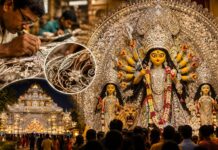
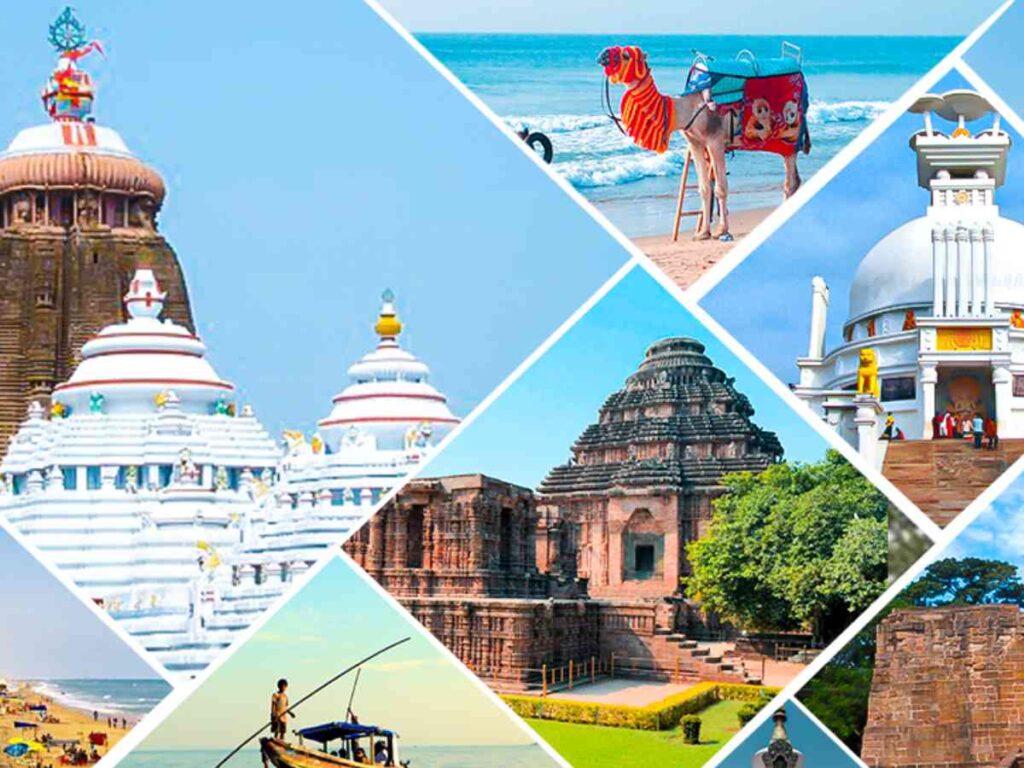
Odisha’s tourism potential deserves far greater national and international visibility. The state’s rich cultural heritage is deeply rooted in its ancient temples, age-old festivals, and enduring rituals. World-renowned religious sites such as the Jagannath Temple in Puri—famous for its annual car festival—along with the Lingaraj, Rajarani, and Mukteswar temples in Bhubaneswar, and the UNESCO (United Nations Educational, Scientific and Cultural Organization) World Heritage–listed Sun Temple at Konark, attract lakhs of devotees and tourists from India and abroad. These sites generate intense spiritual fervour as well as substantial economic activity. Bhubaneswar, the “City of Temples,” stands out for its remarkable concentration of temples representing outstanding examples of Kalinga architecture. Religious tourism alone offers immense untapped potential. Odisha’s Buddhist circuit is particularly significant, encompassing Ratnagiri, Udayagiri, and Lalitgiri in Jajpur and Cuttack districts, Dhauli in Khordha district, and the Langudi hills and Prachi Valley, which house ancient monasteries and exquisite sculptures. These sites attract Buddhist pilgrims and scholars from across the world. Several lesser-known Buddhist relic sites scattered across the state await recognition and development. For Jain pilgrims, Odisha holds special significance through the Khandagiri and Udayagiri caves near Bhubaneswar and important locations in western and southern Odisha, reflecting the state’s long Jain heritage. Beyond heritage tourism, the state also has a wide scope for adventure, eco, rural, sports, and medical tourism, supported by its diverse geography and improving infrastructure.
Adventure and eco-tourism hold immense promise due to Odisha’s sanctuaries, dense forests, rivers, waterfalls, and long coastline. Bhitarkanika, Similipal, Tikarpada, Sunabeda, Chilika, and Deomali are prominent attractions. Chilika Lake, Asia’s largest brackish water lagoon, is globally renowned for migratory birds. The government’s initiative to promote eco-retreats and nature camps at scenic locations has created new avenues for employment and sustainable tourism growth.
Sports tourism is another emerging area. Odisha’s successful hosting of the Hockey World Cup in 2018 and 2022 showcased its organisational capabilities and attracted thousands of visitors. Hosting more mega sporting events can significantly boost tourist inflow and global visibility. With a 480-kilometre-long coastline, the state enjoys a distinct advantage. Expediting coastal road projects, as seen in Tamil Nadu, Maharashtra, and Gujarat, can greatly enhance connectivity. Simultaneously, showcasing handicrafts, handlooms, art, and culture through festivals like Bali Yatra in Cuttack and Dhanu Yatra in Bargarh, along with curated exhibitions, can attract domestic and foreign tourists while supporting artisan livelihoods.
Tourism in Odisha can emerge as a booming service sector if the provisions of the Odisha Tourism Policy Act, 2022, are sincerely implemented. However, challenges persist. Rail connectivity is absent in several districts, international-standard hotels are limited, and many scenic destinations beyond Bhubaneswar, Puri, and Konark remain underexplored due to poor connectivity and inadequate accommodation. Encouraging private investment through incentives is therefore crucial.
Professionalism in tourism services, guided by the ethos of Atithi Devo Bhava, must be ensured. Tourist safety, cleanliness, and protection from harassment are essential, as garbage and plastic waste often undermine visitor experience. Community participation, public–private partnerships, trained local guides, effective branding, and media-driven promotion are vital. With focused investment, strong coordination, and committed execution, tourism can truly become a sustainable growth engine of Odisha’s economy, enabling the state to live up to its slogan—“Odisha: India’s Best Kept secret.”
(The writer is a former banker and a columnist. Views expressed are personal)