




















Odisha reviews progress under Jal Jeevan Mission 2.0, rural water supply projects, Har Ghar Jal, ODF Plus villages, and digital governance initiatives
OdishaPlus Bureau
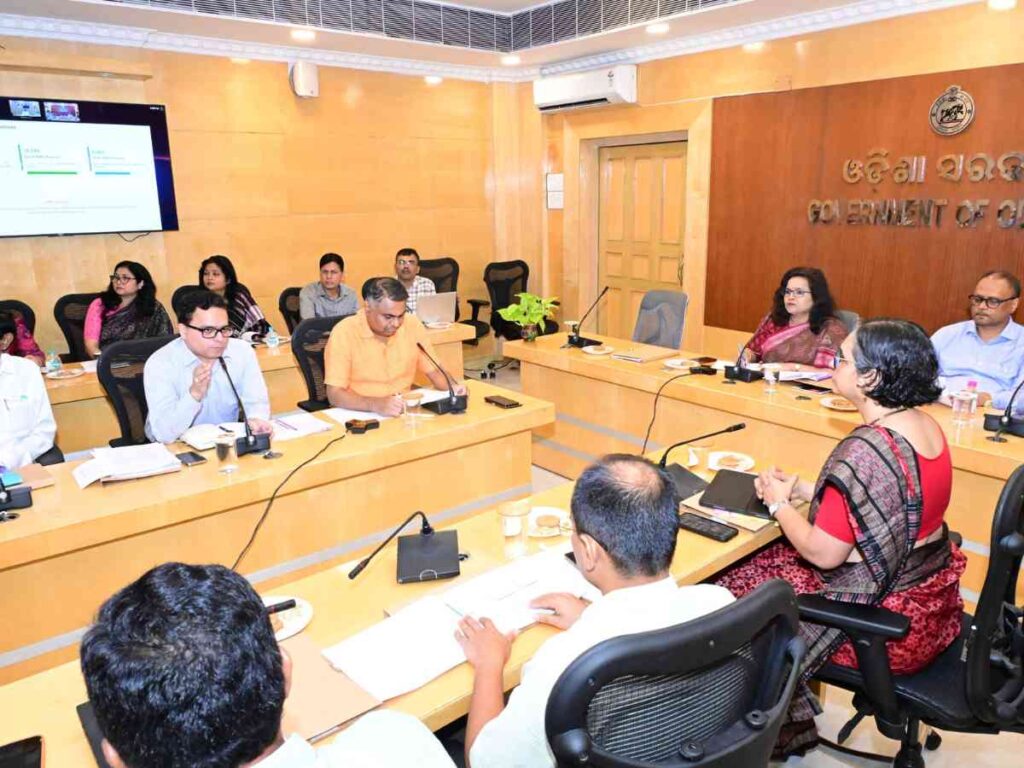
The state government on Tuesday reviewed the progress of rural drinking water projects and discussed reforms proposed under Jal Jeevan Mission 2.0 at the 19th Management Committee meeting of the Odisha Water and Sanitation Mission (OWSM).
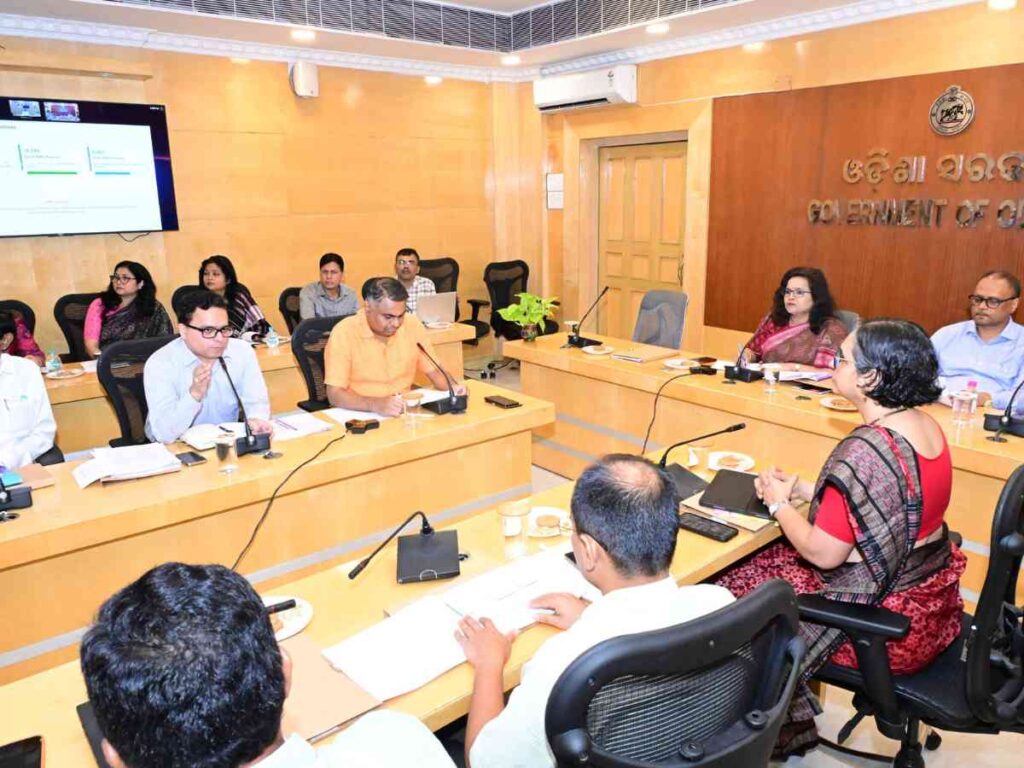
The meeting, held at Lok Seva Bhawan in Bhubaneswar, was chaired by Chief Secretary Anu Garg. It was attended by Planning & Convergence Department Development Commissioner-cum-Additional Chief Secretary Deoranjan Kumar Singh, Water Resources Department Principal Secretary Shubha Sarma, Panchayati Raj and Drinking Water Department Commissioner-cum-Secretary Girish S.N., and senior officials from various departments.
Director-cum-Additional Secretary of Drinking Water and Sanitation Vineet Bhardwaj presented the status of ongoing drinking water projects, service delivery, and proposed policy measures.
According to officials, of the 207 mega piped water supply projects being implemented in the state, 42 have been completed, while intake works and water treatment plants for another 44 projects have been completed, enabling partial or full water supply. It was informed that monitoring mechanisms have been strengthened to expedite the completion of the remaining projects.
The committee was also informed that 18,737 of the state’s 19,086 small drinking water projects have been completed. The remaining projects are targeted for completion by October 2026. Of the 8,863 solar-powered drinking water projects, 6,637 have been completed, while the rest are expected to be finished by November 2026.
The meeting reviewed the proposed Operation and Maintenance Policy under Jal Jeevan Mission 2.0 and discussed measures related to technical support at the village and Gram Panchayat levels, institutional arrangements, tripartite agreements involving implementing agencies and local bodies, water quality monitoring, source sustainability, digital governance under the Sujalam Bharat platform, and community participation in water management.
Officials said that more than 94,000 Sujalam Village IDs have been created under the digital governance initiative. Geo-tagging of assets, project monitoring modules and the establishment of a Command and Control Centre are scheduled for completion by December 2026.
The committee also reviewed plans for capacity-building of Har Ghar Jal field personnel, manpower requirements, financial sustainability of drinking water schemes, and research and innovation in the sector.
Under the Har Ghar Jal programme, drinking water supply has been extended to 16,724 villages, of which 12,484 villages have been certified. The remaining certifications are expected to be completed by October 2026, officials said.
The meeting also reviewed the findings of the Water Service Assessment, the submission of the State Improvement Plan, and the implementation of drinking water projects under PM-JANMAN and Dharti Aaba Janjatiya Gram Utkarsh Abhiyan (DA-JGUA). Officials informed the committee that all villages covered under these programmes have received project approvals and household tap water connections.
Progress under the Swachh Bharat Mission (Gramin) was also reviewed. According to the presentation made at the meeting, more than 96 per cent of villages in Odisha have been declared Open Defecation Free (ODF) Plus Model Villages. The committee also discussed issues related to solid and liquid waste management in rural areas.