

















The Maharani’s Son by Pratibha Ray, translated by Rabindra Kumar Nayak, brings alive Dharanidhar Naik’s rebellion against oppression in colonial Odisha.
Bhaskar Parichha
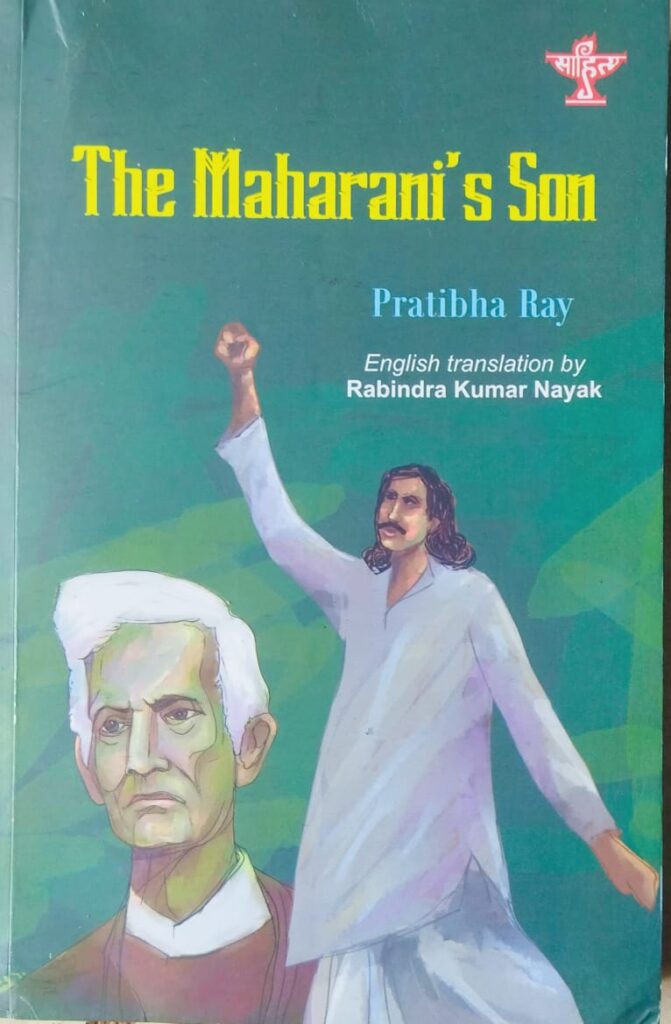
Book Name: The Maharani’s Son
Author: Pratibha Ray
English Translator: Rabindra Kumar Nayak
Publisher: Sahitya Akademi
Location: New Delhi
Themes centered on the historical struggle of the marginalized Dalits, led by the tribal leader Dharanidhar Naik, against the oppressive regime of the Kendujhar monarchy, a feudatory state in Odisha during the late nineteenth century, are uncommon. Therefore, this post-colonial fictional narrative of the life and accomplishments of this rebel hero expresses the frequently muted voice of opposition to exploitation.
“The Maharani’s Son” (Maharani Putra) by Pratibha Ray is inspired by such a rebellion. Pratibha Ray, a key figure in Odia literature, enchants readers with her novels and short stories that delve into life’s aesthetic values and a rich social landscape rooted in tradition and history. The book has been rendered into English by Rabindra Kumar Nayak, a bilingual translator and former Reader in English, Anandapur College. He has translated over 35 books, published by eminent publishers of the state and country.
Ray utilizes an omniscient narrative style to depict the transformation of Dharanidhar into a figure deeply connected to Nature, evolving from a tribal chief to the son of the Maharani, ultimately becoming a tragic character. His story is marked by betrayal at the hands of Phakirmohan Senapati, the Dewan serving the king of Kendujhar. Throughout the narrative, Dharanidhar is shown in various roles: as an inmate in Katak jail, as a devoted worshipper reciting hymns at the temple of Lord Jagannath in Puri, and as a sannyasi who spends his final days in Aali, where he passes away on May 16, 1914.
Therefore, a hero does not fade into the depths of oblivion but is rather honored in the Hall of Fame of History. This novel constitutes a noteworthy contribution to Odia literature, where the two vibrant personalities, Phakirmohan Senapati and Dharanidhar Naik, enrich the story with their profound insights and magnificence.
This is how Rabindra Nayak explains the translation of this historical Odia novel: ‘Firstly, the author’s request was as good as a command and secondly, to avail this opportunity to pay my humblest tribute to Dharanidhar Naik, the unsung revolutionary and the hero of this novel, who hails from the district I belong to. Dharanidhar was not just a name, but a metaphor for the voiceless, oppressed, and the exploited lot who were getting crushed under the ruthless wheel of misrule. He revolted against the oppressive monarchy and the coercive British regime as he spearheaded the Bhuyan Movement. Ultimately, he fell into the trap set by wily Phakirmohan and got caught like an innocent fly in a cobweb. He gave in, not like a vanquished soldier, but a valiant hero who stood upright with leonine strength and indomitable willpower, holding his head high. Smt. Ray’s postcolonial fictionalization of this rebel hero’s life and achievement gives an eloquent tongue to the feeble, smothered voice of dissent against exploitation.’
Ray has rewritten history with compassion and empathy and truthfully recorded the voice of the suppressed and the colonised as against the perspective of the coloniser with a view to inculcating a patriotic spirit in the minds and hearts of the suffering masses.
In that case, it becomes the duty of a translator to make the voice heard to the global audience and, more importantly, to the colonisers.
According to the translator, ‘Many things are lost in translation and it is fated to suffer semantic losses, notwithstanding one’s best effort and diligence. However, I have taken great care to do justice to the original work and bring out a faithful rendering of the main content. Some indigenous culture-specific words have been deliberately left untranslated for the sake of aesthetics and due to a lack of exact equivalents, and hence, their meanings have been given separately.’ The glossary adds weight to the novel.
The Maharani’s Son is expected to significantly enhance the landscape of Dalit literature within the modern Indian context, bringing fresh perspectives and narratives that resonate with current social issues.
(The author is a senior journalist and columnist. Views expressed are personal.)