











Viksit Odisha 2036 must balance growth and ecology. Madhav Gadgil’s environmental vision offers Odisha a roadmap for people-centric and sustainable development
Dr. Sulagna Saha and Dr. Goutam Saha

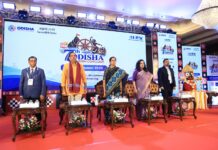
The Government of Odisha has charted a bold and ambitious course for the state’s future with its “Viksit Odisha 2036” vision. This roadmap aims to transform the state into a modern, prosperous, and developed society. The plan is focused on economic growth, industrial expansion, infrastructure modernization, and improved human development. However, as this transformative journey accelerates, a fundamental question demands attention: What are the moral and ecological boundaries that must guide this progress to ensure it is sustainable for the next century? The recent demise of Madhav Gadgil, India’s pioneering “people’s ecologist,” offers a scientifically rigorous framework to answer this question. His life’s work does not condemn development, but provides an ethical and practical compass for achieving it.
Madhav Gadgil passed away in Pune on January 7, 2026, at the age of 83. He was a pioneering ecologist who seamlessly wove mathematical rigor from Harvard with the earthy wisdom of Indian villages. His departure marks the end of an era, but his legacy remains more relevant than ever. It was a blend of uncompromising science, democratic environmentalism, and unheeded warnings. This relevance resonates sharply today in states like Odisha, where rapid industrialization, mining expansions, and climate-induced cyclones are testing the very balance between development and ecological integrity that Gadgil championed.
After earning his PhD in mathematical ecology from Harvard University in 1969, studying under renowned biologists like E.O. Wilson made a deliberate choice to return to India. He turned away from a potentially illustrious international career to engage with on-the-ground ecological challenges of his homeland, joining the Indian Institute of Science (IISc) in Bangalore in 1973.
In 1983, he founded the Centre for Ecological Sciences (CES) at IISc, which became India’s premier hub for ecological research. Under his leadership, CES produced over 200 publications and pioneered groundbreaking studies on sacred groves, wildlife behavior, and human ecology It was here that Gadgil began mentoring a generation of ecologists, including figures like R.J. Ranjit Daniels, instilling in them a respect for both data and lived experience.
What truly set Gadgil apart was his philosophical core. He believed that local people are not a threat to their environment, but its most competent and invested stewards. He passionately rejected the colonial-era model of “people-free conservation,” which often led to the displacement of communities. Through extensive nationwide fieldwork, from the Bandipur forests and bamboo resources of Karnataka to the sacred groves of the Northeast, he demonstrated that community-managed ecosystems, like many sacred groves, often thrived better than state-controlled reserved forests. For contemporary Odisha, this is not just an academic theory. It is a pressing reality in the ongoing struggles of indigenous communities in the Niyamgiri hills against bauxite mining, or in the Hasdeo Aranya region against coal mining. Gadgil’s work argues that recognizing and legally empowering these communities through proper implementation of the Forest Rights Act (FRA) is not an obstacle, but a prerequisite.
This conviction materialized into a practical framework of democratic environmentalism. Gadgil tirelessly advocated for delegating conservation decisions to Gram Sabhas and Biodiversity Management Committees. He promoted sustainable livelihoods tied to healthy ecosystems, such as eco-tourism and the harvesting of non-timber forest produce, arguing that ecology and human well-being are two sides of the same coin. It was a vision of nation-building from the ground up, rooted in ecological wisdom and social justice. His vision finds echoes in Odisha’s own experiments with community-based tourism in Chilika Lake or minor forest produce collectives, but these remain overshadowed by mega-industrial projects. The state’s current push for critical mineral mining underscores the very tension Gadgil identified. It is the clash between immediate economic ambitions and the long-term health of the land and its people.
This philosophy faced its greatest test with the Western Ghats. In 2011, Gadgil chaired the Western Ghats Ecology Expert Panel (WGEEP). The committee’s report recommended classifying 64% of the Ghats as Ecologically Sensitive Areas (ESAs), with graded protections, a ban on mining and large dams in core zones, and, crucially, the empowerment of local bodies in governance. It was a blueprint for preserving a vital ecosystem while allowing for responsible, regulated development.
The political and industrial response was swift and uniform rejection . State governments across Kerala, Karnataka, Maharashtra, Goa, Gujarat, and Tamil Nadu, with politicians from across the spectrum, branded the report “anti-development.” A powerful nexus of mining lobbies, real estate interests, and quarrying contractors saw their profits threatened. The Central Government eventually sidelined the Gadgil Report in favor of a drastically diluted version by the Kasturirangan committee, which reduced the protected area significantly. Gadgil himself called this a “governance failure driven by moneyed interests.”
It is a scenario that is now familiar in Odisha. Odisha has seen intense debate over the dilution of environmental clearances and the fast-tracking of projects in coastal and forested regions. The state’s vulnerability to the climate crisis, experiencing increasingly severe cyclones like Fani, Amphan, and recent floods, mirrors the disasters Gadgil predicted for the Ghats. The erosion of the Puri coast, flooding in urban Bhubaneswar, and landslides in the hilly districts are not merely natural calamities. They are, in Gadgil’s terms, symptoms of ecological planning ignored in favor of short-term gains. To ignore this interconnectedness while pursuing a development vision for 2036 is to risk building a prosperous state on ecologically crumbling foundations. The catastrophic floods and landslides in Kerala and other Ghat states in subsequent years was the direct result of unchecked deforestation, illegal quarrying, and reckless construction on fragile slopes. It serves as a grim preview of potential futures for ecologically stressed regions in Odisha if a similar path is followed.
Despite this political indifference, Gadgil never succumbed to despair. He knew that he had offered uncomfortable truth to the political power. As historian Ramachandra Guha, his longtime friend and collaborator, noted in a recent interview, Gadgil retained his optimism and humility. Their collaboration resulted in seminal works like This Fissured Land (1992) and Ecology and Equity. Guha recalled Gadgil’s incredible field stamina, outpacing colleagues decades younger, whether studying mining impacts in Goa in his 70s or sacred groves in his late 60s.
His accolades, including the Padma Bhushan (2006) and the UNEP Champions of the Earth award (2024), were global recognitions of his value. The naming of a new tree species, Elaeocarpus gadgilii, in his honor is a fitting, living tribute. He and his wife, the renowned atmospheric scientist Sulochana Gadgil, chose to build their lives in India. He rejected the culture of guru worship, fostering fierce yet respectful debate. His deep cultural immersion with adopting Kannada, his friendship with literary giant Shivaram Karanth, and releasing his work in multiple Indian languages, showed a scientist who was truly of the soil.
Madhav Gadgil’s passing is not just the loss of a great scientist. It is the silencing of a sage who spoke for the forests, the mountains, and the people who depend on them. Odisha, at a crossroads of aggressive industrialization and climate vulnerability, Gadgil’s legacy offers a clear path. It is to listen to science, empower the communities, and plan with the future in mind. His unheeded warnings in the Western Ghats must not be repeated in Odisha’s Eastern Ghats, along its coastline, or in its dense forests. The most meaningful tribute Odisha can offer to Madhav Gadgil is to ensure that “Viksit Odisha 2036” becomes a national exemplar of enlightened development. The state must choose to integrate the foresight of its sages and scientists into its planning, learning from the costly mistakes made elsewhere. In doing so, Odisha can honor Gadgil’s most enduring lesson: that people are not the problem; they are the solution. In remembering Gadgil, Odisha, and in extension, India must choose to learn from his foresight, not be doomed to repeat its ignorance.
(Authors are faculty members in National Institute of Fashion Technology, Bhubaneswar. Views Expressed are personal.)