
















India won 85 medals at the Asian Games 2026 in Aichi-Nagoya, finishing fourth. Here’s a look at India’s medal tally, key performances, challenges and lessons
Satish Sharma
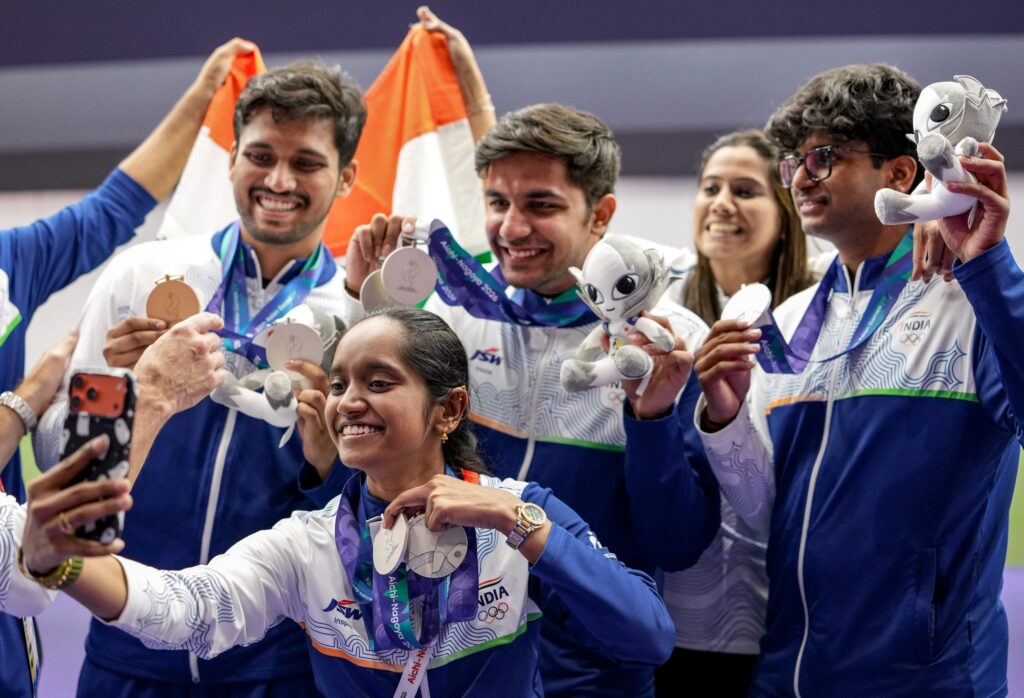
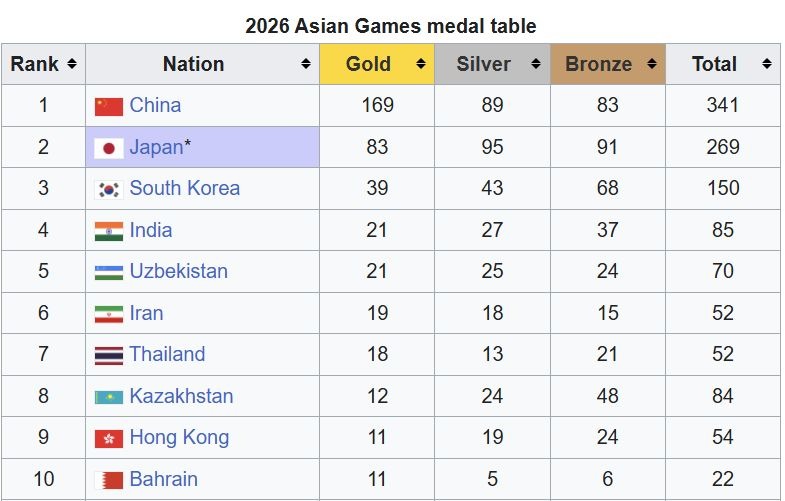
The 20th Asian Games, held in Aichi-Nagoya, Japan, from September 19 to October 4, ended with India winning 85 medals—21 gold, 27 silver and 37 bronze—to finish fourth in the overall medal standings. Although India’s medal tally was well below the record 106 medals won at the 2023 Hangzhou Asian Games, it was still the country’s second-best performance in the history of the continental Games.
China once again dominated the medal table, finishing at the top with 341 medals, including 169 gold, 89 silver and 83 bronze. Its massive haul underlined its continuing dominance of Asian sport. India’s fourth-place finish, meanwhile, confirmed its position among the continent’s leading sporting nations.
A Smaller Contingent, Yet Fourth
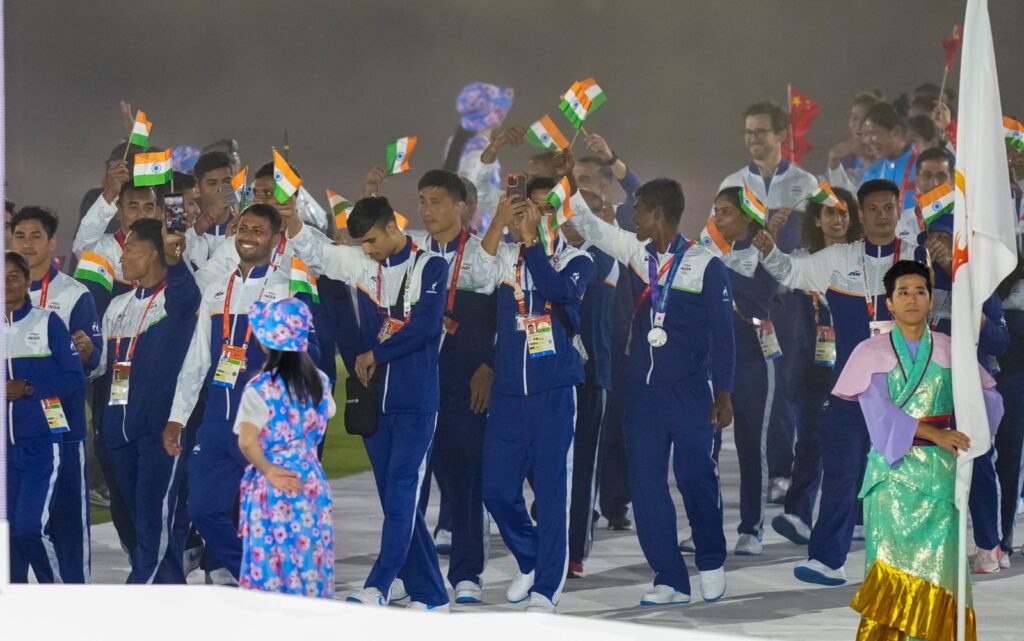
A comparison between Hangzhou and Nagoya needs to take into account the size of the Indian contingent. In 2023, India sent 655 athletes who competed in 40 sports. This time, 501 athletes represented the country across 36 sports.
At Hangzhou, India won 28 gold, 38 silver and 40 bronze medals. In Nagoya, the tally was 21 gold, 27 silver and 37 bronze. That meant a decline of seven gold, 11 silver and three bronze medals.
Yet India remained fourth in both editions.
Finishing fourth despite a smaller contingent and participation in fewer sports is certainly encouraging. But the decline also highlights a worrying trend: several sports that produced a large share of India’s gold medals in Hangzhou failed to reproduce that performance in Nagoya.
Of Hangzhou’s 28 gold medals, India could not retain 20 this time. All seven shooting golds and all six athletics golds were lost. The decline was particularly visible in individual events. On the positive side, team, relay and mixed events made a significant contribution to India’s gold-medal tally.
Athletics: Below Expectations, Yet Plenty to Celebrate
India’s 74-member athletics contingent could not repeat its 29-medal performance from Hangzhou. In Nagoya, athletics produced 24 medals—one gold, nine silver and 14 bronze.
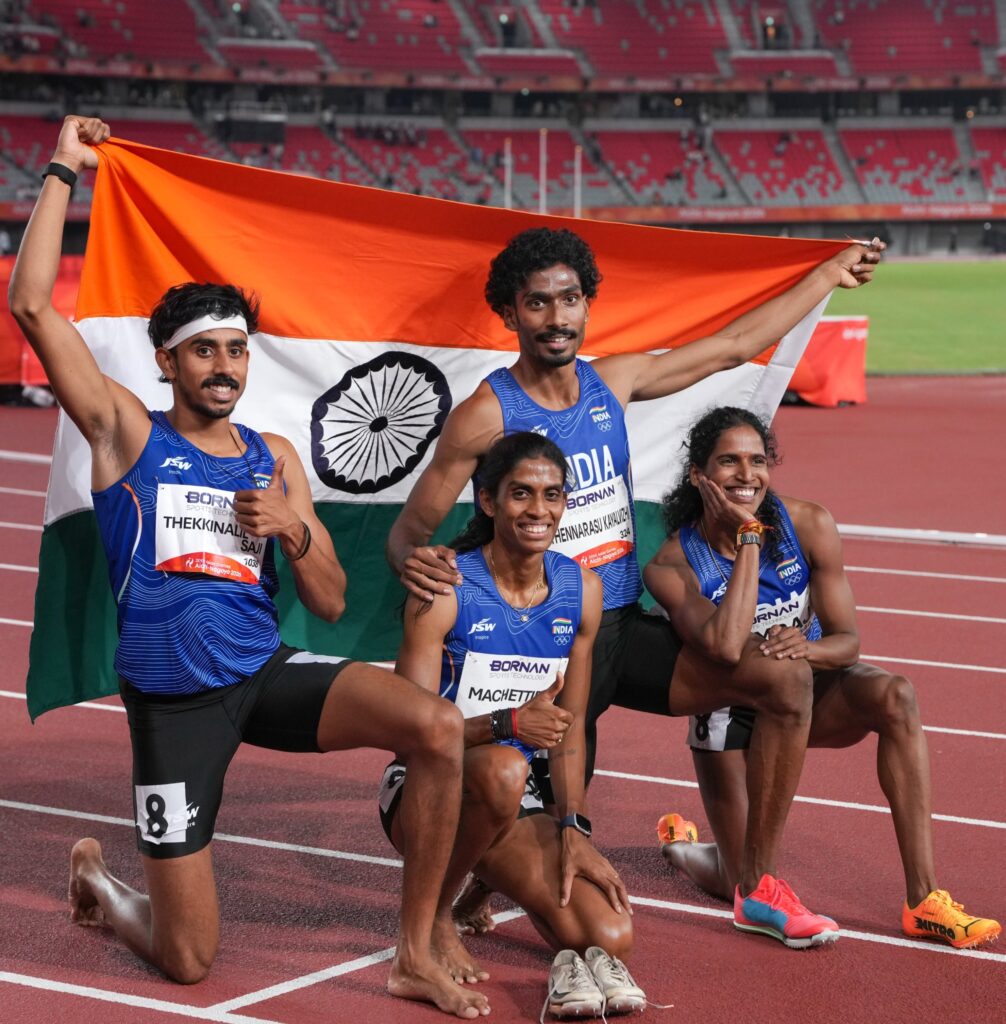
At Hangzhou, India had won six athletics gold medals. Neeraj Chopra, Tajinderpal Singh Toor, Parul Chaudhary and Avinash Sable were among those who delivered individual golds. The picture was very different in Nagoya. India’s only athletics gold came in the women’s 4x400m relay.
The quartet of Kiran Pahal, M. Poovamma, Prachi Chaudhary and Vithya Ramraj produced one of India’s most important victories on the track.
Gulveer Singh and Vithya Ramraj emerged as two of the leading stars of the campaign. Gulveer won medals in the 10,000m, 5,000m and 1,500m, becoming the first Indian athlete to win three medals in a single edition of the Asian Games.
Vithya Ramraj also made headlines by surpassing P.T. Usha’s long-standing national record in the women’s 400m hurdles. The women’s 4x400m relay gold further underlined her contribution to the campaign.
In the marathon, Sawan Barwal won bronze with a national record—the first such record in the event since 1982. In the high jump, Sarvesh Kushare cleared 2.25m but narrowly missed gold after Chinese Taipei’s athlete cleared the same height in fewer attempts.
In the women’s pole vault, Varnika Elangovan cleared 4.15m to win bronze, giving India its first Asian Games medal in the event.
The men’s 100m sprint, however, proved disappointing. Gurindervir Singh and Animesh Kujur finished well below their personal and season’s best performances and failed to enter the medal race.
Shooting: Still a Major Strength, But a Significant Drop
Shooting has traditionally been one of India’s strongest medal-producing sports at the Asian Games. At Hangzhou, Indian shooters won 22 medals, including seven golds. In Nagoya, the campaign ended with 15 medals—three gold, eight silver and four bronze.
Neeru Dhanda won individual gold in the women’s trap and also partnered Kynan Chenai to win mixed trap gold. The mixed 10m air pistol pair of Kamaljeet and Suruchi Singh also secured gold.
Despite these successes, India fell short of expectations in several rifle and pistol events. Manu Bhaker, who had won two medals at the Paris Olympics, also missed out on a medal, adding to the disappointment.
Nevertheless, shooting once again demonstrated why it remains a crucial component of India’s medal strategy at major multi-sport events.
A Golden Campaign in Archery
Archery emerged as one of India’s most successful disciplines in Nagoya. The 12-member contingent won nine medals—five gold, two silver and two bronze.
Seventeen-year-old Kumkum Mosod created history by winning gold in the individual recurve event, becoming the first Indian woman to win an individual recurve gold at the Asian Games.
India also dominated several compound events, winning gold in the mixed and women’s team competitions. Some performances reached world-record levels.
The success is significant because it demonstrates that India’s medal-winning base is expanding beyond its traditional strengths.
Boxing and Wrestling Deliver
Indian boxers won three gold and three bronze medals. Olympic medallist Lovlina Borgohain and Parveen Hooda won gold in the women’s events, while Ankush Panghal secured gold in the men’s competition.
Wrestling produced two gold, one silver and one bronze medal. Aman Sehrawat won gold in the men’s 57kg freestyle category, while Sujeet Kalkal claimed gold in the 65kg freestyle event, reinforcing India’s strength on the wrestling mat.
In Greco-Roman wrestling, Nitesh Siwach won silver in the 97kg category. It was India’s first Asian Games medal in the event since 1962.
Historic Achievement in Golf
Golf produced another landmark moment. Twenty-three-year-old Pranavi Urs won individual gold, becoming the first Indian woman to win an individual Asian Games golf gold medal.
India’s women’s team also won silver in the team event.
Team Sports Provide a Major Boost
One of India’s biggest strengths in Nagoya was its performance in team sports. India won gold in both men’s and women’s competitions in cricket, hockey and kabaddi.
The Indian women’s cricket team successfully defended its title. The men’s cricket team also won gold, defeating Pakistan by 19 runs in the final.
In hockey, India won gold in both the men’s and women’s competitions. The men’s team defeated Malaysia 5-1 in the final to retain the Asian Games title. The women’s team beat China 1-0 to win gold, ending a 44-year wait for the Asian Games women’s hockey title.
These victories carried additional significance: both the men’s and women’s hockey teams secured direct qualification for the 2028 Los Angeles Olympics.
India also won its first-ever Asian Games bronze medal in men’s sepak takraw.
There were, however, concerns over the fitness and preparation of some athletes. Avinash Sable, returning from injury, did not appear to be at his best, while Jyothi Yarraji and Praveen Chithravel could not even start their respective events.
₹702 Crore Investment Raises Questions
Before the Indian contingent left for Japan, the Sports Ministry stated that more than ₹702 crore had been spent over the previous three years on training, equipment, coaches and experts to prepare athletes for the Asian Games.
The expenditure reflects the government’s growing commitment to high-performance sport. But a substantial investment also raises a legitimate question: is the benefit reaching all potential medal-producing disciplines equally?
India is preparing to host the Commonwealth Games in 2030. The Nagoya experience should therefore provide important lessons for future sports policy, funding and preparation.
Where Does India Need to Improve?
Nagoya produced several encouraging signs, but it also exposed areas requiring attention. Fencing, tennis, rowing and certain rifle and pistol events in shooting need greater focus.
Athletics, too, must improve its ability to convert medal opportunities into actual podium finishes.
Medal counts alone cannot be the sole measure of success. India also needs to examine how many medal opportunities were lost, which athletes exceeded expectations, where new talent emerged and which sports require additional support to reach Olympic standards.
Equally important is the scientific assessment of athlete fitness before major competitions. The participation of athletes who were injured or not fully fit raised questions that cannot be ignored.
When the Games Themselves Came Under Scrutiny
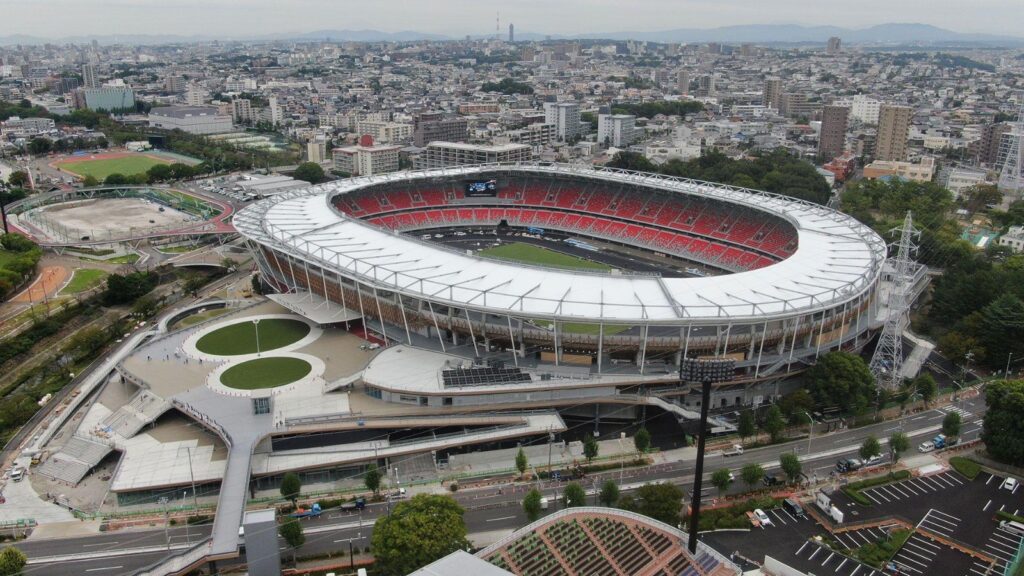
Japan is globally recognised for its technology, discipline and efficient organisation. Against that backdrop, organisational problems reported during the Aichi-Nagoya Asian Games came as a surprise.
Accommodation and Transport Problems
In an attempt to reduce costs, organisers did not create a traditional athletes’ village. Instead, athletes and officials were accommodated in hotels, temporary facilities and even a cruise ship.
Complaints emerged from several locations about small beds and cramped rooms. Taller athletes, in particular, reportedly struggled with undersized beds.
There were also complaints about food. Some athletes returning late to their hotels found restaurants already closed, creating difficulties in accessing meals.
Organisers had reportedly planned accommodation for around 15,000 people, but more than 17,000 athletes and officials arrived. This placed additional pressure on the accommodation system.
Transport was another major concern. Complaints included late buses and teams being taken to the wrong venues.
Badminton star P.V. Sindhu expressed her frustration after being required to play three matches within an 18-hour period. Pakistan’s men’s volleyball team was reportedly taken to the wrong gymnasium about an hour before one of its matches.
Rain also disrupted several competitions, including cricket. India and Pakistan advanced to the semi-finals without playing their quarter-final matches.
Following these incidents, organisers were forced to apologise for shortcomings in accommodation and logistics.
Empty Stadiums Raise Concerns
The sight of large numbers of empty seats also affected the atmosphere of the Games. Japanese Olympic Committee president Seiko Hashimoto described the low attendance as disappointing.
The success of a major international sporting event cannot be measured only by medals and sporting results. Athlete comfort, spectator participation, transportation, accommodation, food and adequate recovery time between competitions are equally important.
The Nagoya Lesson
The Aichi-Nagoya Asian Games presented two contrasting pictures for India.
On one side was an impressive fourth-place finish with 85 medals, the emergence of new talent, outstanding performances in team sports and a golden campaign in archery.
On the other were the decline in major medal-producing sports such as athletics and shooting, along with questions surrounding athlete fitness and preparation.
India’s challenge now is not merely to increase its medal tally. It is to build a sporting system capable of surpassing the 106-medal achievement at Hangzhou.
That will require expanding medal potential across a wider range of sports and providing talented athletes with sustained scientific training, better coaching and world-class facilities.
Nagoya also offered an important lesson for future international sporting events: impressive stadiums and advanced technology are not enough. Comfortable accommodation, reliable transportation, proper nutrition, adequate recovery time and efficient management are equally essential.
India has retained its strong position in Asian sport with 85 medals. The next objective should not simply be to defend fourth place. The larger goal must be to increase both the medal tally and the number of sports in which India can realistically challenge for medals—at the next Asian Games and, more importantly, at the 2028 Los Angeles Olympics.
(The author is a Senior Sports Journalist. Views expressed are personal.)