










Folklorist Mahendra Kumar Mishra preserved Odisha’s tribal languages and oral traditions, earning UNESCO recognition and the Padma Shri for his lifelong work
Bhaskar Parichha
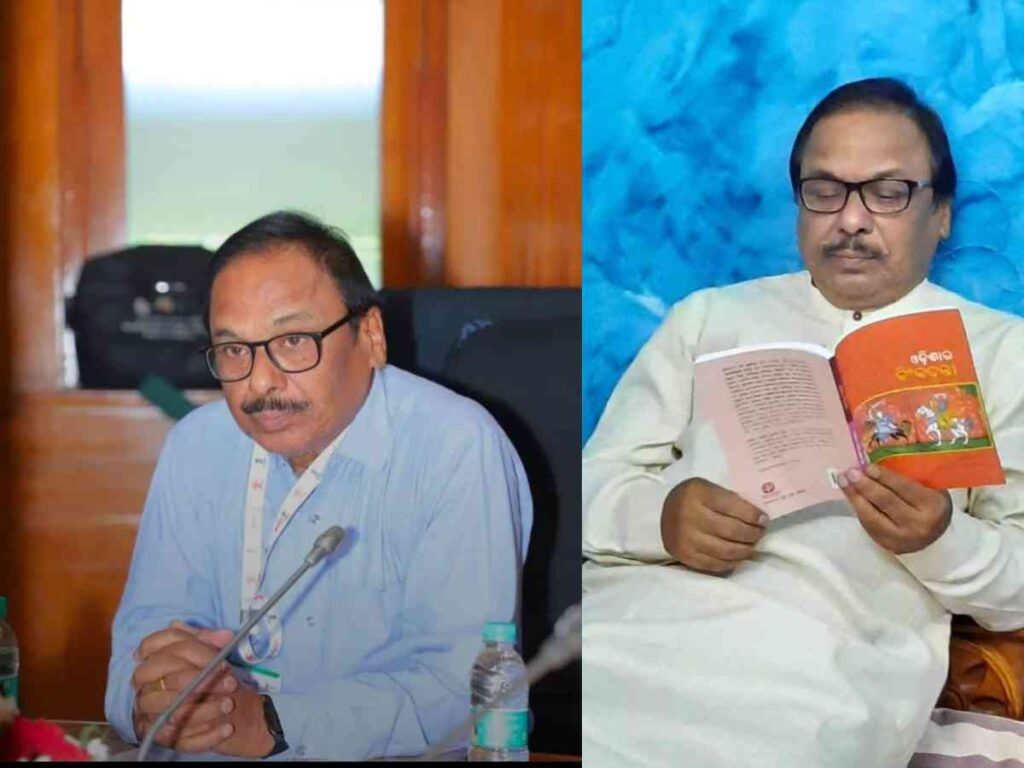
Mahendra Kumar Mishra’s journey began not in the halls of fame but in the remote tribal landscapes of Odisha, where every story, song, proverb, and ritual was a living thread of community life. From early on, Mishra was drawn not just to the words of tradition but to the voices behind them — the elders, storytellers, and singers whose oral narratives carried centuries of wisdom.
As he pursued linguistics and folklore academically and in the field, Mishra embraced a mission that many overlooked: to document and safeguard the oral traditions of Odisha’s indigenous communities. He travelled extensively across the state, listening to tribal myths and epics, carefully recording proverbs and songs in their original voices, and bringing them into written form. His work went beyond mere transcription — he sought to understand how these traditions shaped identity, history, and the sense of belonging among communities.
Over decades, Mishra authored more than 25 books on Odia culture and tribal folklore, publishing detailed studies on oral epics, indigenous narratives, and the folklore of distinct groups such as the Saora and Paharia, among others. Through his writing, villages and valleys that had rarely seen their stories preserved in print found a place in academic and cultural discourse. His scholarship made tribal traditions accessible to broader audiences — from researchers and students to young people seeking roots in their cultural heritage.
But Mishra’s impact extended beyond books. Recognising that language is central to education and identity, he became a pioneering advocate of mother-tongue-based multilingual education in Odisha’s tribal regions. As a key figure in Odisha’s education reforms, he helped design and promote approaches where children learned first in their own tribal languages before transitioning to mainstream languages. This effort helped transform classroom experiences for thousands of tribal students, enabling them to learn with dignity and cultural relevance.
For this transformative work, in 2023 Mishra received the prestigious International Mother Language Award from UNESCO — the first Indian to be so honoured — recognising his lifetime commitment to promoting linguistic diversity and mother-tongue education.
Now, in 2026, his life’s work has been further acknowledged with the Padma Shri, one of India’s highest civilian honours, under the “unsung heroes” category for his contributions to literature, culture, and education. This award celebrates not only his scholarly achievements but also the quiet, persistent dedication to preserving voices that might otherwise have faded.
Mishra’s story is one of bridging worlds: between oral and written traditions, between classroom and community, and between cultures that have long existed in the margins and the larger narrative of Indian heritage. In celebrating him, India celebrates the storytellers, languages, and cultural landscapes that form the mosaic of its identity.
(The author is a senior journalist and columnist. Views expressed are personal.)