










Eminent Odia poet Haraprasad Das questions Western literary paradigms, urges Indian writers to reclaim civilisational roots, redefine modernity, and resist cultural colonisation
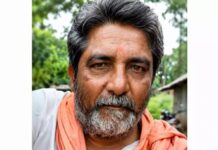
Haraprasad Das

Any canopic perspective of literature in India today has to be about the very justification of writing today. Is it true that whatever we create in the name of literature addresses a world wound up in a certain mythology of modernity expounded by others for us, or are we defining our own life experience on our terms, in our time?
The fact that we must necessarily cope with these questions and yet persuade ourselves to believe that we face no such questions is perverse, self-defeating, and, more importantly, a moral failure. Let me explain how. Let us ask ourselves: Are the many peoples of the world a single people or many peoples distinctly differentiated by culture, language, tradition, and creativity?
I believe there are many peoples of the World. When we speak of a”people”, we necessarily speak of a cartography that distinguishes between languages, cultural markers, historical times, and political realities. That, plus the essential human being who is coequal to others in sensory terms. But being a co-equal is not being equal. Even sensory experiences are expressed as conditioned by language.
Thus, beyond generalised co-equality, there are particularised expressions that negotiate varying cultural loads. The essential human being is not a neutral entity, but a dynamic, sensitive, uncertain, unsettled, and restless agency of reality. That being the case, can there be a stereotyped protagonist of modernity pieced together by the West from the debris of War and Industry? Must man live in hopeless drudgery, frustration, and misery? Must a man be necessarily alienated, lonely, and rootless to qualify as a subject of literature? Why must the soul of the contemporary man be colonized by the spectre of a never-ending past of remorse and regret? Why must Aswich haunt? Why must the Euro-American lobby attract us to their rotting centre and patronise our weakening shine in the margin? Why must we not be allowed to write our own modernity?
Our modernity would comprise their misdeeds, our response to that, our inability at glib theorisation, our dismay as we face their multi-lateral funding of intellectual discourses, our aspirations dwarfed by their capitalist logic, but the last chapter, like the proverbial last laugh, will be ours, telling the rest of the world that we are the triumphant survivors of their modernity. History has not ended for us. Our little histories were awake when you walked over them; they are alive now when your war rooms are plotting death.
Having come this far, I must not fail in detailing where exactly we are failing. When I say “We”, I mean the writers of Indian languages, including English. Let me lay this out for clarity in comprehension. We almost always forget that India is not only a country or sub-continent. India is a civilization. As a result, we are hardly ever aware that after all the civilizations died, Indian civilisation still lives in the Indian people. It would be interesting to notice the civilisational markers that have vanished elsewhere. Why? The reason is simple. An entire civilization was spent only in perfecting man and giving him the language of gratitude to nature.
The solution to what the world worries about today was given thousands of years ago to Indians by their Civilization as ancestry and it remains until now as our racial memory. Have you ever thought why our literature is completely oblivious of its civilizational moorings? Why is it that we have not cared to recreate the civilizational Master Texts? While so we have fallen prey to the minor works of the West peddled as Master Texts. An Indian author unfamiliar with his civilizational roots would remain at best a mediocre or secondary creator.
India is the land of narratives. We look back at Brihat Katha for the ancient most narrative, and here we are lauding Donquixote as exemplary narrative. The infinite variety of narratives has failed to enthuse creative writers. To say the least, a massive colonial cover-up has buried our discourses and narratives. It is not enough to write poetry and fiction; it is more important to restore their foundation through new narratives. How do you do it?
This is where your innovative ability, creativity, and skill would be tested. The West has very well anticipated it. So, this filthy contraption of pastiche, parody, and collaging, and this incredulity towards grand narratives. They are afraid of Grand, because someone like you carries it as part of an inheritance. Write big texts, grand epics. Oppose their design of destruction by minimising your potential. If you are writing in English, you must have noticed how the market functions. Literary Agents know better than a writer how to write a book.
A forty-page summary can be blown up to four hundred pages. It is commerce. Mercifully, Poetry is spared, so what? Poets are happy to remain unread. But I wonder how a Murakami or a Han Kang makes the highest grade? I suspect the West has created a regional market. The western publishers promote pulp for local readership. Writers of bad English write for readers of bad English. So, no mainstreaming!
Poetry now is a minefield. Every poet is a model unto himself, and the long tradition of aesthetics in perfect speech is replaced by weird imageries of abstract formulation. It is so because poets have nothing to say. The best poets are content in cooking up standalone dazzling metaphors and leaving real poetry unwritten. They remain prisoners of an idiom that is Western. Indian languages have lost their poetry in losing music and memorability, two vital elements of Indian creativity.
There is a false belief that in poetry, the composition, the way it is, is the content. In other words, any nonsense if it has flashes of lightning is good poetry, and the art of abstraction has some venerable practitioners. It is still not understood that this pseudo-art was temporarily practised in the inter-war years by the Dadas. This is not the art of poetry. This is an apology for poetry. If your life experience and worldview are void, why write poetry? Increasing noise, variety, insensitivity, and lack of empathy have robbed you of your poetry. Get closer to man, see nature anew with gratitude in your eyes. That is the way our ancestors discovered poetry.
The West has nothing to give us. They have run out of poetry. Imagine Jean de Amerique, an unknown Haitian youth, running away with the highest French honour, the Appolinaire Prize of 2024. Imagine Divya Victor, a Trinidadian Tamil, bagging America’s highest Poetry honour in 2023. Why did that happen? It happened because mainstream Europe and America have lost their sensitivity.
The expatriates in America and the remote islanders under French occupation are still human, they still have human content in their life experience, while the the so called civilized mainlanders have lost it. The global teachers of the language of hatred and bloodshed are now learning to write poetry in classrooms.
The paradigm fixed for us by the West has rusted in the hinges; it has no power in it to hold us obliged anymore. It is time to unfix the paradigm and set the future free. Al is the only danger, beat AI, the war at the last frontier of creativity has begun. Prove that creativity has no algorithm.
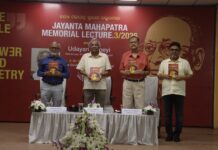
(Keynote address at Toshali Literature festival. Sri Das is an eminent Odia poet. Views Expressed are Personal.)