




















Aichi-Nagoya Asian Games 2026: India’s Quest for Greater Depth, More Medals and New Milestones
Satish Sharma
For Indian sport, the Aichi-Nagoya Asian Games are more than another multi-sport event. They are a test of whether the country’s recent rise is sustainable.
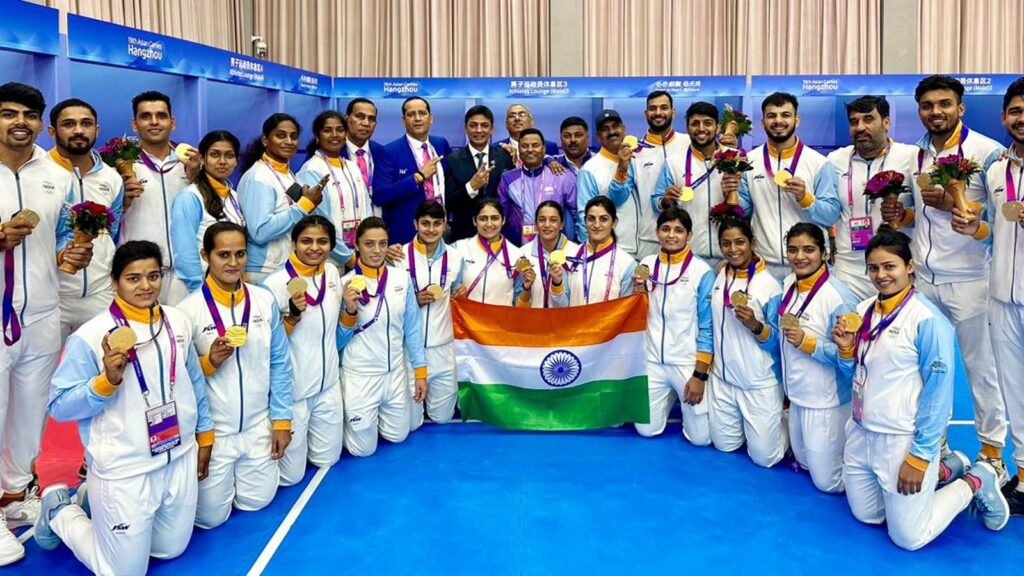
When athletes from across Asia assemble in Japan from September 19 to October 4, India will arrive carrying the weight and confidence of history. At Hangzhou in 2023, India crossed the 100-medal barrier for the first time, returning home with a record 107 medals – 28 Gold, 38 Silver and 41 Bronze and a fourth-place finish.
Now comes the inevitable question: Can India go beyond 107 in Nagoya?
The answer will depend not on one superstar or one sport, but on the collective strength of a sporting system that has expanded considerably over the past decade.
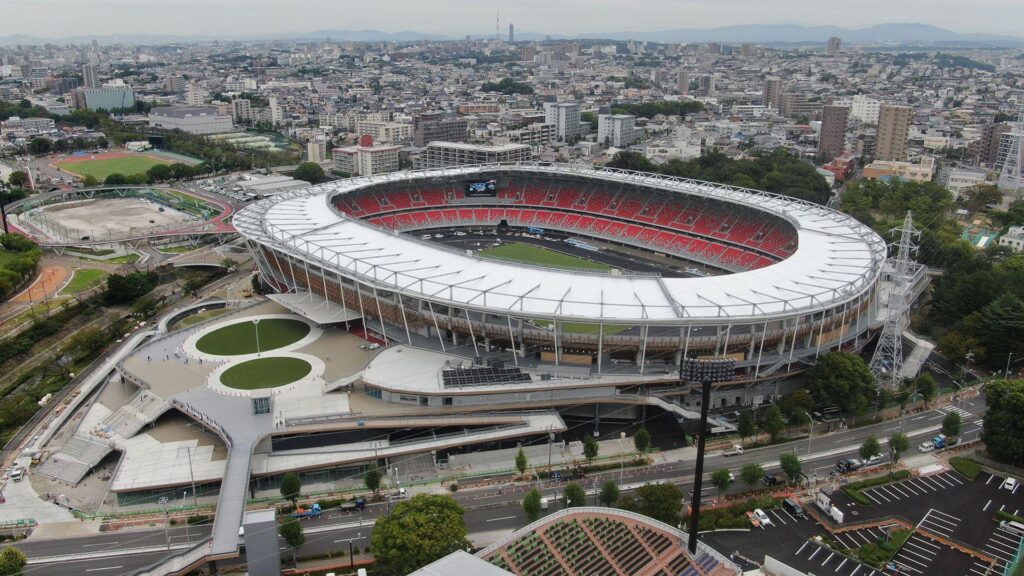
Japan is hosting the Asian Games for the third time, after Tokyo in 1958 and Hiroshima in 1994. The Aichi-Nagoya edition, scheduled from September 19 to October 4, will feature more than 10,000 athletes from 45 Asian countries competing for 469 medal events across 43 sports. Only the Equestrian events will be held at the JRA Equestrian Park in Tokyo.
The official motto of the Games is “Imagine One Asia”, while the official mascot is “Honohon.”
India will send a 503-member contingent across 36 disciplines. More than 300 athletes are expected to make their Asian Games debut, a striking indication of the depth that Indian sport has developed.
The challenge is to convert that depth into medals.
A Game Born in India
There is a special historical connection between India and the Asian Games. In 1951, just four years after Independence, New Delhi hosted the inaugural edition. It was an ambitious undertaking for a young nation still finding its feet, but India played a pivotal role in creating a common sporting platform for Asia.
The foundations were laid in February 1949, when representatives of 9 Asian National Olympic Committees met at Patiala House in New Delhi. The Asian Games Federation was formally established on February 13, with Yadavindra Singh elected President and Guru Dutt Sondhi Secretary.
Delhi was unanimously chosen to host the first Games. The inaugural Asian Games, originally planned for 1950, were eventually held from March 4 to 11, 1951. Eleven countries sent 489 athletes, who competed in 57 events across six sports – athletics, swimming, basketball, cycling, football and weightlifting. The scale of the Asian Games today is almost unimaginable by comparison.
Japan topped the inaugural medal table with 60 medals, including 24 Gold, while host India finished with 51 medals—15 gold, 16 silver and 20 bronze. Singapore swimmer Neo Chwee Kok won the first gold medal in Asian Games history and eventually collected four gold medals.
For India, Sachin Nag created history by becoming the country’s first Asian Games swimming champion in the 100m freestyle. Sprinter Roshan Mistry became the first Indian woman to win an Asian Games medal, taking silver in the 100m.
India had to wait nearly two decades for its first women’s individual gold. At Bangkok in 1970, Kamaljeet Sandhu won the 400m in 57.3 seconds.
A new era of Indian women’s athletics had begun
From Modest Beginnings to a Sporting Powerhouse India has participated in every edition of the Asian Games and has steadily expanded its medal base. Over the decades, legendary performers have left an enduring mark on the Games.
P.T. Usha, the celebrated “Payyoli Express”, won 11 Asian Games medals out of which four gold and seven silver. Her four-gold performance at Seoul in 1986 remains one of the outstanding individual displays by an Indian athlete.
Leander Paes accumulated eight Asian Games medals, including five gold, across four editions in Beijing 1990, Hiroshima 1994, Busan 2002 and Doha 2006.
Jaspal Rana, one of the defining figures of Indian shooting in the 1990s and 2000s, won four Asian Games gold medals.
Then there was Milkha Singh, the legendary “Flying Sikh”, whose four Asian Games gold medals at the 1958 and 1962 editions established him as one of India’s greatest track athletes.
In the modern era, Neeraj Chopra has carried that legacy forward. His consecutive Asian Games javelin gold medals at Jakarta in 2018 and Hangzhou in 2023 have made him one of the most recognizable faces of Indian athletics.
Hangzhou Changed the Narrative
The Hangzhou Asian Games marked a watershed moment. India did not merely cross the 100-medal barrier; it did so with a broad-based performance. The final tally of 107 medals – 28 Gold, 38 silver and 41 bronze placed India fourth behind China, Japan and South Korea.
For years, Indian sporting success at multi-sport events was often associated with a few disciplines. Hangzhou offered evidence of something different: a wider and deeper sporting ecosystem.
That makes Nagoya an intriguing test. Was Hangzhou an exceptional high point or the beginning of a new normal?
Athletics: The Backbone
Athletics could once again provide the backbone of India’s medal campaign.
Star athlete Neeraj Chopra’s absence has given a shock to India’s mission. Still the larger story is the emergence of strength across several events. Indian athletes are increasingly competitive in sprints, relays, middle and long-distance running, race walking and field events.
A strong athletics campaign could provide the volume of medals India needs to remain comfortably above the 100 mark. More importantly, it would demonstrate that India’s athletics programme is developing beyond dependence on individual stars.
Shooting: Where Gold Could Come Thick and Fast
Shooting has become one of India’s most dependable medal producing sports at major multi-sport competitions. The country enters Nagoya with a blend of experienced competitors and emerging talent across rifle, pistol and shotgun events. Team events add further opportunities.
If Indian shooters reproduce their best form, shooting could once again become one of the principal engines of the medal campaign, with multiple gold-medal possibilities.
Archery: The Compound Advantage
Archery has developed into another major Indian strength, particularly in compound events. Indian archers have established themselves at the international level, creating medal opportunities in individual, mixed and team competitions. The recurve category also offers possibilities, making archery an important contributor to India’s overall tally.
Boxing and Wrestling: The Margin between Hope and Reality
Boxing offers India several medal prospects in both the men’s and women’s categories. Yet boxing is notoriously sensitive to draws, match-ups and performance on the day.
Wrestling is more difficult to predict
India won six wrestling medals at Hangzhou, but reproducing that tally will be challenging. The absence of some leading names and the competitive nature of Asian wrestling could make this one of the most unpredictable sections of India’s campaign. A four-to-seven-medal haul would represent a solid outcome.
Hockey: Two Golds, Two Very Different Stories
For India, hockey carries an importance that goes beyond the medal count. The men’s team remains one of Asia’s strongest sides and will be expected to challenge for gold. The women’s team, meanwhile, will be looking to rebuild its reputation after a disappointing World Cup campaign.
A gold medal for the Indian women could also carry an additional reward: a direct qualification pathway to the 2028 Los Angeles Olympics.
For the men, retaining Asian supremacy is a matter of prestige. For the women, Nagoya could be an opportunity for redemption. Two hockey gold medals would therefore have significance far beyond the medal table.
Kabaddi: Tradition under Pressure
Kabaddi has traditionally been an Indian stronghold. India has enjoyed sustained success in both the men’s and women’s competitions, but the gap with the rest of Asia is no longer as comfortable as it once was. Iran, South Korea, Japan and other emerging teams have become increasingly competitive.
India will be expected to defend both titles, but neither gold medal can be taken for granted. Two kabaddi golds, however, could provide a valuable boost to the medal campaign.
Badminton, Squash and Table Tennis
India’s medal prospects extend beyond its traditional strengths. In badminton, both individual and team events offer opportunities. The emergence of younger players will be particularly important as India seeks to maintain its position among Asia’s leading badminton nations.
Squash is another sport in which India has considerable medal potential, particularly in team and mixed events.
Table tennis remains more complicated. Indian players have improved significantly, but the presence of China makes the path to the podium exceptionally demanding.
The China, Japan and South Korea Factor
India’s medal ambitions cannot be considered in isolation. China remains the benchmark. Since making its Asian Games debut in Tehran in 1974, China has transformed itself into the continent’s dominant sporting power. Since Seoul 1986, it has consistently topped the medal table. At Hangzhou, China won 383 medals, including 201 gold.
Japan will have the advantage of home support in Nagoya, along with considerable depth across numerous sports.
South Korea will remain a formidable opponent, particularly in archery, shooting, badminton, fencing and other disciplines.
India’s real challenge, therefore, is not simply to collect medals but to strengthen its position among Asia’s sporting elite.
The Numbers Game: 100, 107 or More?
Predicting an exact medal tally before a major multi-sport event is always hazardous.A realistic assessment could place India somewhere around the 90–105 medal range, depending on performances across shooting, athletics, boxing, archery, wrestling and other disciplines.
But 107 is not beyond reach
If India performs above expectations in its high-potential sports, while hockey and kabaddi deliver the expected gold medals, the record from Hangzhou could come under serious threat. A total of around 25–30 gold medals combined with more than 100 medals overall would represent a highly successful campaign.
Yet the colour of the medals will matter as much as the number. A country can increase its overall tally and still slip down the medal table if its gold-medal conversion rate declines.
Beyond the Record
The significance of Nagoya lies in what the Games will reveal about the trajectory of Indian sport.
The 107-medal haul at Hangzhou was historic. Breaking that record would be another milestone, but perhaps the more important question is whether India can demonstrate consistency.
Can the country produce medals across a wider range of disciplines?
Can emerging athletes convert international potential into Asian Games success?
Can established champions deliver when expectations are highest?
And can India move closer to the three traditional Asian sporting giants like China, Japan and South Korea? The answers will begin to emerge in Nagoya.
India does not merely need to cross the century mark again. The real ambition should be to break the 107-medal barrier.
If that happens, it will not simply mean that India has won more medals than it did at Hangzhou. It will signal that the country’s sporting rise is acquiring something far more valuable than a record: consistency, depth and credibility on Asia’s biggest sporting stage.
(The author is a Senior Sports Journalist. Views expressed are personal.)