
















There goes a story, a story as old as time that ‘Once upon a time a girl had her period…’ and it would almost always be perceived as horror. The kind of horror that you’d want to avoid talking about…
Vidhika Kohli
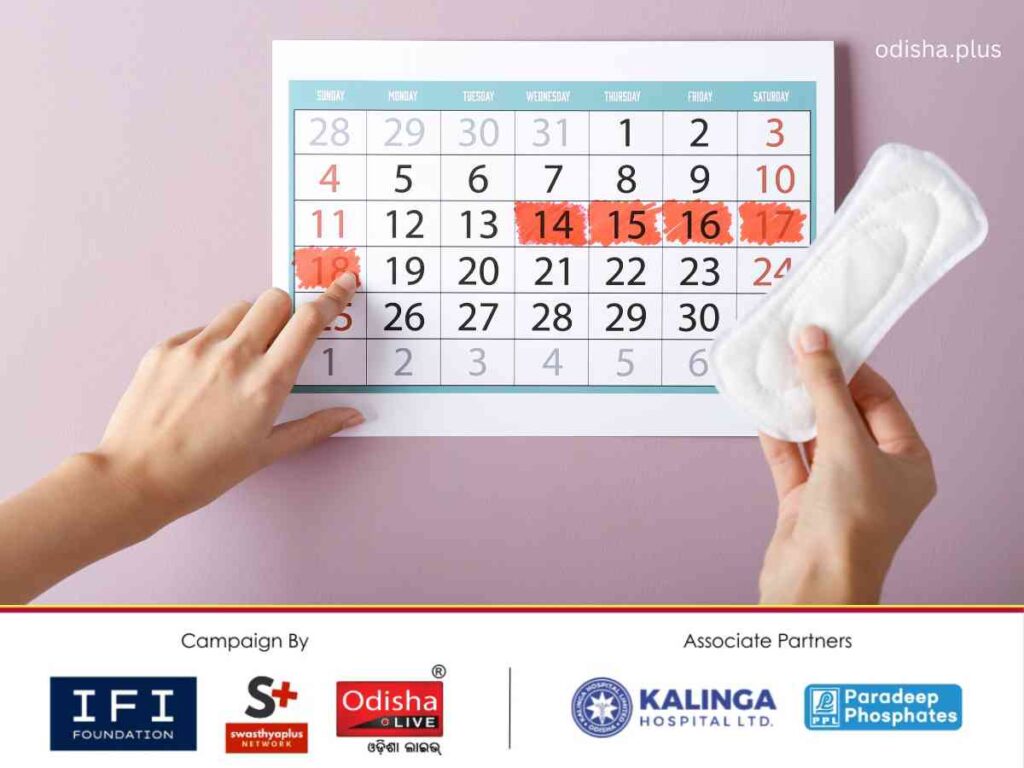
For decades, the period has been illustrated as a disease, or a curse, or a problem that should be kept to oneself. Mothers do not share what it is with their daughters and schools do not teach their children about it. If you go through the experience yourself then you keep it to yourself and for generation after generation young girls and women have had to cut themselves off from the rest of the world and silently avoid the problems and pain that comes from both ignoring the conversation and not knowing about ‘the period’ in depth.
The Period is not something strange or foreign, it is something that millions of people experience around the world, and the sheer urge to avoid talking about it or treating it as something ‘wrong’ is only adding to the ‘horror’ that many young girls have to face when they get their first period.
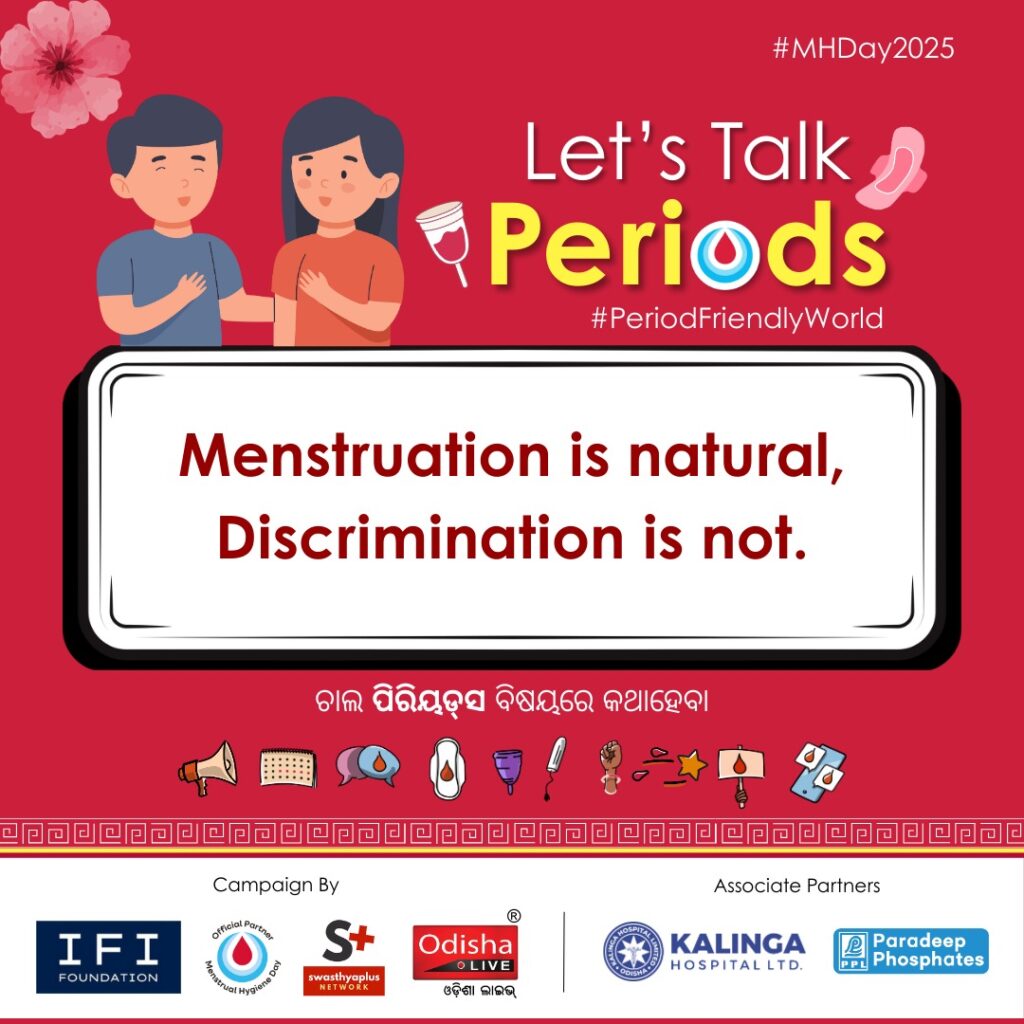
In an effort to combat this, ‘My Periods Story,’ a video series dedicated to empowering women, breaking down the stigma and getting rid of the hesitation around talking about the period, was launched as a part of the ‘Let’s Talk Periods’ campaign in 2023 and featured many eminent voices sharing their experiences with their first period.
From this series, Tanaya Patnaik, Editor of Sambad Group, shared how periods is often seen as a rural issue, with many believing that urban environments probably better facilitate conversation around the period, but she quickly debunks this belief.
Even within urban environments a certain hesitation exists.
While sharing experiences from her past, she explained how there is an urgent need to address the accessibility to hygiene products, schools used to lack the sanitary products required by many girls, “if you had your period in the middle of the school day you’d have to call home.” These days some but not all school dispensaries maintain stocks of sanitary products; certain public places also have vending machines with sanitary pads but a lot of times these machines remain poorly stocked or entirely empty.
At the time of her first period, she mentioned hiding and thinking she had contracted some form of disease. She learned about it, after menarche, through her friends and elder sisters.
Speaking of her experience in retrospect, she emphasized the importance of teaching children about periods and keeping informed, she further, mentioned that the stigma needs to be removed from home first and reminded viewers that the period is nothing to be ashamed of.
Similarly, Shipra Saxena (WASH Specialist Odisha, India UNICEF Office) shared that she too was scared of her period and mentioned feeling like she had no one to speak to during the time.
She emphasized on the need for period awareness as a must for both boys and girls, spoke on how period products should be made more accessible and affordable for all, and highlighted the very important role of the media in being used to communicate.
Sneha Mishra, Secretary of AAINA, addressed many of the myths and taboos she’d heard with reference to menstruation. She mentioned how ‘information is power’ when it comes to a matter such as knowing and talking about Periods and honed in on the importance of privacy for young girls and women when trying to manage their menstrual health and hygiene.
Often with public or ‘community’ restrooms, people who menstruate run into the issue of hygiene and women have run into the issue of finding men using the women’s restrooms which stands as a serious privacy and safety issue.
Women should be able to safely care for themselves with the dignity that they deserve, but this is far from the actual reality.
Mayor of Bhubaneswar Municipal Corporation, Sulochana Das says that “Menstruation is an integral part of many women’s lives but we still shy away from open discussions on the matter. There exist many restrictions which are imposed on a woman during her period.”
She mentions how girls can talk about their period and head out and buy pads much more freely these days, but in the past, she had felt shy about her period and didn’t use pads but instead a gauze and cloth prepped by her mother as a sanitary absorbent.
Further, she reminds us of how ‘Awareness is key,’ both awareness about the period as well as about period products and their various dos and don’ts.
There are millions of such voices, known and unknown, for whom menstrual health and hygiene is far from reach. Millions of young girls face health complications because they still use cloth or tissue paper as a sanitary absorbent, millions of women young and old have lost out on their educations and their daily lives because of a lack of support at both home and at school.
If we continue to encourage ourselves and more and more women and men, young and old, to speak out on the matter, share their stories and talk about periods, we may be able to slowly but surely change the narrative behind the period once and for all.
IFI Foundation in collaboration with OdishaLIVE, and Swasthya Plus is running a digital media campaign to raise awareness about menstruation among Odisha’s adolescent boys and girls, women and masses. With titled ‘Let’s Talk Periods’, the campaign on the eve of ‘World Menstrual Hygiene Day’ observed annually on May 28, is active from 19-29 May, 2025, over a span of 10 days.
ALSO READ: Period Products: Types, Uses and Access