



















Wars reshape borders, claim lives, and leave lasting economic scars. From global conflicts to regional tensions, the financial toll is immense and far-reaching
Tejeswar Patnaik
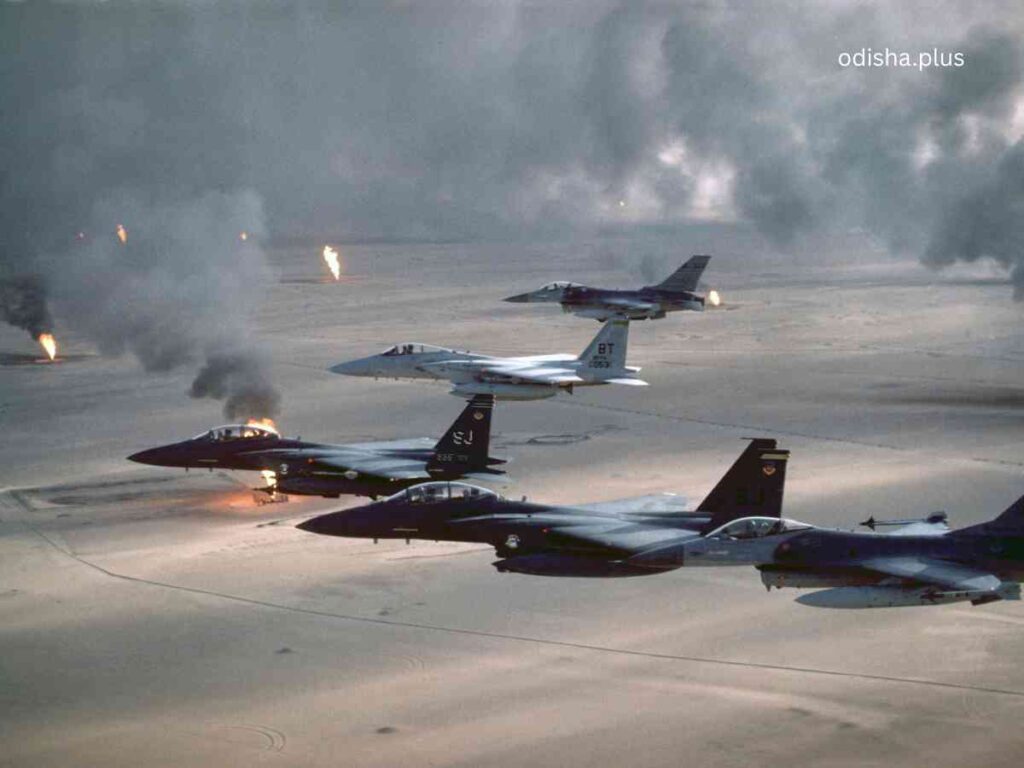
Throughout history, nations have waged countless wars that reshaped borders, alliances, and economies — often at a heavy price. The First and Second World Wars remain the biggest examples of global conflict. The First World War (1914–18) drew in major powers, pitting the Allies — including Russia, the United States, and other nations — against the Central Powers led by Germany, Austria-Hungary, and Turkey. What began as a struggle for imperial dominance claimed roughly 8.5 million soldiers’ lives and caused another 1.3 million civilian deaths.
Then came the Second World War (1939–45), a global catastrophe that left between 70 and 85 million dead, including roughly 55 million civilians. Genocide, indiscriminate bombings, and brutal atrocities made it one of the deadliest conflicts in human history. The economic impacts of both World Wars were equally severe and long‑lasting, reshaping global trade and politics for decades.
Even after 1945, wars between nations have erupted. In the last eight decades, the wars in the Middle East, Asia, Europe, and elsewhere have left deep scars. According to the Stockholm International Peace Research Institute (SIPRI), “the loss of human lives is the most adverse effect” of war. Yet that is only part of the story. The economic toll of war — rising commodity prices, crippling inflation, disruption of global supply chains, declining industrial and agricultural output, and the loss of human capital — often lingers long after the guns fall silent. The displacement of millions of people and the exodus of refugees across borders deepen the crisis.
The ongoing Russia–Ukraine war is a stark example. Its economic reverberations have been felt globally, impacting energy and food supply chains. Both nations have suffered substantially due to declining economic growth, while the cost of the Gaza conflict has been estimated at roughly $4 billion. This, apart from thousands of civilians who died in the war. Meanwhile, global analysts warn that the biggest economic threat posed by the Israel–Iran war could come from surging oil prices, deepening the Middle East’s existing economic crisis marked by rising unemployment, intensifying inflation, escalating debts, and food shortages.
A recent study by Research Hub revealed that global conflicts and violence cost the world an estimated $14.96 trillion in 2020 alone. In its war with Russia, Ukraine now spends roughly 34% of its GDP on its military effort. Israel increased its defence budget from 4.4% of its GDP in 2022 to 8.8% in 2024. The United States allocates approximately 3.4% of its GDP — roughly $997 billion — for its defence needs, while Russia spends roughly 7.1% of its economic output, a higher percentage than even Ukraine.
Closer to home, India announced an allocation of Rs 6.81 trillion for defence in its Union Budget for 2025–26, representing roughly 1.9% of its total GDP. Yet many defence experts recommend that New Delhi raise its defence expenditure closer to 3% of GDP, given the rising threats posed by both China and Pakistan.
The long‑term impacts of war run deeper than annual defence allocations. According to SIPRI, the cost of the United States’ invasion of Iraq in 2003 to overthrow Saddam Hussein came to roughly $2.2 trillion. Yet its indirect consequences were even more profound: rising poverty, deepening economic inequality, and the dismantling of infrastructure and institutions across a war‑torn Middle East.
Even in the post–World War II era, when Allied and Axis nations were grappling with economic recovery, the United States surged ahead. Its defence industry grew into a powerhouse, and its military–industrial complex (MIC)became a catalyst for advances in aerospace, electronics, and telecommunications. The Cold War further fueled this trend, with an arms race, research, and development yielding breakthroughs that shaped the global economic and technological landscape.
Throughout this period, access to vital resources like oil and gas acted as a catalyst for tensions, especially in the Middle East. The United States’ hegemonic interests often compounded these tensions, as nations that refused to accept its dominance became flashpoints for conflict. Meanwhile, ethical and moral norms were too often sacrificed, and provisions of the United Nations Charter were violated. Such events raise serious questions about the role and relevance of international institutions in preserving peace.
Today, the nature of warfare has evolved. The world is no longer grappling only with military conflicts. Cyber attacks can cripple nations and disrupt global supply chains, making modern warfare as unpredictable and highly expensive. The economic cost of war goes far beyond direct military expenditures — it impacts global trade, investment, and the very resilience of nations.
Closer to home, the recent 87‑hour conflict between India and Pakistan last month came with a heavy price. According to estimates, it costs both nations roughly $1 billion per hour — about $20 billion per day — highlighting how quickly tensions can inflict damage upon economies.
Today, India finds itself at a critical juncture. The global security landscape is more complex and contested than ever, with challenges ranging from managing tensions with global powers like the United States and China to addressing persistent threats closer to its borders. Yet, within these challenges also lie opportunities.
With a focus on long‑term economic growth, a robust defence posture, and a strategic, forward‑looking approach to diplomacy, India has the potential to carve out a pivotal role in an increasingly turbulent world. The path ahead does not seem to be easy, but with vision and resolve, India can rise to the moment as a beacon of resilience, stability, and peace.
(The writer is a former banker and a columnist. Views are personal)