

















With ₹7,808 crore in investment proposals and over 53,000 jobs announced, Odisha’s textile sector is stitching together tradition and industrial growth
OdishaPlus Bureau

Odisha’s textile story has always been rich, deeply interwoven with the heritage of Sambalpuri ikat, Berhampur silk, and the skilled hands of thousands of weavers. Over the years, this tradition has evolved, with the state positioning itself as a rising force in the modern textile and apparel industry. From a cultural cornerstone to a key economic driver, textiles are now at the heart of Odisha’s inclusive development model.
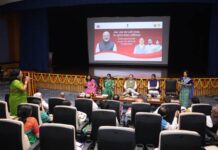
That momentum found its defining moment at the first-ever Odisha Textile Summit – Odisha TEX 2025, held at the Lok Seva Bhawan Convention Centre in Bhubaneswar on July 25. The event marked a major leap for the sector, securing investment proposals worth ₹7,808 crore and promising over 53,300 jobs.
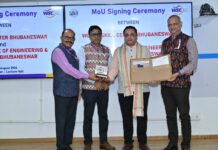
Organized by the Government of Odisha, the summit drew participation from more than 160 companies including Sportking India Ltd, KPR Mill Ltd, First Step Babywear, Hindalco, and SCM Garments. A total of 33 MoUs were signed to establish textile units across Balangir, Keonjhar, Sambalpur, Jagatsinghpur, Ganjam, and Cuttack. This builds on the earlier success of the Utkarsh Odisha: Make-in-Odisha Conclave, where ₹7,002 crore worth of textile-focused MoUs were inked in January.
Chief Minister Mohan Charan Majhi called the summit a landmark achievement and reaffirmed the state’s goal to create over one lakh jobs in the textile sector by 2030. Highlighting the government’s focus on rural development, he said new textile clusters will reduce migration by generating jobs locally. “Odisha is on its way to becoming a textile hub in Eastern India,” he stated.
To support this push, two new textile and footwear parks were launched in Jagatsinghpur and Bhadrak, equipped with plug-and-play infrastructure. Worker hostels were also inaugurated, with a focus on improving facilities for women workers. The government announced an increase in employment subsidies under the OATTP 2022, raising monthly support to ₹6,000 for male workers and ₹7,000 for female workers.
The summit also celebrated Odisha’s handloom legacy. The Chief Minister encouraged citizens and officials to wear handwoven fabrics like Sambalpuri sarees and Berhampur silk at least once a week to show pride in the state’s culture and support its artisans.
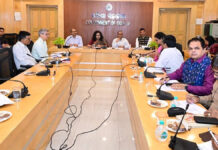
Industries Minister Sampad Chandra Swain termed Odisha TEX 2025 the beginning of a new era, and Textiles Minister Pradeep Bala Samant emphasized the state’s commitment to a balanced ecosystem that uplifts both modern industries and traditional weavers. Senior officials including Chief Secretary Manoj Ahuja, Development Commissioner Anu Garg, and Industries ACS Hemant Sharma were also present, signaling the administration’s high-level backing.
Odisha TEX will now be held annually, with plans to establish five textile parks and generate over five lakh jobs in the next ten years. With nearly 40 percent of the country’s private investment this year flowing into Odisha, the state is clearly weaving a future that’s both rooted and forward-looking.