





















The dignity of labour and the principles of fairness are not negotiable, and administrative apathy can no longer be an excuse for exploitation” – says SC
OdishaPlus Bureau
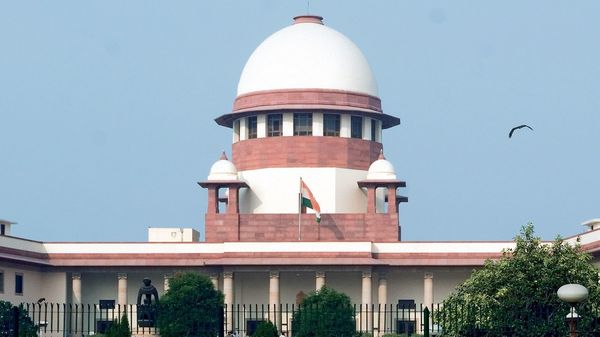
In a resounding verdict that champions the rights of millions of temporary government employees, the Supreme Court of India recently delivered a powerful rebuke to the practice of “exploitative ad-hocism,” declaring that the State, as a “constitutional employer,” cannot hide behind financial excuses to deny workers their dignity and livelihood.
The Court asserted that prolonged delay in regularizing perennial workers is not mere negligence but a “conscious method of denial.”
The landmark judgment, delivered by a bench of Justices Vikram Nath and Sandeep Mehta, came in the case of Dharam Singh v. State of UP, where daily-wage employees had been working for the Uttar Pradesh Higher Education Services Commission for over three decades without the security or benefits of permanent employment.
The ruling sets a formidable precedent, holding the government to a higher standard of accountability and fairness in its employment practices.
A Three-Decade Wait for Justice
The case revolved around a group of Class-III and Class-IV employees who were engaged by the U.P. Higher Education Services Commission between 1989 and 1992. For more than 30 years, they performed essential, year-round duties—sorting applications, providing office support, and driving—integral to the commission’s functioning. Despite the perennial nature of their work and repeated requests from the commission itself to sanction permanent posts, the state government consistently refused, citing “financial constraints” and a ban on creating new positions.
After being denied relief by the Allahabad High Court, which cited a lack of vacancies and regularization rules, the workers brought their long-standing grievance to the Supreme Court. Their appeal challenged not just their precarious employment status but the very foundation of the state’s arbitrary refusal to acknowledge their decades of service.
A Constitutional Employer, Not a Market Participant
The Supreme Court, in its scathing order, dismantled the state’s arguments, refusing to accept financial stringency as a “talisman that overrides fairness, reason and the duty to organise work on lawful lines.”
The bench articulated a powerful doctrine of the State’s responsibility, emphasizing that its role is fundamentally different from that of a private company.
“The State is not a mere market participant but a constitutional employer,” the judgment declared. “It cannot balance budgets on the backs of those who perform the most basic and recurring public functions.”
The court’s tone was unequivocal in its condemnation of the systemic delays and administrative apathy that trap workers in a cycle of insecurity. The bench powerfully articulated the human cost of such practices, stating, “As a constitutional employer, the State is held to a higher standard and therefore it must organise its perennial workers on a sanctioned footing, create a budget for lawful engagement, and implement judicial directions in letter and spirit. Delay to follow these obligations is not mere negligence but rather it is a conscious method of denial that erodes livelihoods and dignity for these workers.”
The verdict further criticized the growing culture of “ad-hocism” and outsourcing, warning that they cannot be used as a “convenient shield to perpetuate precariousness.” The Court held that where work is continuous and essential, the government has a constitutional duty to create sanctioned posts. “To continue extracting such work for decades while pleading want of sanctioned strength is a position that cannot be sustained,” the bench asserted.
Sweeping Directions and a New Dawn
Refusing to simply remand the matter back for reconsideration, which could lead to further bureaucratic delays, the Supreme Court issued comprehensive and time-bound directives to ensure “complete justice.”
The court ordered the Uttar Pradesh government to, regularize all the appellants with retrospective effect from April 24, 2002, create supernumerary posts if necessary to accommodate them, pay full arrears of the difference between their daily wages and the minimum of the regular pay scale from 2002 onwards and recalculate and pay pensionary and terminal benefits for employees who had retired or passed away during the prolonged legal battle.
This judgment is being hailed as a beacon of hope for countless contractual, temporary, and daily-wage workers across the country who perform permanent jobs without the corresponding rights. By holding the State accountable to its constitutional obligations, the Supreme Court has sent a clear message: the dignity of labour and the principles of fairness are not negotiable, and administrative apathy can no longer be an excuse for exploitation.