













Explore Diwali traditions, Jhoti and Alpana art, and Odisha’s Tiger Dance in Mrinal Chatterjee’s Window Seat, celebrating India’s vibrant cultural spirit
Mrinal Chatterjee

Diwali
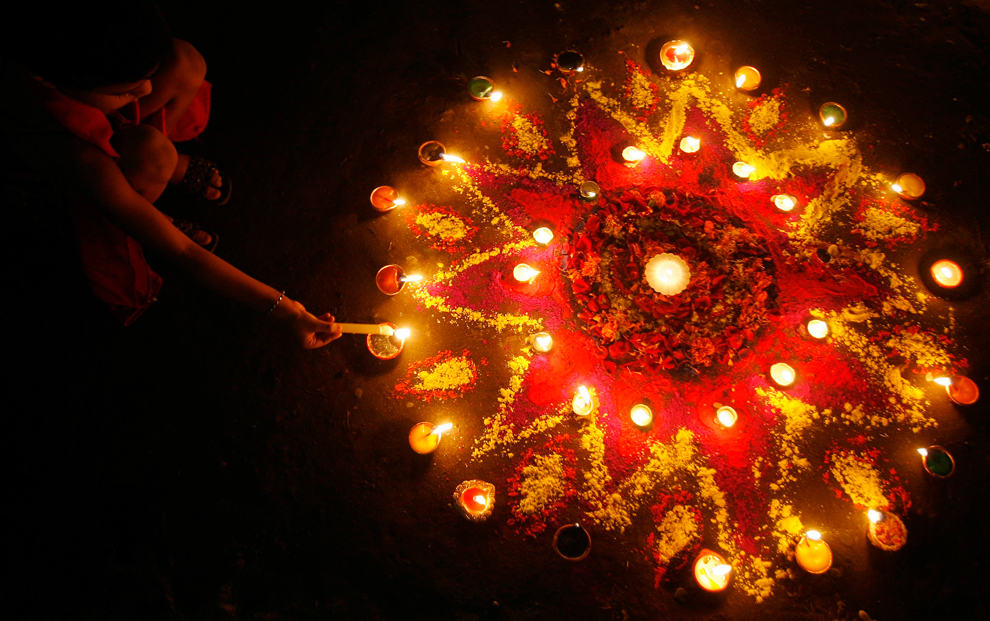
Diwali, also known as Deepavali, is one of the most celebrated and vibrant festivals in India. The word Deepavali means “a row of lamps,” symbolizing the triumph of light over darkness, good over evil, and knowledge over ignorance. It is celebrated by people of various religions across India and the world with great enthusiasm and joy.
In India different regions celebrate this festival differently. Several eastern India states like West Bengal, Odisha, part of Bihar, Assam, Tripura, and Bangladesh worship Goddess Kali on this night. In Odisha people pay obeisance to their forefathers by lighting jute sticks.
Northern Indian states celebrate Diwali as according to Hindu mythology, it marks the return of Lord Rama to Ayodhya after fourteen years of exile and his victory over the demon king Ravana. The people of Ayodhya welcomed Rama, Sita, and Lakshmana by lighting rows of clay lamps, signifying the victory of righteousness. For many, Diwali also celebrates the goddess Lakshmi, the deity of wealth and prosperity. Businessmen and families perform Lakshmi Puja on this day, seeking blessings for happiness and abundance.
Preparations for Diwali begin days in advance. Homes are cleaned, decorated with colorful rangolis, and illuminated with earthen lamps, candles, and electric lights. People buy new clothes, exchange gifts, and share sweets with relatives and friends. The festive air is filled with laughter, fireworks, and the aroma of delicious food.
Beyond its religious significance, Diwali carries a deeper message of unity and renewal. It encourages people to dispel the darkness within — such as ignorance, anger, and greed — and to light the lamp of compassion, love, and wisdom.
Jhoti, Chita, Muruja, Alpana
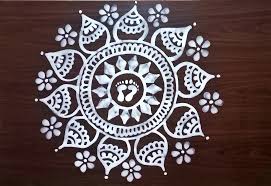
No religious festival in India is incomplete without decorations on the floor and walls. There are different art forms using different materials- from flowers and petals, to wet rice dust to powdered colours.
Jhoti, Chita, Muruja and Alpana are traditional art forms of floor and wall painting found across eastern India, particularly in Odisha and Bengal.origins, materials and specific ceremonial contexts, but share a common purpose of ritualistic and festive decoration.
Jhoti is a traditional Odia art on the floor and walls, very popular in the rural areas. Jhoti is quite different from Rangoli. While Rangolis are made using coloured powders, Jhoti involves line art using the traditional white coloured, semi liquid paste of rice (called Pithau). Fingers are used as brushes in this art form. Intricate and beautiful floral designs like the lotus, elephants, symbols used in Patta Chitra find place in this form of free hand drawing. Small foot marks of goddess Lakshmi are a must in any Jhoti.
Alpana uses the same material, but the design is different. Muruja uses powdered colours like in rangoli.
Bibhuti Bhushan Bandopadhay
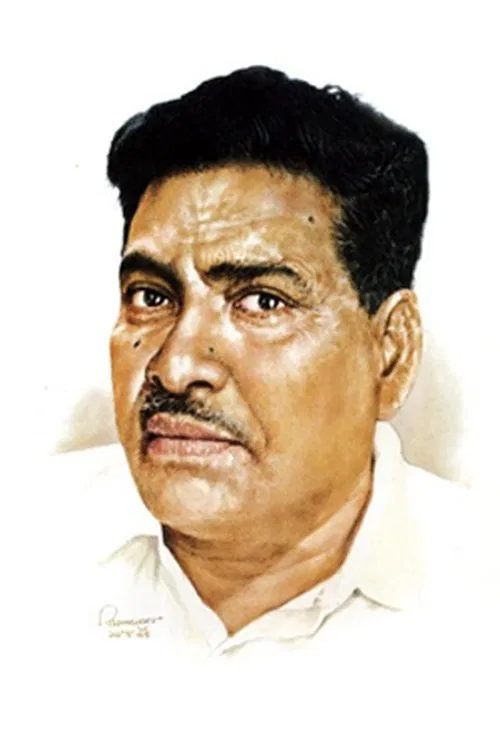
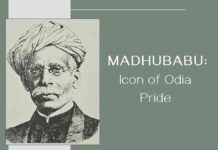
Bibhutibhushan Bandyopadhyay, one of the most prominent novelists of Indian literature is known for his lyrical prose and deep connection to nature. He is best remembered for his semi-autobiographical novel Pather Panchali (Song of the Little Road, 1955), which was later adapted into the first instalment of Satyajit Ray’s acclaimed Apu Trilogy. He wrote several novels that won popular and critical acclaim like Aparajito (1932), Aranyak (1976), Ichhamati, Fuleswari (1974) and Amar Prem (1972). His writing reflects a deep sensitivity to nature, spirituality, and the human condition. Through his simple yet profound storytelling, he remains an enduring figure in modern Indian literature.
He was born on 24 Oct 1894 in present day North 24 Parganas of West Bengal. He died on November 1, 1950 in Ghatshila, Bihar.
Tiger Dance
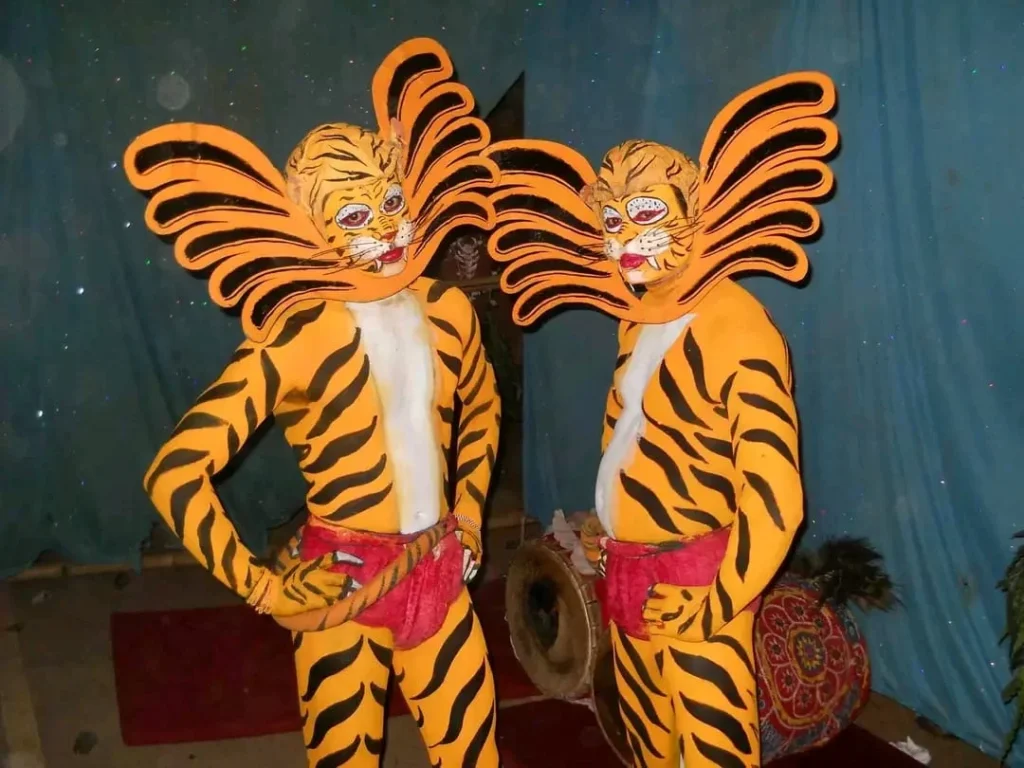
The gait and form of the tiger has been imitated in several traditional dance forms across India; and these are known as Tiger Dance. Puli Kali from Kerala and Huli Vesha (or Pili Yesa) from coastal Karnataka and Bagha Nacha of Odisha are some of the examples.
Puli Kali, or “tiger play,” is a vibrant performance during the Onam festival where artists paint their bodies to look like tigers and dance to traditional percussion, with a theme of tiger hunting. Huli Vesha is performed during Navratri festival to honour Goddess Durga.
Bagha Nacha, or Tiger Dance, isfrom Odisha, mostly performed in Ganjam district. Male dancers paint their bodies in tiger-like stripes and wear masks to mimic the movements of a tiger, often in stylized encounters with an ox or hunter, accompanied by musicians playing instruments like the Changu and Dhol. It has roots in tribal hunting rituals and is also performed during festivals like the Thakurani Yatra.
(The author is Professor at Indian Institute of Mass Communication, IIMC Dhenkanal. Views expressed are personal.)