




















OCOY united Odisha’s youth for climate action, turning local stories into a powerful movement for sustainability
OdishaPlus Bureau
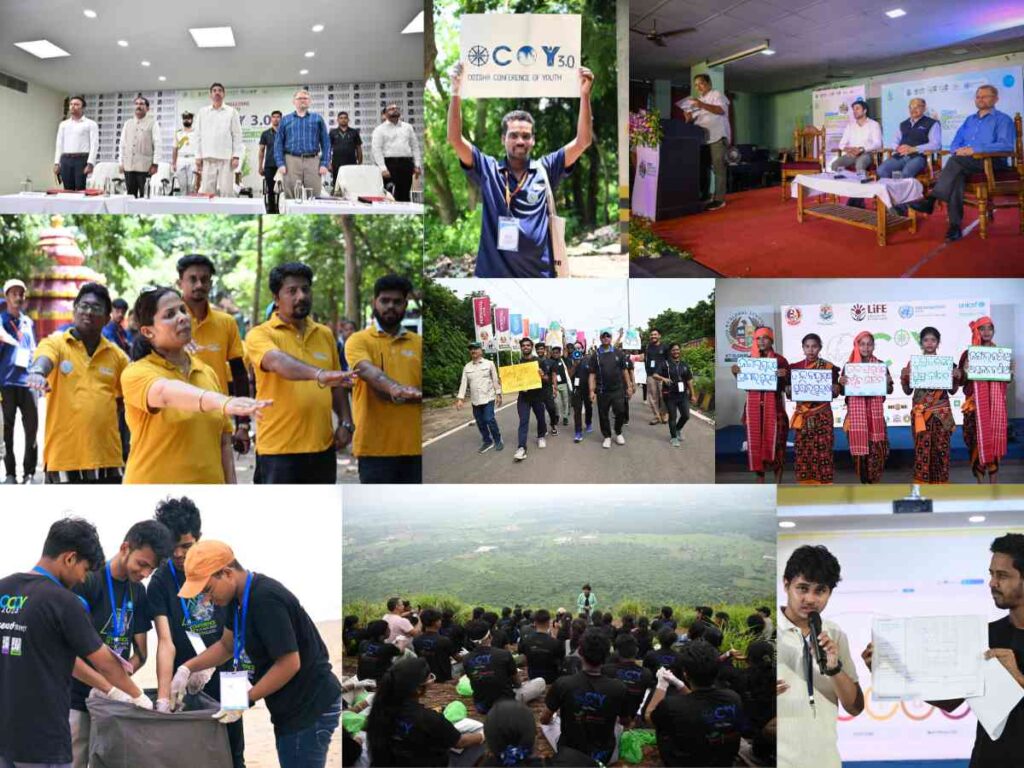
There is a photograph that keeps returning in conversations about OCOY: a handful of young people on a windswept beach at Astaranga, their sleeves rolled up, sacks of rubbish leaning against the dunes, laughter and fierce concentration in equal measure as they sort plastic from seaweed. It is not an image of grand policy or a glossy report. It is a moment of work, of learning, and of decision, the instant a group of ordinary young people decided they would not wait for someone else to fix what was breaking around them. That beach, that plogging drive, became a quiet emblem for what OCOY would come to be; practical, place-based, and proudly youth-led.
OCOY, the Odisha Conference of Youth, an initiative by the Youth4Water Plus campaignbegan as a modest three-day conversation in 2023 and, within three editions, grew into a movement that stitches together villages, classrooms, start-ups, artists, and policymakers. What started with roughly 150 delegates became gatherings of hundreds, and a partnership network that expanded from around 17 initial collaborators to more than 50 organisations and institutions lending time, expertise, and muscle to a shared vision for Odisha’s future. This is the story of that rise: how OCOY turned meetings into mobilization, storytelling into policy pressure, and youthful curiosity into enduring civic energy.
From curiosity to conviction
The first conference in 2023 felt like a homecoming for a generation that had lived climate in its daily weather, floods, and coastal losses. Delegates brought storiesof ponds that had become dumping grounds and of colleges with no plans for heat waves. OCOY 2023 did something deceptively simple and profoundly effective: it made lived experience the starting point for conversation. Indigenous knowledge was celebrated, films like Maa Ka Doodh were screened to shock and inform, and field visits made policy tangible. The three-day Youth Statement that concluded the event read like a citizen’s brief: fix cyclone shelters, revive ponds, create green skills. It was practical and it was insistent.
That grounding in place, in lived stories, is one reason OCOY did not remain an annual conference. It was a spark that landed on dry tinder. People who came to speak became partners who stayed to plan. Students who once attended sessions became trainers in their own districts. The movement’s growth was not accidental. It was the result of designing an event that treated young people not as audiences, but as co-creators.
The turning point: scale with soul
By the time OCOY convened its second edition the following year, the gathering had a new muscle: reach. Pre-conference activities mapped ponds, cleaned beaches, taught seed-ball making in colleges and communities. The state-wide outreach, mobilizing youth from all 30 districts, showed a vital truth: young people are more than willing to act if given tools, credibility, and a stage. The second edition did not abandon the intimate; it simply multiplied it, and in doing so proved the model scalable.
The third edition, OCOY 3.0, held at ASBM University, made the movement’s ambition loud and public. 150 participants, a lineup of cross-sector speakers and dignitaries, and new program designs, Green Boot Camps, Youth Parliaments, and the launch of Mission 30 by 30, turned conversation into a visible plan. What stood out was not spectacle but connection: grassroots stories sat next to governor-level addresses; local innovators pitched alongside nutrition specialists. The Governor’s call to shift “from greed to need” and UNICEF’s framing of climate as a public health and equity crisis made clear that this was not a festival of ideas; it was a platform for translating life into law and practice.
Partnerships: how the circle widened
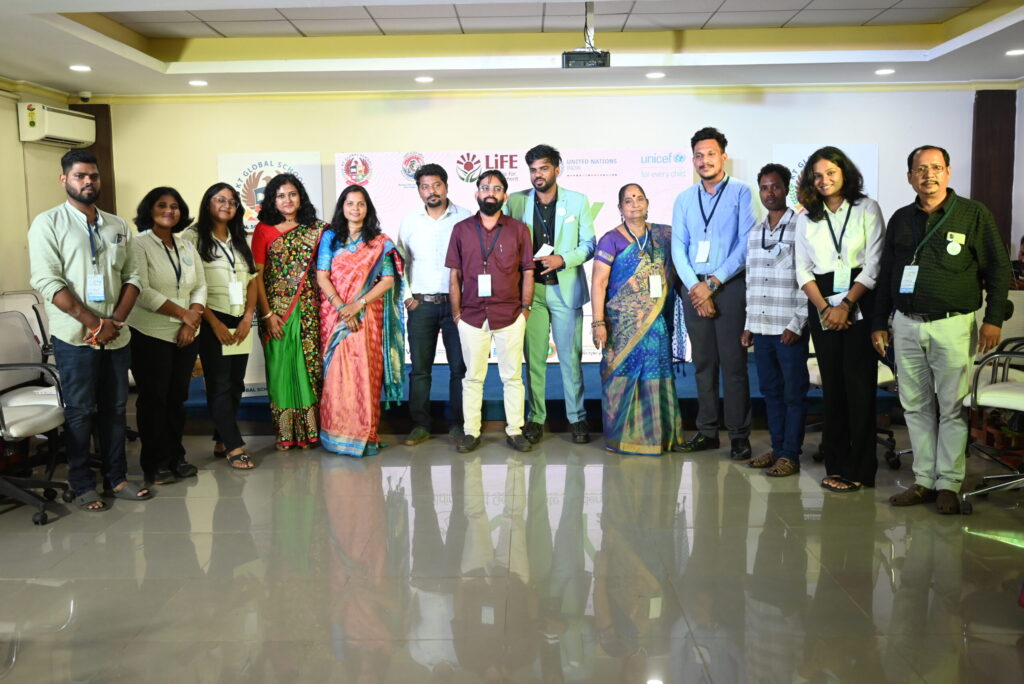
A movement is only as strong as the people and institutions that choose to show up. OCOY’s partnership journey is instructive because it did not chase names as trophies; it cultivated relationships that were useful at the community level. Where the earliest phases counted roughly 17 partners, later editions saw the list grow to more than 50 organisations, universities, government departments, civil society groups, media houses, incubators, and cultural networks, each bringing a different piece of the puzzle: technical training, seed funding, pedagogic support, or media amplification in partners like Odisha Plus. That network enabled OCOY to move from dispersed activity to coordinated action: school programs synced to district mobilisations, media fellowships producing local radio episodes, incubation partners taking promising youth ideas to market. The movement that once fit into a single auditorium could now touch a panchayat, a classroom, and a lab.
What OCOY learned: practices that stuck
First, learning by doing wins hearts and minds. Field immersions, whether at a coastal village, a pond revival site, or a food system demo, turn abstract climate frameworks into household priorities. Delegates who worked on a pond restoration or spent a morning with local fisherfolk returned to cities with commitments, prototypes, and teams.
Second, storytelling amplifies action. OCOY did not rely only on technical manuals; it seeded films, street theatre, and radio series. Change stories carried a human face that policy often misses. When a farmer, a teenager, or a frontline health worker tells a climate story in a local language, neighbors listen and sometimes change. The movement’s emphasis on creative advocacy produced materials that carried these conversations beyond the conference halls and into tea stalls and anganwadi centers.
Third, young people need tangible pathways, entrepreneurship, skills and institutional seats. Show me a training that leads to an income pathway, and I will show you a sustained volunteer, many OCOY mentors argued. That is why incubation showcases and green skills tracks repeatedly surfaced across the editions. Youth were not just asking to be heard; they were asking for the tools to build livelihoods that align with climate resilience.
A movement that demands its place at the table
OCOY’s Youth Parliaments and District Dialogues were not symbolic. They were training grounds for governance and negotiation. Young delegates simulated bills, drafted proposals, and debated items like climate education and youth climate corps. More importantly, many of those proposals did not just end on paper. They were refined with expert feedback during the conference and pushed as recommendations to relevant state departments and partners. Suddenly, young people were not merely protesting the lack of representation; they were exercising it.
What changed: on the ground and in the mind
Across the editions, changes were tangible. Communities that hosted field immersions started local clean-up calendars. Colleges integrated life-skills sessions aligned to WASH and Mission LiFE themes. Young entrepreneurs who once pitched prototypes during OCOY found mentors to help pilot their ideas. A growing number of local governments signalled openness to youth advisory inputs. The movement did not replace existing institutions; it nudged them to be more open, to listen, and to work differently.
Why the next chapter matters
OCOY’s third edition planted a clear stake in the ground: youth could be part of planning and implementing climate resilience in Odisha. But momentum must be made durable. That will mean keeping the core commitments of the movement intact: deep local learning, vibrant storytelling, and pathways to livelihoods. It will also mean sustaining partnerships that have grown from a few dozen to more than 50organisations, because scale without structure blunts impact. The movement’s power is not only the numbers; it is the diversity of partners, universities, government departments, civil society, incubators, artists, and the way they have learned to work together around a set of shared, practical goals.
Voices that shaped the movement
Shipra Saxena, WASH Specialist, UNICEF Odisha: “The climate doesn’t wait, and neither should we.”
William J. Hanlon Jr., Chief, UNICEF Field Office, Odisha: “Climate change is a public health and equity crisis. Young people must be co-creators of solutions.”
Dr. Hari Babu Kambhampati, Hon’ble Governor of Odisha: “We must shift from greed to need; climate leadership is about values and responsibility.”
Ganesh Ram Singh Khuntia, Minister of State, Forest, Environment & Climate Change, Odisha: “Young citizens are not mere stakeholders but co-creators of Odisha’s climate-resilient future.”
Akash Das Nayak, MLA Korei: “Planting alone is not enough, we must spread awareness about reducing plastic use and sustain grassroots engagement.”
A final note
OCOY is not finished. It is a growing chorus of places and people, classrooms and panchayats, festivals and labs, who are learning how climate action is properly done: locally, creatively, and with young people at the helm. The movement is an invitation, a training ground, and a challenge. If you are reading this and feel a pulse when you think of that photograph on the beach, do one thing today that links you to it. Movements are built from small, repeated choices. OCOY shows what is possible when a generation decides it will not change the future… in the future.