















Odisha showcases heritage, crafts, tribal products and community development at IITF 2025, attracting strong visitor response and national appreciation
Abhishek Pati, Biswajit Sahoo & Abhishek Ray
Odisha is participating at the 44th India International Trade Fair (IITF) 2025 at Bharat Mandapam, New Delhi, with great enthusiasm, aspirations and pride from November 14 to November 27, 2025. As one of India’s most culturally vibrant and economically emerging states, Odisha’s presence at IITF reflects a renewed commitment to showcasing State’s heritage, entrepreneurial spirit, progress and development vision @2036 on a national platform.
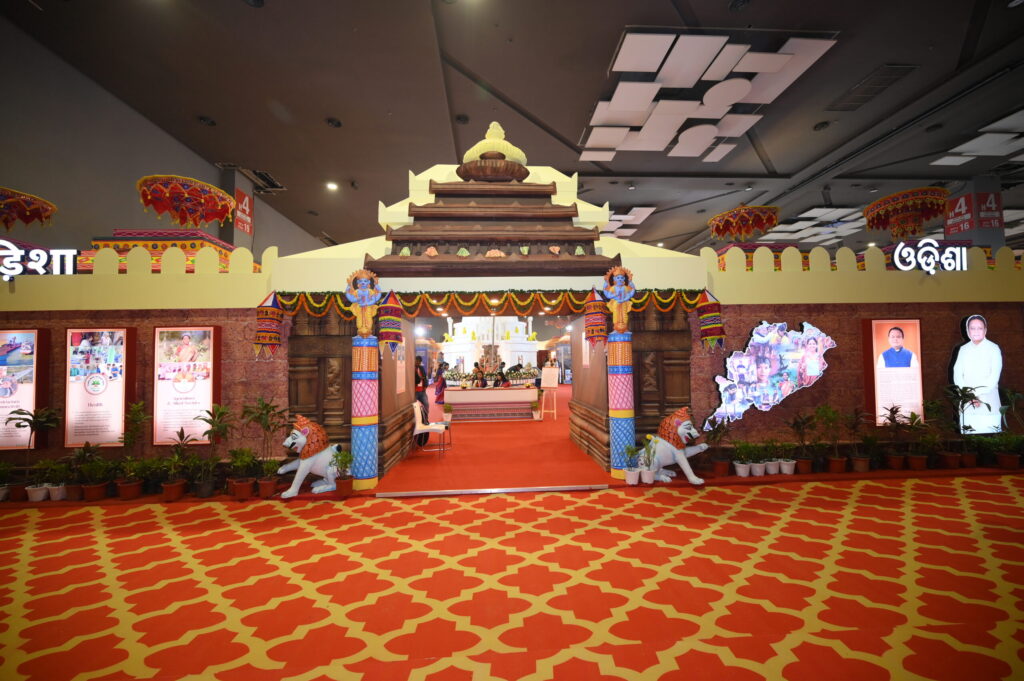
The Odisha Pavilion at the trade showcase has been designed as an immersive experience that blends together the state’s timeless traditions and its contemporary growth trajectory. Odisha Mandap stands as one of the most compelling spaces—inviting visitors not merely to view exhibits, but to experience a State where culture, creativity, and community-led development coexist in harmony. With its seamless mix of tribal artistry, handloom legacy, rural enterprise, indigenous food products and modern development narratives, the pavilion has evolved into a living representation of Odisha’s identity.
A National Stage for Odisha’s Cultural Identity
The IITF has long served as one of India’s most significant platforms for interstate and global trade and cultural exchange. This year’s edition, themed ‘Ek Bharat, Shresth Bharat’, provides a fertile ground to showcase the diversity of the nation. Odisha’s participation perfectly embodies this ethos, presenting not just products but stories of people, traditions, livelihoods, and resilience.
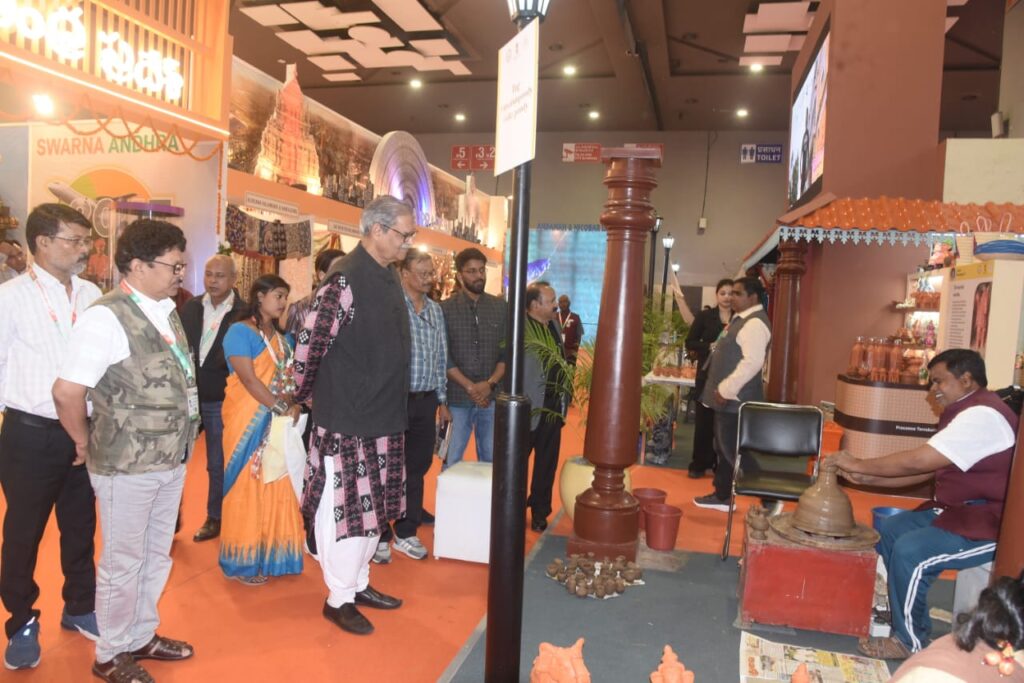
Spread across a curated space featuring 28 thematic stalls representing multiple departments, institutions, and enterprises of the State, the Odisha Mandap has drawn consistent footfalls since the fair opened on November 14. Displays range from traditional crafts to modern startups, from agricultural innovations to tribal livelihoods, and from heritage tourism to emerging industry landscapes.
Design Echoing Odisha’s Spiritual and Maritime Identity
A striking feature of the Odisha Mandap is its architectural narrative. The entryway draws inspiration from the Singha Dwara of the iconic Jagannath Temple in Puri—symbolically welcoming visitors much like the temple welcomes devotees.
The maritime chapter of Odisha’s history finds representation through the Boita Dwara, reminding visitors of the ancient Sadhavas (Odia tradesmen) who sailed across Southeast Asia carrying textiles, arts, and stories—marking Odisha’s historic era of sea trade.
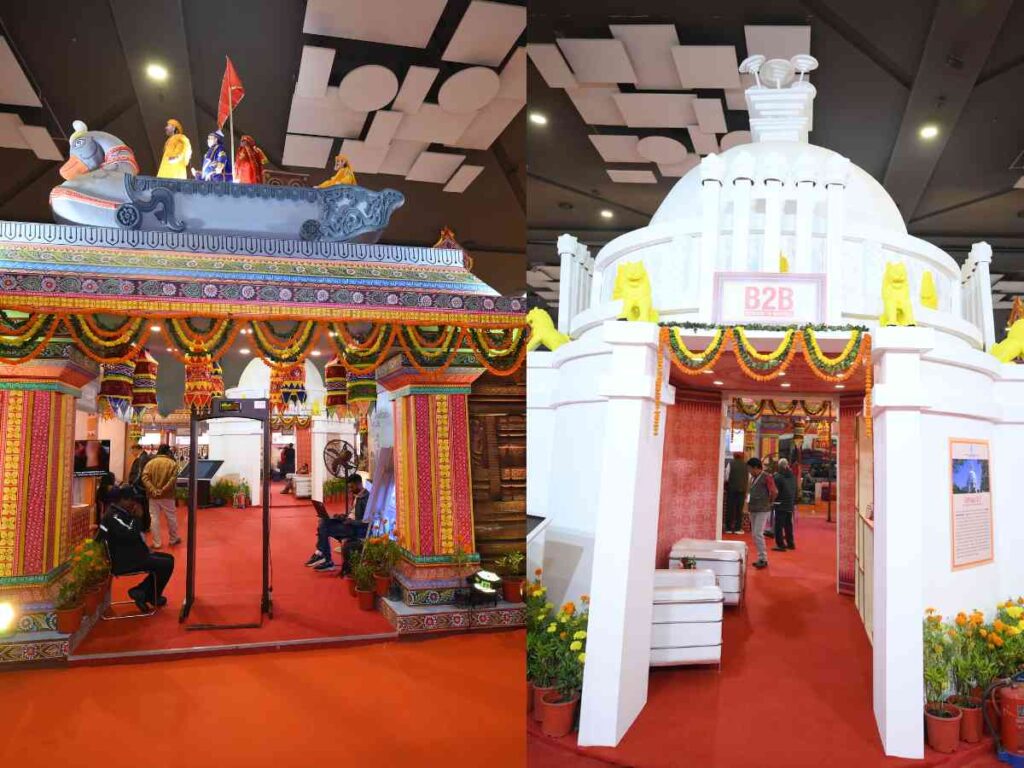
In another section, elements inspired by the Dhauli Shanti Stupa symbolise peace, compassion and Odisha’s enduring Buddhist legacy. The combination of these cultural motifs aligns with the broader national theme and positions Odisha as both ancient and evolving.
Enthusiastic Response of Visitors
Visitors at the pavilion have expressed appreciation not only for the aesthetics but for the depth of narrative woven into each stall.
“It feels like Odisha has not just set up a pavilion — it has brought its soul here,” shared a visitor from Delhi. “The blend of rich cultural heritage with stories of development and entrepreneurship is impressive. It truly reflects how tradition can evolve without losing identity,” he added.
Craftsmanship Rooted in Heritage and Skill
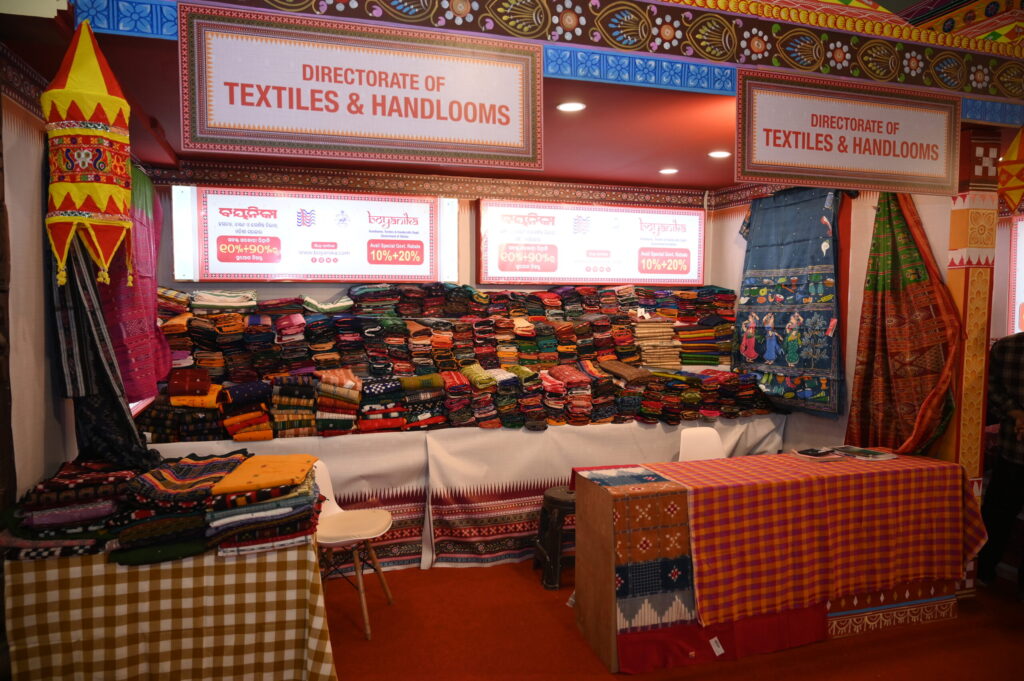
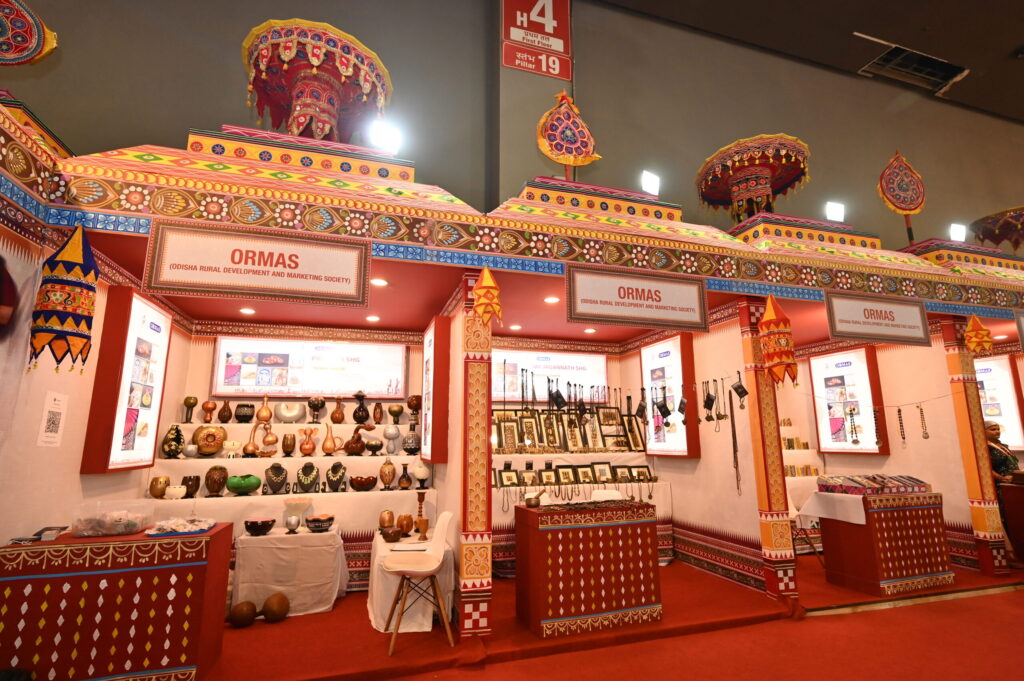
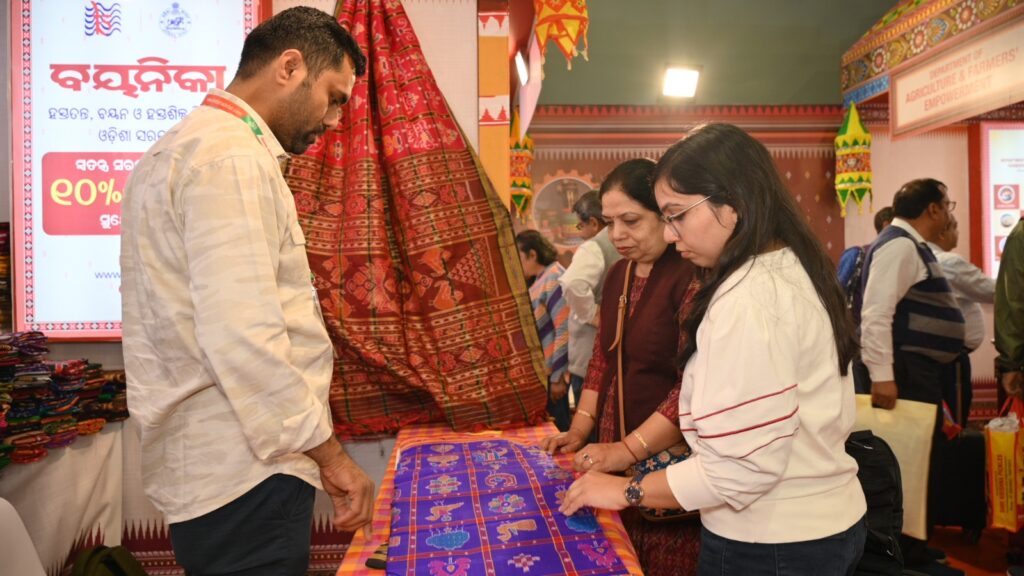
Odisha’s presence in IITF 2025 places significant emphasis on traditional crafts — many of which are rooted in tribal identity and have received national recognition, including Geogrphical Indication (GI) tags. Among the most admired are:
• Kotpad handloom textiles from Koraput, dyed using organic natural colours
• Cuttack silver filigree (Tarakasi)—centuries-old metalwork in delicate lace-like patterns
• Stone carving traditions from heritage craft clusters
• Golden grass weaves, known for both utility and fine artistry
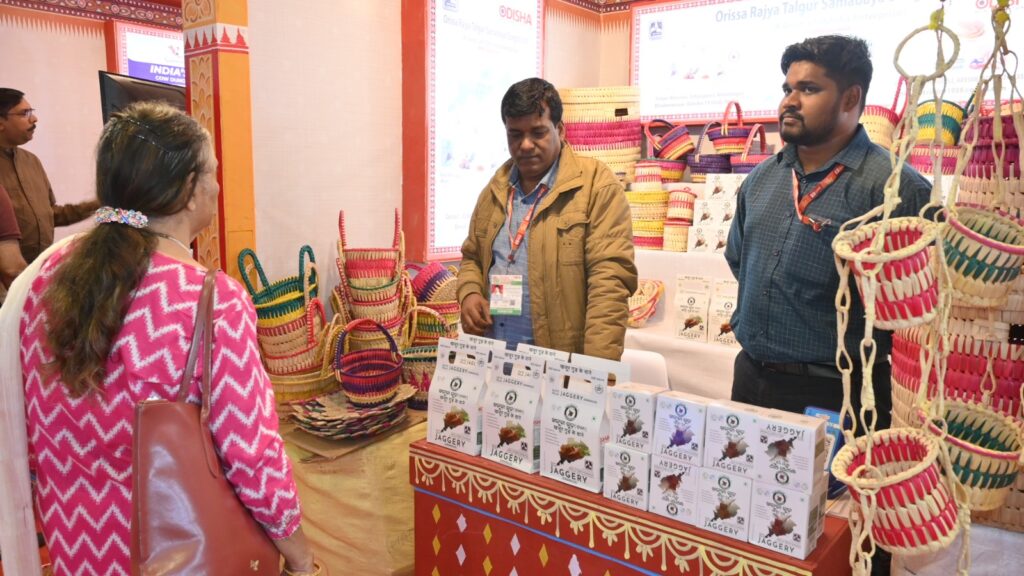
• Paddy and sabai grass craft, representing rural innovation
Live demonstrations by artisans have further enhanced visitor engagement, allowing them to witness firsthand the precision and patience behind each creation of fine art and craft.
Rural and Tribal Products Take the Spotlight
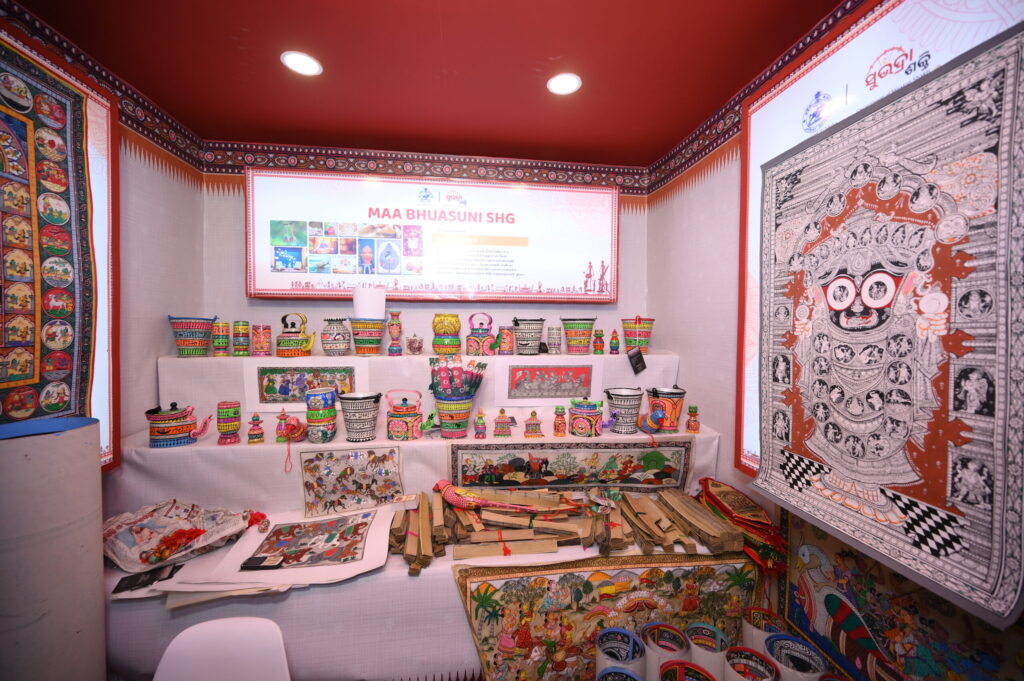
Beyond craft traditions, visitors have shown interest in a variety of tribal produce and agricultural innovations, including:
• Millets and millet-based food products, in alignment with India’s growing push toward nutrition and sustainability
• Spices and forest-derived products, tied to tribal livelihoods
• Handmade personal care items, particularly from women-led enterprises and cooperatives
These displays highlight Odisha’s focus on decentralised rural growth and inclusion.
One visitor, interacting with producers, remarked, “You can clearly see that the products here are not mass-prototypes; they come with history and human touch.”
Koraput Coffee and OMFED Draw Visitor Interest
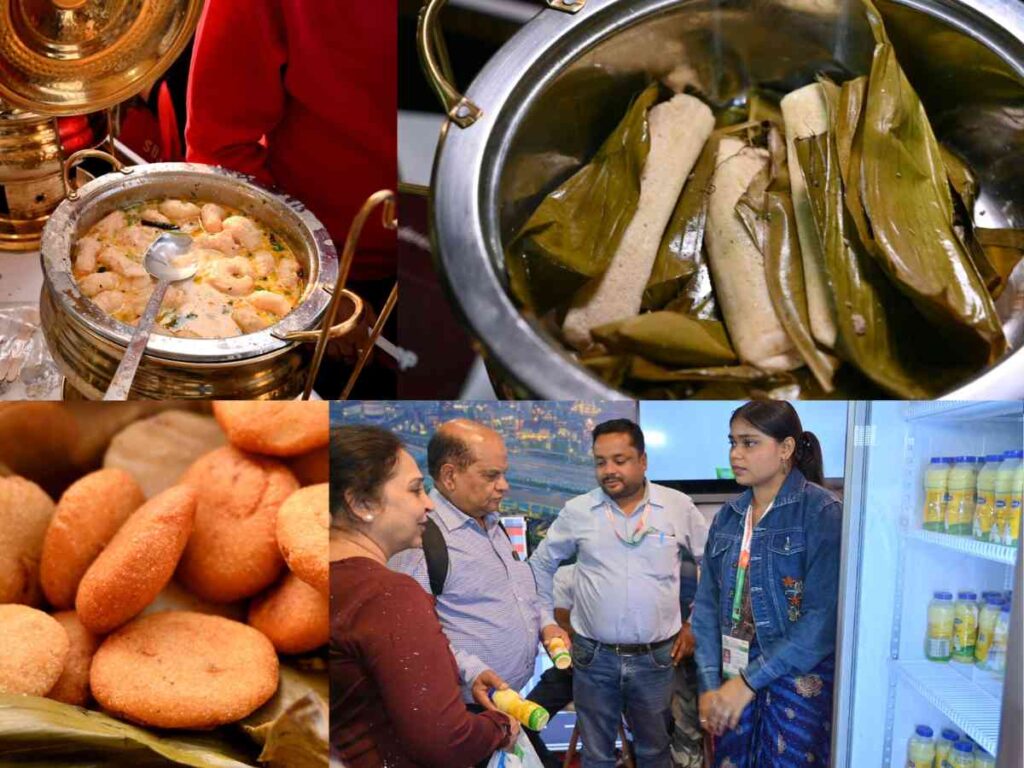
Two products drawing particular attention at the global trade exhibition are Koraput Coffee, known for its rich flavour profile and grown by tribal farmers in the highlands of southern Odisha, and OMFED dairy products, which many visitors associate with Odisha’s expanding agricultural framework.
Koraput Coffee especially reflects a rural-to-global story—where Arabica beans cultivated in tribal hills have now found recognition in premium consumer markets. Many visitors expressed curiosity about the journey from tribal farms to modern cafés—impressed by the model of procurement through TDCCOL and Women SHGs.
Leadership Voices Add Perspective
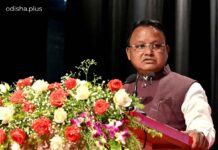
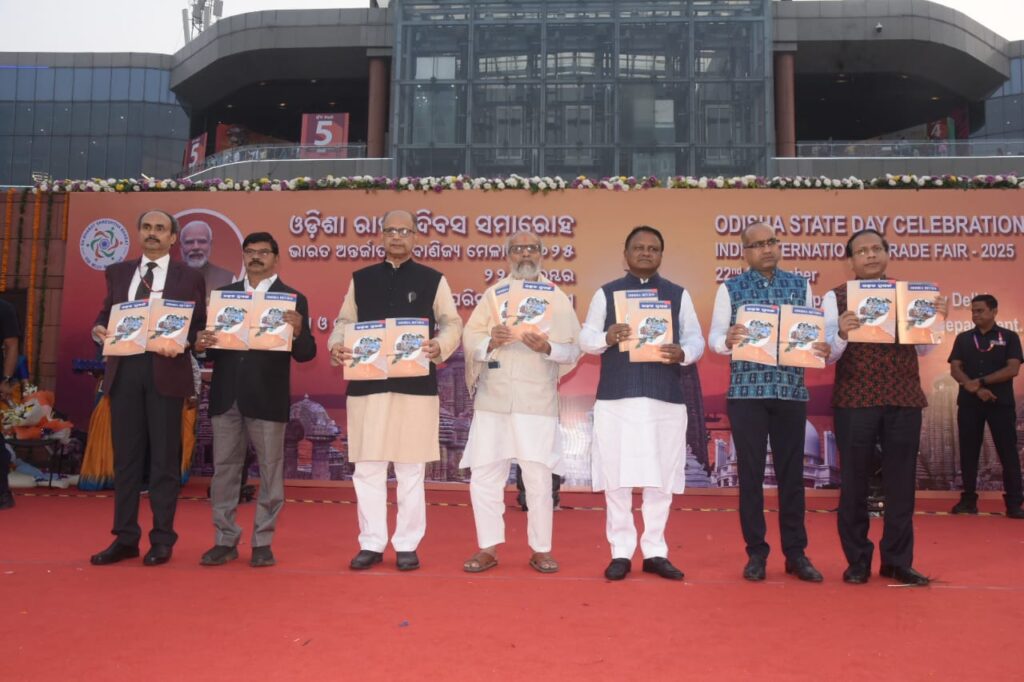
Chief Minister Mohan Charan Majhi kicked off the incredible State Day Celebrations at the IITF on November 22 with great fanfare and an atmosphere filled with cultural splendour and excitement. The CM praised State’s efforts in enriching the trade event stating that Odisha’s participation allows the State to present its identity with both dignity and pride. “Odisha is a land of timeless heritage and emerging potential. At IITF, we not only showcase our traditions but also our journey of growth, empowerment, and opportunity,” the CM said.
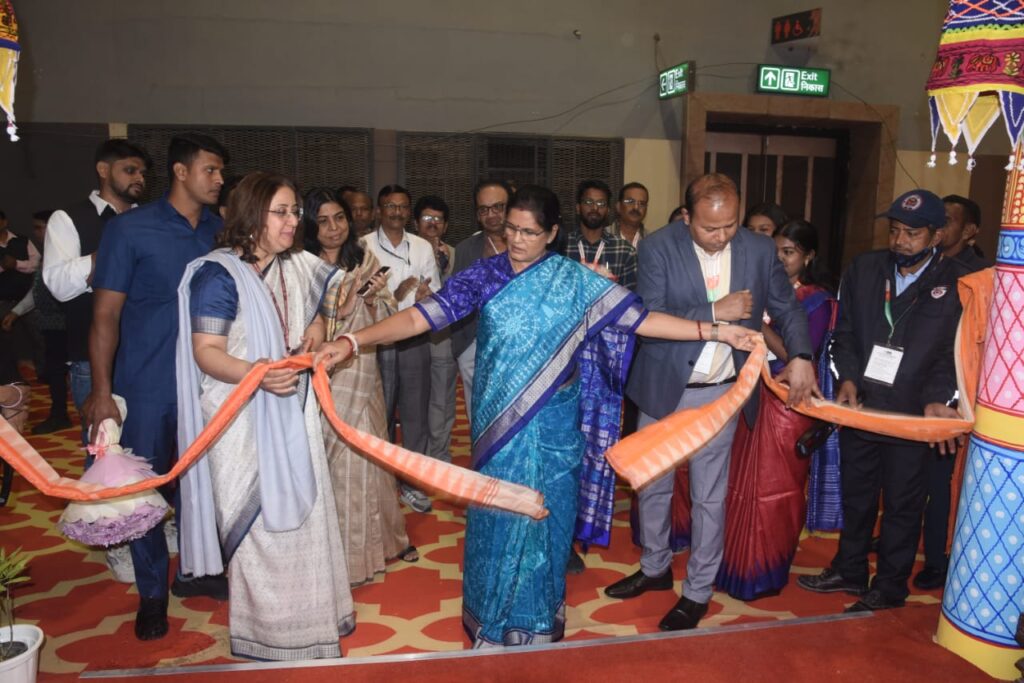
Deputy Chief Minister Pravati Parida, who inaugurated the pavilion on November 14, highlighted the active involvement of women entrepreneurs and artisans, calling it a reflection of the State’s commitment to empowerment and sustainability.
Similarly, Deputy Chief Minister Kanak Vardhan Singhdeo, ministers of FS&CS, Science and Tech, Krushna Chandra Patra, MPs and several other leaders from across India and abroad have appreciated the pavilion’s representation of both historical depth and developmental momentum.
Voices of People Add the Final Layer
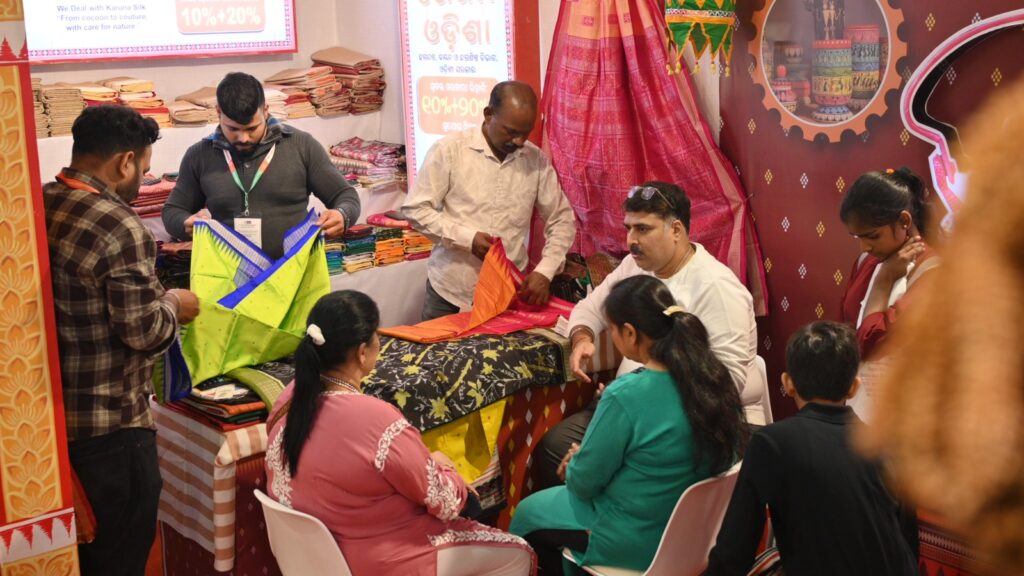
A visitor from Odisha attending the State Day celebration shared, “It fills me with pride to see my State represented with such dignity and attention to detail. The pavilion feels like home away from home.”
Another Odia student living in NCR noted,“This exhibition reminds people that Odisha is not just a destination — it is a culture, a legacy, and a story still unfolding.”
A Platform Celebrating Diversity
The India International Trade Fair, organised annually by the India Trade Promotion Organisation (ITPO), continues to serve as one of the most significant national platforms—bringing together different States, cultures, crafts, industries, and developmental models. Beyond commerce, it stands as a celebration of India’s diversity and cooperative progress.
Odisha’s participation this year reinforces the message that cultural identity and modern development need not exist separately—rather, together they define the State’s evolving narrative.