


















Jayanta Mahapatra’s poetry reimagines Odisha’s rivers—Kathjodi, Mahanadi, and Chandrabhaga—as moral landscapes shaped by memory, history, and faith
Pradeep Biswal
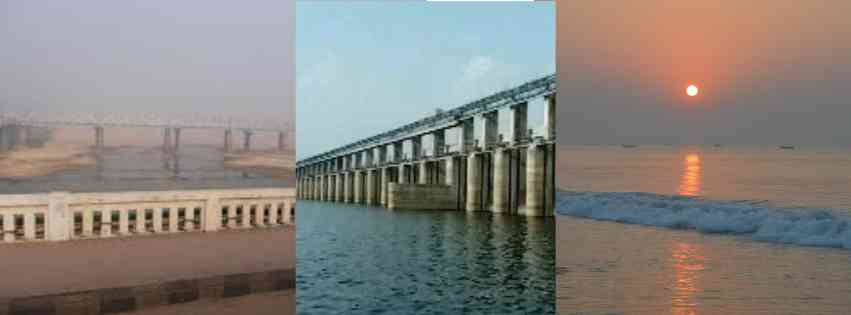
Legendary poet Jayanta Mahapatra’s poetry grows out of Odisha’s physical landscape, yet it is never merely descriptive. Rivers in his work—especially the Kathjodi, the Mahanadi, and the Chandrabhaga—function as moral witnesses, bearing silent testimony to memory, deprivation, faith, and death. Through them, Mahapatra constructs a poetic geography in which place becomes conscience.
Mahapatra’s own life deepened this intimacy with rivers. His house at Tinikonia Bagicha in Cuttack stood almost equidistant from the Kathjodi and the Mahanadi, both intimately linked to his childhood memories. Significantly, he named his house Chandrabhaga, after the river near the Sun Temple at Konark. These three rivers thus shaped not only his lived experience but also his poetic imagination, flowing quietly into the moral fabric of his verse.
Kathjodi: The River of Private Memory
The Kathjodi, a quiet branch of the Mahanadi flowing through Cuttack, belongs to Mahapatra’s inward and personal world. Rarely foregrounded with rhetorical emphasis, it is felt as a presence of stillness, familiarity, and emotional restraint. The river aligns with Mahapatra’s characteristic tone of muted recollection and unresolved memory.
This sensibility surfaces memorably in A Rain of Rites, where landscape dissolves into consciousness:
“The past lies everywhere like water.”
The line captures the essence of the Kathjodi in Mahapatra’s poetry—unassertive yet pervasive, shaping awareness rather than announcing itself. Here, the river becomes an extension of interior life, where childhood, loss, and belonging coexist without resolution. Kathjodi is thus the river of lived memory, flowing not through myth or spectacle, but through the quiet persistence of personal history.
Mahanadi: History, Hunger, and Silence
If the Kathjodi is inward, the Mahanadi is collective and historical. Mahapatra repeatedly associates Odisha’s rivers with famine, poverty, and abandonment—echoes of colonial exploitation and postcolonial neglect that scar the land and its people.
In poems such as Hunger and several Odisha-centred works, the landscape is burdened with human suffering rather than promise. A stark line from Hunger resonates powerfully with the symbolic weight carried by the Mahanadi:
“It was hard to believe the flesh was heavy on my back.”
Though the river is not named, its presence is unmistakable—as a carrier of bodily hunger, moral exhaustion, and historical weight. Flowing through regions where survival itself becomes an ordeal, the Mahanadi in Mahapatra’s poetry remains silent—never redemptive, never consoling. The river does not fail the people; history does. Its silence is an indictment, not a refuge.
Chandrabhaga: Ritual, Faith, and Irony
The Chandrabhaga, near Konark, is Mahapatra’s most overtly symbolic river. Associated with ritual bathing during Magha Saptami, it represents the collision between faith and mortality. In the celebrated poem Dawn at Puri, Mahapatra offers one of the most haunting ritual landscapes in Indian English poetry:
“A skull on the holy sands
tilts its empty country towards hunger.”
The image devastates the promise of ritual purification. The sacred geography—linked culturally and imaginatively to Chandrabhaga and Puri—becomes a space where death intrudes upon devotion. Bodies are not renewed; they are exhausted. Another line from the same poem deepens this irony:
“The wet air tiring of incense brings a chill of silence.”
Religious performance here appears fragile, almost futile, against the enormity of human suffering. Chandrabhaga thus emerges as a river where belief is enacted but never answered. Now physically extinct, the river survives in Mahapatra’s poetry as a potent symbol of life’s transience and ritual’s unresolved promise.
Silence: A Shared Current
Silence is the shared current running through Mahapatra’s river imagery. Across the Kathjodi, the Mahanadi, and the Chandrabhaga, the dominant motif is endurance without speech. These rivers do not console; they witness. This aligns with Mahapatra’s restrained poetic voice, which refuses easy transcendence or lyrical excess. In Bare Face of Night, he writes:
“Silence is what I hear.”
The line could serve as an epigraph to his entire riverine imagination. The rivers absorb prayers, hunger, and grief, but offer no reply. They are ethical landscapes rather than decorative symbols.
Though rooted firmly in Odisha, these rivers transcend regional specificity. The Kathjodi becomes the river of personal memory, the Mahanadi of historical injustice, and the Chandrabhaga of ritual confronting death. Together, they map a poetic terrain where geography becomes destiny.
Mahapatra’s rivers remind us that poetry, like water, carries what history leaves behind. In his work, the Kathjodi, the Mahanadi, and the Chandrabhaga are not symbols imposed upon the land; they are living landscapes that think. Flowing through his poems, they gather memory, suffering, and faith into a quiet but relentless moral presence. As Mahapatra shows us, rivers do not explain. They remember—and in remembering, they become part of our collective consciousness.
(Pradeep Biswal is a bilingual poet, editor, and translator based in Bhubaneswar. A retired IAS officer, he served the Government of Odisha in several key positions before and after superannuation. Views Expressed are Personal.)

Outstanding presentation of Orissan three rivers and their association with the poet.