




















Is Odisha’s Midday Meal Scheme distracting from learning? Explore the need to reform PM POSHAN management to free teachers for core academic duties
Rabindra Kumar Nayak
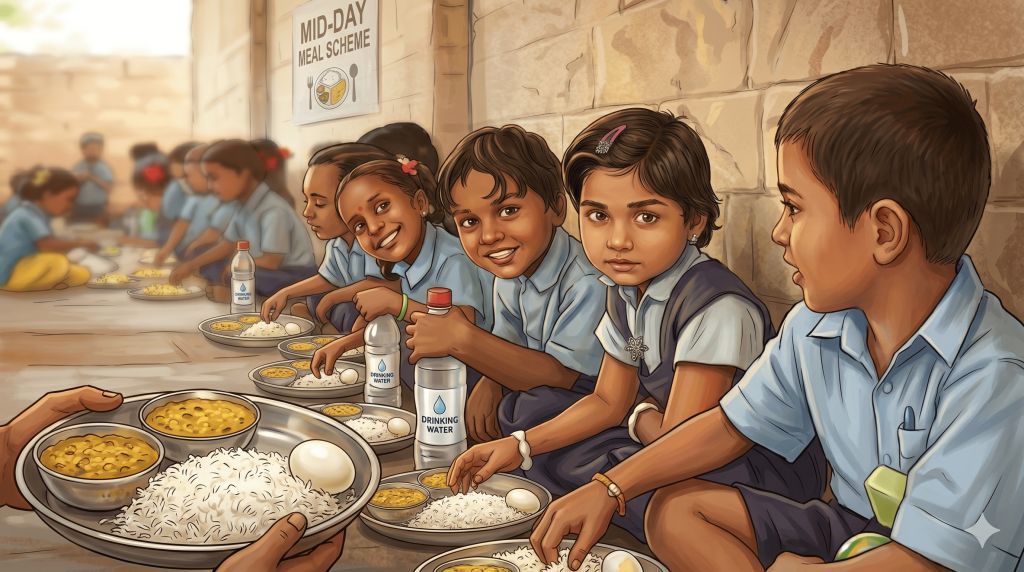
The Midday Meal Scheme, now operating under the PM POSHAN Scheme, has long stood as a pillar of India’s welfare architecture. In Odisha, it has served as a lifeline for thousands of children, particularly in rural, tribal, and economically marginalised regions. By ensuring that children receive at least one nutritious meal a day, the scheme addresses not only hunger, but also school attendance and retention.
Yet, beneath this well-intentioned initiative lies a growing debate: should the programme continue in its present form, or has it begun to hinder the academic environment it seeks to support? There is no denying the transformative impact of the scheme.
In many parts of Odisha, especially in backward districts, the promise of a cooked meal has brought children into classrooms who might otherwise have remained outside the education system. It has reduced dropout rates, improved enrolment, and helped bridge social divides by bringing children from different castes and communities together at a common dining space. For many families struggling with poverty, the Midday Meal is not merely an incentive; it is a necessity.
However, the operational reality in schools paints a more complex picture. The responsibility of managing the programme often rests heavily on teachers. From maintaining stock registers and supervising the cooking process to ensuring proper distribution and addressing unforeseen issues, teachers are compelled to devote a significant portion of their time to non-academic duties. In schools with limited staff, this burden becomes even more pronounced.
The implications for classroom teaching are serious. When teachers are distracted by administrative and logistical responsibilities, the quality of education inevitably suffers. Teaching hours are reduced, lessons are rushed, and the opportunity for meaningful engagement with students diminishes.
In such a scenario, the fundamental objective of schooling – to impart knowledge and foster intellectual growth – is overshadowed by the demands of programme management. Moreover, concerns about food quality and hygiene continue to surface intermittently. Reports of substandard meals, irregular supply of ingredients, and lack of proper monitoring raise questions about the effectiveness of the current implementation model.
While many schools manage the programme efficiently, the inconsistencies across regions highlight systemic gaps that cannot be ignored. This brings us to the central question: should the Midday Meal Scheme be discontinued, or should it be restructured?
To argue for its discontinuation would be both impractical and unjust. In a state where malnutrition and economic disparities still exist, withdrawing such a crucial support system could have severe consequences. Hunger is a formidable barrier to learning, and any policy that ignores this reality tends to exclude the most vulnerable children from the educational process. The more constructive approach, therefore, lies in reform rather than removal.
One of the most widely suggested solutions is to transfer the operational responsibility of the scheme to specialised agencies. Self-help groups, non-governmental organisations, or centralised kitchen systems could manage the preparation and distribution of meals more efficiently. Such models have already shown success in various parts of the country, ensuring better quality control and reducing the administrative burden on schools. Entrusting the programme to external agencies would allow teachers to focus entirely on their core responsibility – teaching.
It would restore the sanctity of the classroom and enable educators to devote their time and energy to the intellectual and emotional development of students. At the same time, mechanisms for local oversight, such as school management committees and community participation, must be strengthened to ensure accountability and transparency.
However, this transition must be handled with caution. Outsourcing the programme without proper regulation could lead to issues of commercialisation, cost-cutting, and neglect of local dietary preferences. The involvement of the community, which has been a strength of the current system, should not be entirely eliminated. Instead, a balanced, hybrid model that combines professional efficiency with local participation may offer the most sustainable solution.
The debate surrounding the Midday Meal Scheme in Odisha ultimately reflects a broader challenge in public policy – how to balance welfare with efficiency, and social support with institutional integrity. Education and nutrition are not competing priorities; they are complementary necessities. A hungry child cannot learn, but a poorly managed welfare programme cannot substitute for quality education.
The way forward lies in recognising this interdependence and designing policies that reinforce rather than undermine each other. By relieving teachers of non-academic burdens, improving monitoring systems, and ensuring consistent quality in meal provision, Odisha can transform the Midday Meal Scheme into a more effective and sustainable initiative.
The scheme should not be seen as a problem to be eliminated, but as a system to be refined. With thoughtful reforms and a clear focus on both nourishment and education, it can continue to serve as a foundation for a more equitable and effective schooling system.
(The author is a former Reader in English. Views expressed are personal.)