














Odisha unveils plans to develop the Bhubaneswar–Cuttack–Puri–Paradip region into an integrated economic corridor with ring roads, rail links and industry hubs
OdishaPlus Bureau

Odisha has announced a significant development initiative for the Bhubaneswar–Cuttack–Puri–Paradip area, revealing plans to transform it into a comprehensive integrated economic corridor, bolstered by extensive new transportation links, industrial infrastructure, and tourism growth.
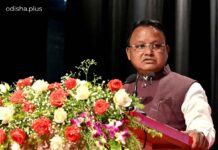
In a high-level meeting convened at Lok Seva Bhawan on Wednesday (24 December), Chief Minister Mohan Charan Majhi directed departments to formulate a specific roadmap that will establish cities within the corridor as strategic “growth hubs” for manufacturing, commerce, and tourism.
The project is centered around an extensive 645 km ring road network designed to facilitate traffic flow and enhance connectivity throughout the state’s capital region.
At its heart is a 432 km Capital Ring Road that extends from Paradip to Puri via Tangi, Saptasajya, and Rameshwar, which will be integrated with the Centre’s proposed 111 km Capital Region Ring Road.
Additionally, a 148 km outer ring road will connect Jatamundia, Trisulia, Urali, Balipatna, Pipili, Jatni, and Khurda, along with a 65 km inner ring road linking Tamando and Dhauli through Chandaka and Pahala.
These corridors are anticipated to redirect heavy freight away from urban areas while connecting rural and semi-urban communities to major economic supply chains.
In conjunction with the road plan, a new 32 km rail line between Puri and Konark and a 70 km line from Konark to Bhubaneswar via Nimapara have been proposed, aimed at facilitating the movement of pilgrims and logistics.
With direct access to Paradip Port, officials expect significant growth across various sectors, including port-based manufacturing, agro-processing, fisheries, chemicals, textiles, logistics, IT, and tourism.
Majhi also urged departments to work closely with NITI Aayog to expedite implementation and called for policy revisions to attract further investment.
At a recent stakeholders’ meeting, NITI Aayog’s principal economic advisor Anna Roy stated that the corridor strategy would be a crucial factor in advancing the state towards its long-term goal of achieving a $1.5 trillion economy.